


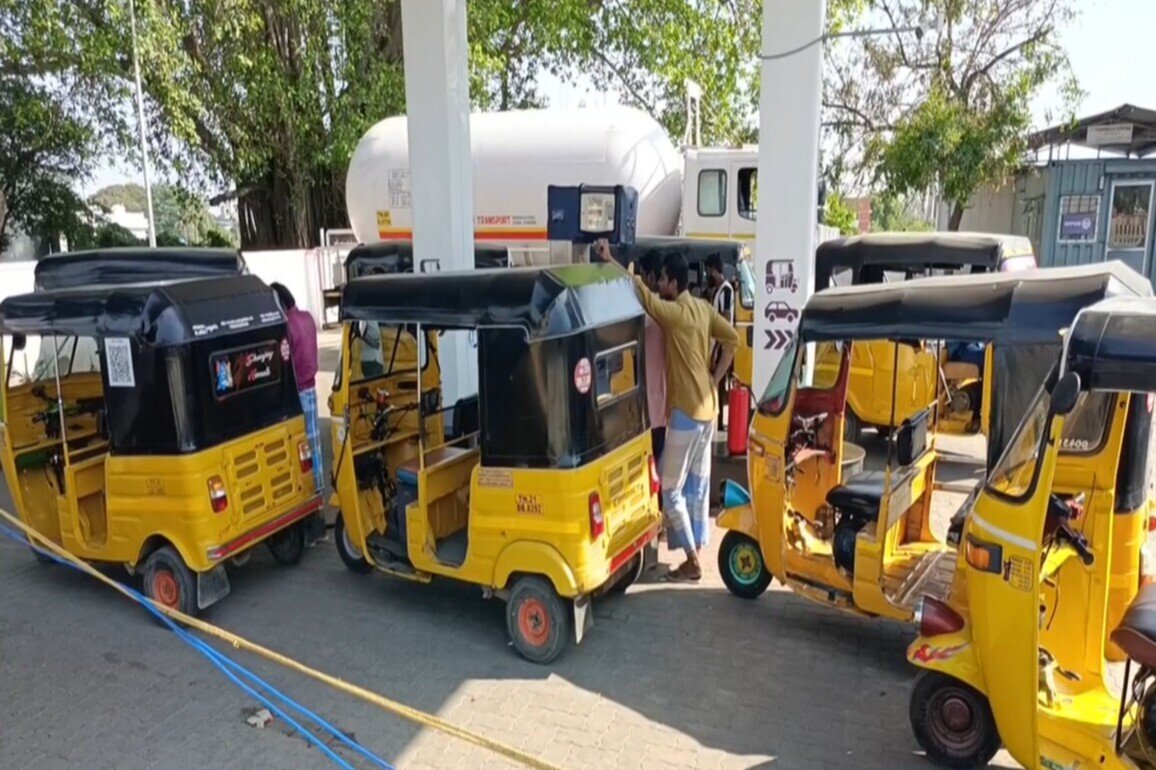
A persistent shortage of LPG in Chennai is disrupting the operations of auto-rickshaw drivers, exposing vulnerabilities in the city’s informal transport economy and raising concerns over fuel supply reliability. The issue is affecting daily earnings, commuter availability, and the broader functioning of last-mile mobility services.
Auto-rickshaws form a crucial component of Chennai’s urban transport ecosystem, particularly for short-distance travel and last-mile connectivity. However, drivers report increasing difficulty in accessing LPG fuel, with supply constraints leading to long waiting times and reduced operational hours. For many, this directly translates into lost income and uncertainty in daily work schedules.The ongoing Chennai LPG shortage highlights the dependence of informal transport systems on stable fuel supply chains. Unlike larger fleet operators, individual drivers often lack the resources to absorb disruptions or switch to alternative fuels quickly. As a result, even short-term shortages can have immediate economic consequences for thousands of workers.Urban mobility experts note that such disruptions can ripple across the city’s transport network. When auto-rickshaws become less available, commuters may face longer wait times, higher fares, or increased reliance on other modes of transport. This can place additional pressure on already crowded buses and trains, particularly during peak hours.The situation also raises questions about the resilience of urban energy systems. As cities like Chennai continue to grow, ensuring reliable access to cleaner fuels becomes essential for maintaining both economic activity and environmental standards.
LPG is widely used in auto-rickshaws as a relatively cleaner alternative to conventional fuels, making its availability critical for reducing urban emissions.From a policy perspective, the Chennai LPG shortage underscores the need for better coordination between fuel suppliers, distributors, and transport authorities.Ensuring consistent supply, improving distribution networks, and creating buffer mechanisms could help mitigate the impact of such disruptions in the future.There are also broader implications for the city’s transition towards sustainable mobility.While LPG offers environmental advantages over petrol and diesel, long-term strategies may need to focus on electrification and alternative energy solutions. Expanding charging infrastructure and incentivising electric auto-rickshaws could reduce dependence on fluctuating fuel supplies.For drivers, however, immediate concerns remain centred on livelihood stability. Many rely on daily earnings to meet household expenses, and prolonged fuel shortages can push them into financial stress. Addressing these challenges requires not only supply-side solutions but also social and economic support mechanisms.
As Chennai navigates the current disruption, the episode serves as a reminder of the interconnected nature of urban systems.Reliable fuel access, efficient transport networks, and inclusive economic policies must work together to sustain the city’s mobility ecosystem and support those who depend on it for their livelihoods.
Also Read:Chennai Bus Services Expanded To Meet Travel Demand
