


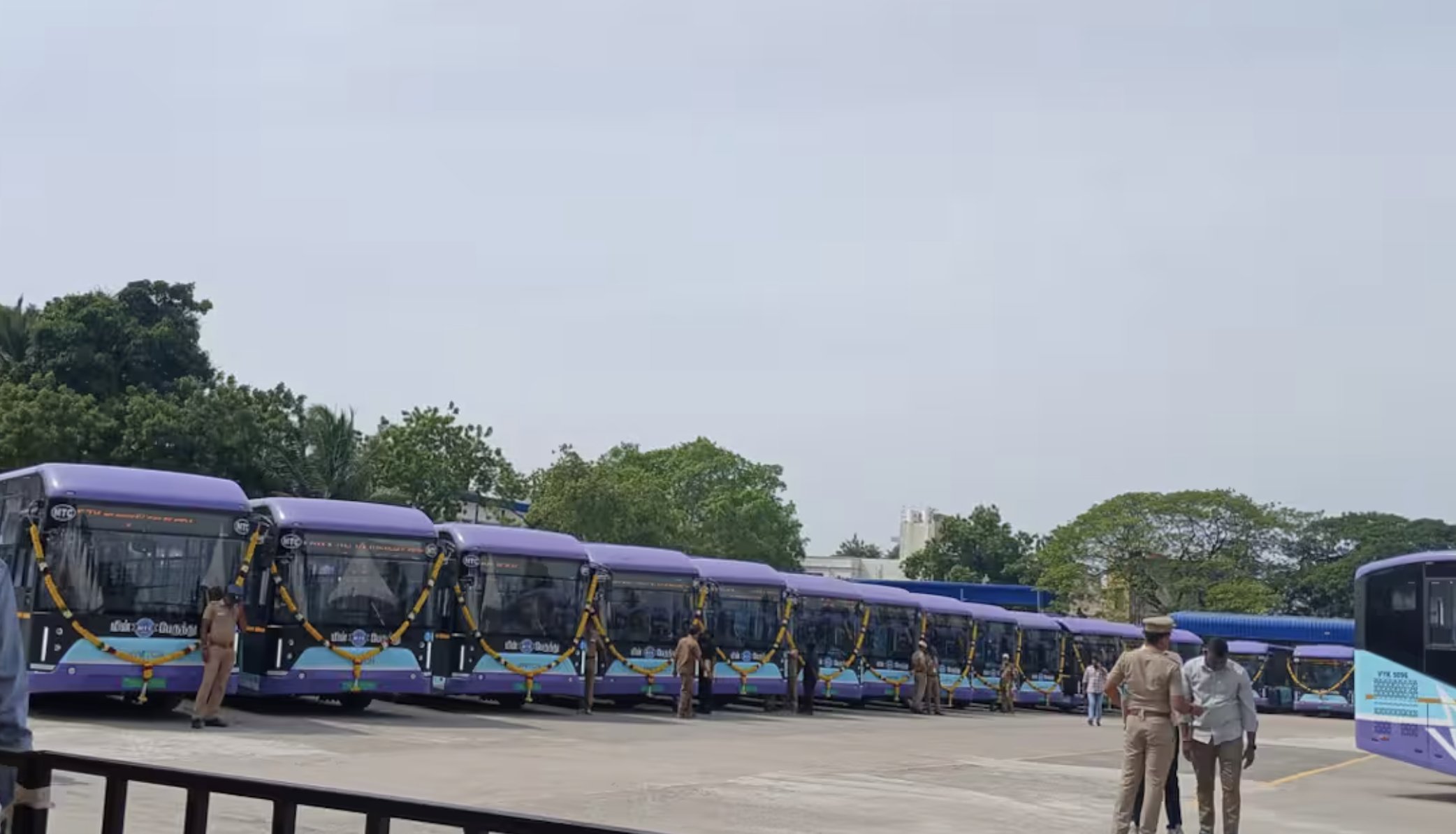
Chennai is witnessing a temporary expansion in intercity bus connectivity as transport authorities scale up services to manage rising passenger demand from across Tamil Nadu. The move underscores the city’s central role in regional mobility networks and highlights the growing pressure on public transport systems in a rapidly urbanising state.
Additional bus services have been introduced linking Chennai with Coimbatore and several other districts, responding to a surge in travel linked to seasonal movement, work commutes, and social travel patterns. The increased frequency and capacity are expected to ease congestion at major bus terminals and improve accessibility for passengers travelling to and from the state capital.As a key economic and administrative hub, Chennai attracts a constant flow of commuters, students, and workers from across Tamil Nadu. This sustained inflow places significant demand on intercity transport systems, particularly during peak travel periods. Authorities view the augmentation of services as a necessary step to maintain connectivity and reduce overcrowding on high-demand routes.The expansion of Chennai bus services reflects broader trends in urban mobility, where road-based public transport continues to play a critical role in bridging distances between cities and districts. While rail networks also support intercity travel, buses offer flexibility in routing and scheduling, making them essential for last-mile and regional connectivity.However, urban mobility experts point out that such temporary measures often highlight deeper structural challenges.
Recurring spikes in travel demand suggest the need for long-term capacity planning, including investments in multimodal transport systems that integrate buses with rail and metro networks. Without such integration, cities risk facing periodic congestion and service inefficiencies.Environmental considerations are also becoming increasingly important in transport planning. While expanding bus fleets improves accessibility, it can also increase emissions if conventional fuel-based vehicles dominate operations. Transitioning towards electric or low-emission buses could help Chennai align mobility expansion with its sustainability goals.For commuters, the additional services are likely to translate into shorter waiting times, improved travel comfort, and more reliable connections. This is particularly significant for lower- and middle-income groups who depend heavily on public transport for intercity travel.The Chennai bus services boost also reinforces the role of state-run transport systems in ensuring equitable mobility.Affordable and accessible transport options are essential for supporting economic participation and social inclusion, especially in a state with diverse urban and rural linkages.
Looking ahead, Chennai’s ability to manage growing travel demand will depend on how effectively it can transition from reactive measures to proactive planning.Strengthening infrastructure, adopting cleaner technologies, and improving operational efficiency will be key to building a resilient and future-ready transport network.
Also Read:Chennai commuters seek improved entry at Avadi station
Chennai sees transport boost with added bus services
