


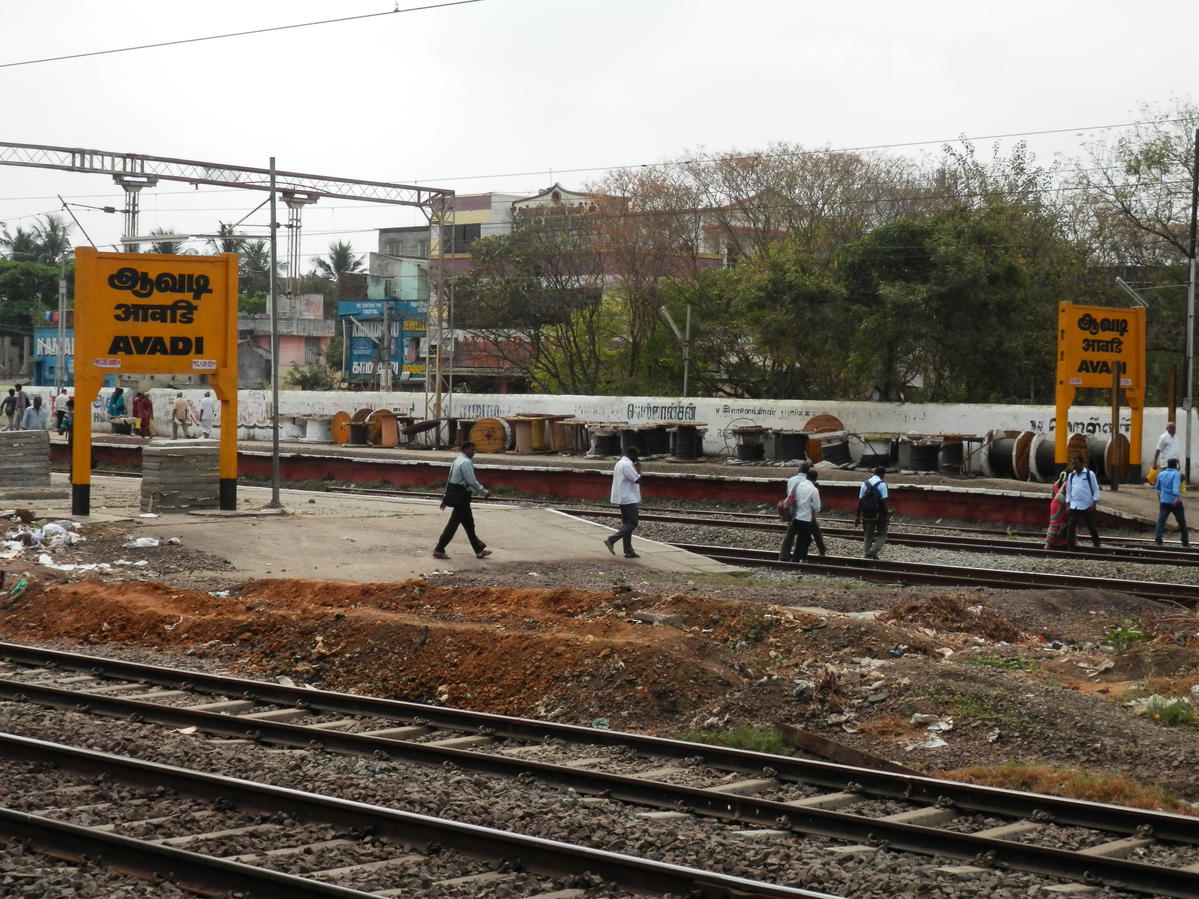
Commuters in Chennai’s Avadi locality are calling for an additional entry point at the suburban railway station, highlighting growing concerns over accessibility and crowd management in one of the city’s key transit nodes. The demand reflects broader challenges in aligning transport infrastructure with rising suburban populations and daily ridership pressures.
Avadi railway station serves as a critical link for thousands of daily commuters travelling between peripheral residential zones and the city’s core. However, passengers have raised concerns about limited entry and exit options, which can lead to congestion, especially during peak hours.The absence of multiple access points not only slows movement but also raises safety concerns in emergency situations.Residents and regular commuters argue that an additional entrance could significantly ease crowd flow, reduce travel time within the station premises, and improve overall user experience. For many, the issue goes beyond convenience—it is about ensuring equitable access to public transport in rapidly growing suburban areas where dependence on rail networks remains high.Urban mobility experts note that such concerns are symptomatic of a larger issue facing expanding cities. As suburban populations increase, transport infrastructure often struggles to keep pace with demand.Stations that were originally designed for lower footfall now face capacity constraints, underscoring the need for periodic upgrades and redesign.The call for improved access at Avadi also ties into broader discussions around inclusive urban design.
Stations must cater to diverse user groups, including elderly passengers, women, and persons with disabilities. Limited entry points can create bottlenecks that disproportionately affect these groups, reducing the overall accessibility of public transport systems.From a planning perspective, enhancing station infrastructure is not just about adding physical capacity but also about improving connectivity with surrounding neighbourhoods. Additional entrances can shorten walking distances, integrate better with local road networks, and encourage more people to use public transport instead of private vehicles.Environmental considerations further strengthen the case for such upgrades.Efficient and accessible rail systems can help reduce traffic congestion and lower emissions by promoting a shift away from road-based transport. However, this requires infrastructure that is user-friendly, safe, and capable of handling growing demand.
Authorities are expected to review the feasibility of the proposed changes, taking into account land availability, cost, and operational requirements. While such interventions may appear small in scale, they can have a meaningful impact on daily commuting experiences and urban mobility outcomes.
As Chennai continues to expand outward, ensuring that suburban transit hubs evolve in tandem with population growth will be critical. Addressing access gaps at stations like Avadi could play a key role in building a more efficient, inclusive, and sustainable urban transport network for the city’s future.
Also Read:Chennai Engineering Faculty Verification Gets Stricter
