


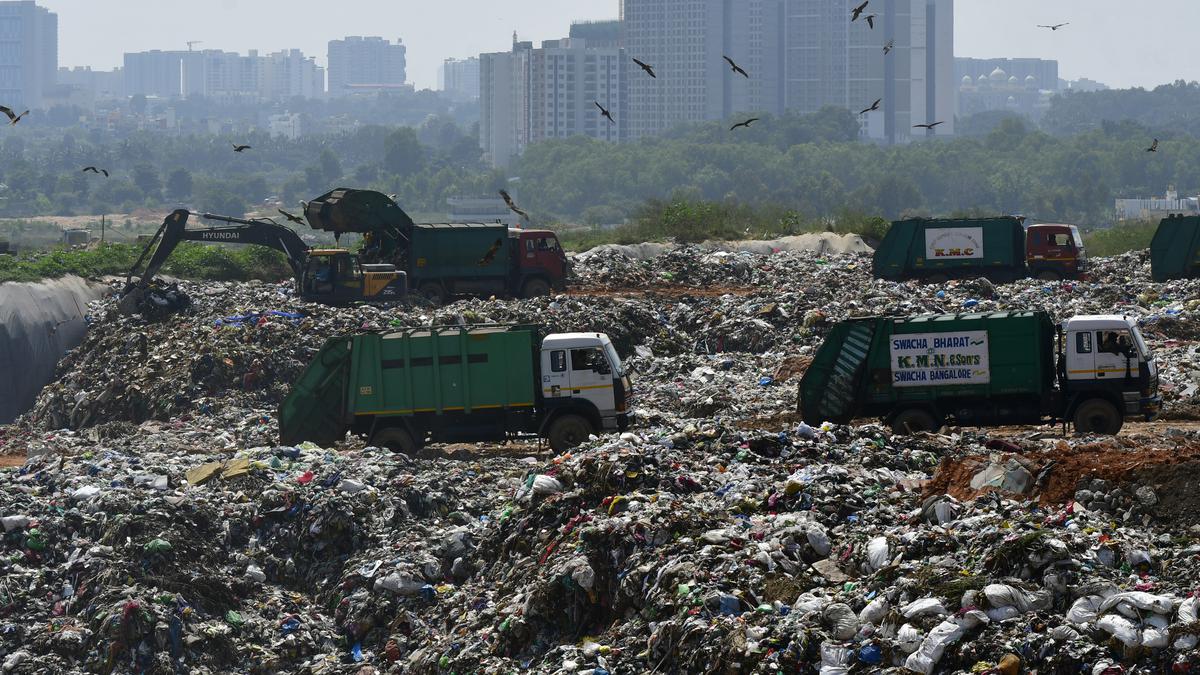
Bengaluru is witnessing mounting disruptions in its municipal waste collection system as stricter enforcement of waste segregation rules begins to reshape how garbage is handled across the city. The push for compliance, aimed at improving environmental outcomes, has exposed operational gaps that are now affecting daily collection services and inconveniencing residents.
At the centre of the issue is the enforcement of waste segregation, which requires households and businesses to separate biodegradable, recyclable, and reject waste before disposal. While the policy aligns with broader sustainability goals and circular economy principles, its sudden and uneven implementation has strained the city’s already complex waste management network.Field-level sanitation workers are reportedly refusing to collect mixed waste, leading to uncollected garbage piling up in several neighbourhoods. Civic officials indicate that the move is intended to compel behavioural change among residents, but the transition has proven uneven. In areas where awareness and infrastructure support are limited, compliance remains inconsistent, resulting in service disruptions.Urban planners note that Bengaluru’s waste segregation challenge reflects a deeper systemic issue—policy enforcement without parallel investment in citizen education, decentralised processing infrastructure, and worker training. Without these supports, even well-intentioned environmental regulations risk triggering short-term inefficiencies that undermine public trust.The economic implications are also notable.
Informal waste workers and small-scale recyclers, who play a crucial role in the city’s waste value chain, are facing uncertainty as collection patterns shift. At the same time, increased transportation costs and operational delays could impact municipal budgets already under pressure from rapid urban expansion.From a sustainability standpoint, waste segregation remains critical to reducing landfill dependency and lowering methane emissions—key components in climate-resilient urban planning. However, experts argue that enforcement must be phased and supported by incentives, not just penalties.Cities that have successfully implemented segregation at scale have combined strict rules with sustained public engagement campaigns and reliable door-to-door collection systems.Residents, meanwhile, are caught in the middle. Many report confusion over segregation categories and frustration over irregular pick-ups. In dense urban clusters, where storage space is limited, even short delays in collection can create hygiene and public health concerns.Officials suggest that corrective measures are being explored, including improved awareness drives and better coordination between contractors and ward-level teams. There is also discussion around expanding decentralised composting units and material recovery facilities to reduce pressure on centralised systems.
As Bengaluru navigates this transition, the situation underscores a broader lesson for Indian cities: sustainability reforms such as waste segregation must be implemented with a citizen-first approach. Without aligning policy ambition with on-ground capacity, even progressive environmental measures risk faltering at the point of delivery.
Read More:Chennai green roofs emerge as climate solution
