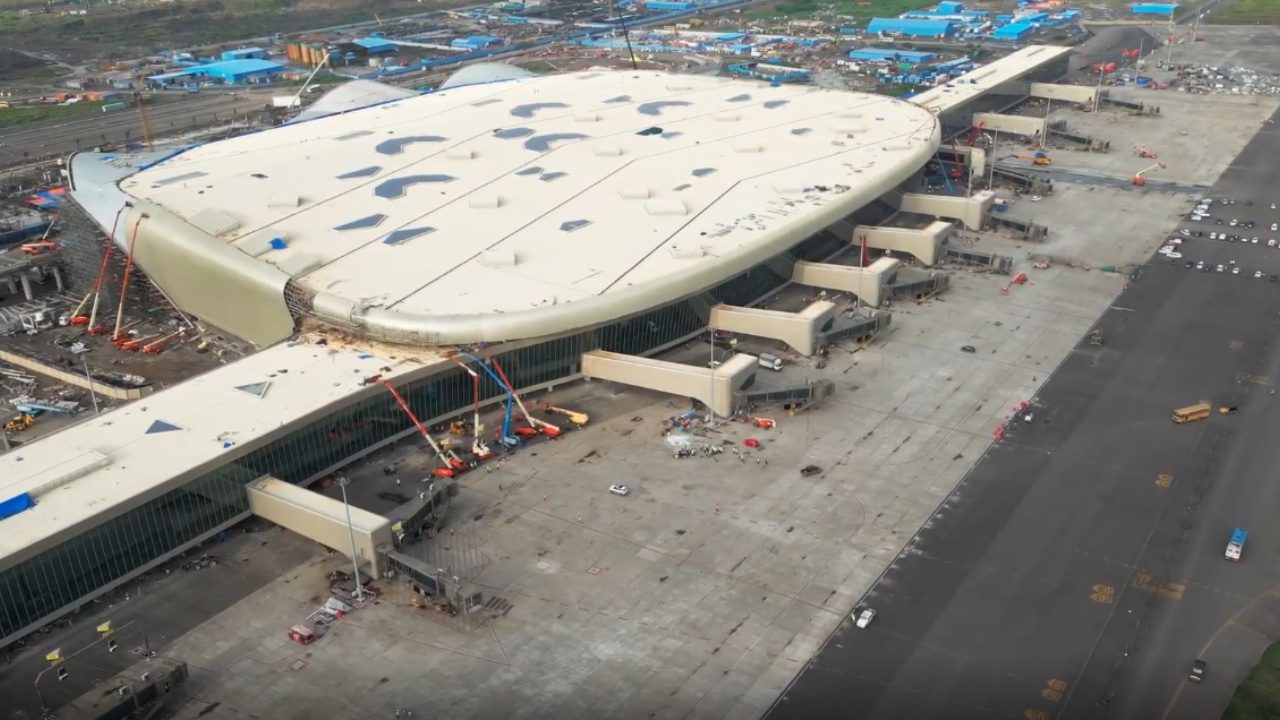
Mumbai’s aviation infrastructure could soon face another inflection point, with growing indications that even two major airports may not be enough to meet future passenger demand. Industry assessments suggest that the Mumbai Metropolitan Region (MMR) could require a Mumbai third airport as traffic projections begin to outstrip the combined capacity of existing and under-construction facilities. At present, the region relies on its primary airport and the upcoming Navi Mumbai International Airport to handle rising passenger volumes. Together, these are expected to accommodate roughly 150 million passengers annually at full capacity. However, demand forecasts for the MMR alone are already approaching 180 million, pointing to a structural gap that may widen over time.
This imbalance reflects a broader surge in India’s aviation sector. Passenger traffic has rebounded sharply in recent years, exceeding pre-pandemic levels and continuing to grow at a rapid pace. Analysts tracking long-term trends indicate that national passenger volumes could multiply significantly over the next two decades, driven by rising incomes, urbanisation and expanding regional connectivity. Within this context, the case for a Mumbai third airport is increasingly being discussed as part of long-term infrastructure planning. The development of Navi Mumbai’s new airport is central to easing current congestion. Positioned within a larger economic corridor, it is expected to catalyse investments across logistics, real estate and transport infrastructure. Urban planners note that such airport-led growth can reshape entire regions, creating new business districts and residential clusters. However, they also caution that without coordinated planning, these developments can intensify land pressures and environmental stress. From a sustainability perspective, expanding aviation capacity presents a complex challenge.
While improved airport infrastructure can enhance efficiency and reduce delays, it also raises concerns about emissions and land use. Experts argue that future planning for a Mumbai third airport must incorporate climate resilience, including energy-efficient design, multimodal access, and integration with low-carbon transport systems such as metro and rail networks. The discussion also highlights the need for a more distributed urban growth model. As Mumbai continues to expand beyond its traditional core, infrastructure decisions will play a key role in shaping how people and businesses move across the region. A third airport, if pursued, could influence development patterns in yet another peripheral zone, potentially easing pressure on existing urban centres. For policymakers, the immediate priority remains ensuring the timely completion and optimal utilisation of the Navi Mumbai airport. At the same time, early-stage planning for additional capacity could help avoid the reactive infrastructure gaps that have historically challenged the region.
As demand continues to rise, Mumbai’s aviation strategy is likely to evolve from a two-airport system to a more complex network. Whether a third airport becomes a necessity will depend on how effectively current projects are integrated with broader transport and urban development frameworks in the years ahead.