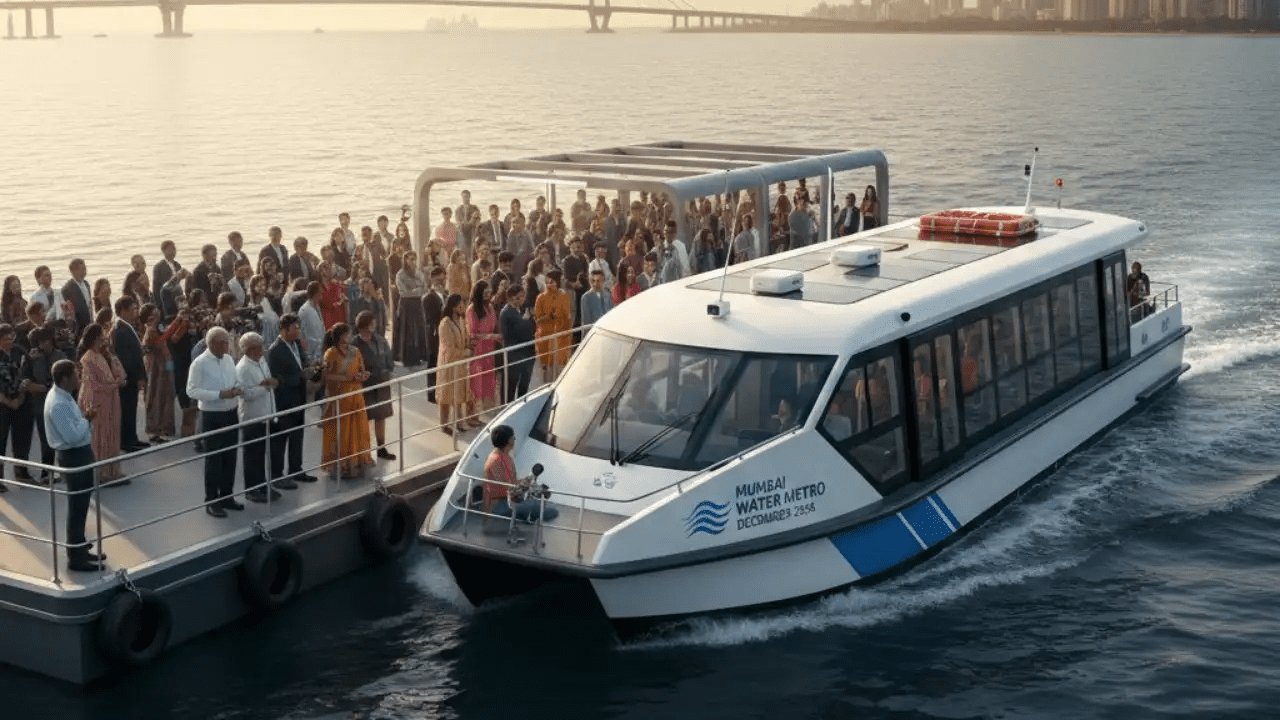
Mumbai’s push to diversify its urban transport network has entered a new phase, with authorities initiating the selection process for a consultant to guide the first stage of the city’s proposed water-based transit system. The move signals a shift towards utilising coastal and inland waterways to address congestion, while also reshaping mobility patterns in one of India’s most densely populated metropolitan regions. The planned Mumbai Water Metro will be executed in multiple phases, with the initial stage targeted for completion by the end of the decade. This phase is expected to integrate a mix of new and existing routes, forming a network that connects suburban growth centres, business districts, and emerging infrastructure hubs such as the Navi Mumbai airport region. Officials estimate a substantial capital requirement for this stage, with implementation structured through a public-private partnership model.
At the core of the plan is the creation and modernisation of passenger terminals, along with the deployment of navigation and safety systems suited to urban waterways. While public agencies are expected to invest in fixed infrastructure such as jetties and terminals, private operators will manage vessel procurement and operations. The appointed consultant will play a central role in refining design frameworks, ensuring technical feasibility, and overseeing execution. Urban planners view the Mumbai Water Metro as part of a broader transition towards multimodal transport systems that reduce reliance on road networks. With arterial roads and suburban rail corridors operating beyond capacity, water-based transit offers an alternative that could ease peak-hour pressure while improving regional connectivity. If implemented effectively, it may also reduce emissions by shifting a portion of commuter traffic to less carbon-intensive modes. The proposed network spans a wide geographic footprint, linking the western suburbs, Thane creek region, and South Mumbai’s commercial districts.
It is also expected to improve access to upcoming economic zones and infrastructure assets, potentially influencing real estate activity along waterfront corridors. However, experts caution that last-mile connectivity and fare integration will be critical to ensuring sustained ridership. Estimates suggest that the expanded network could significantly increase passenger volumes over the next decade, reflecting growing demand for alternative transit options. Yet, the long-term viability of the system will depend on operational efficiency, environmental safeguards, and resilience to climate risks such as tidal variations and extreme weather events. The project also aligns with a larger strategy to leverage Maharashtra’s extensive coastline for mobility and economic development. By activating underutilised waterways, authorities aim to create a transport layer that complements existing metro, rail, and road systems.
As the planning process progresses, attention is likely to shift towards execution timelines, regulatory clearances, and integration with the city’s broader mobility ecosystem. For Mumbai, the success of the water metro will depend not just on infrastructure delivery, but on how seamlessly it fits into everyday commuting patterns while supporting a more sustainable urban future.