


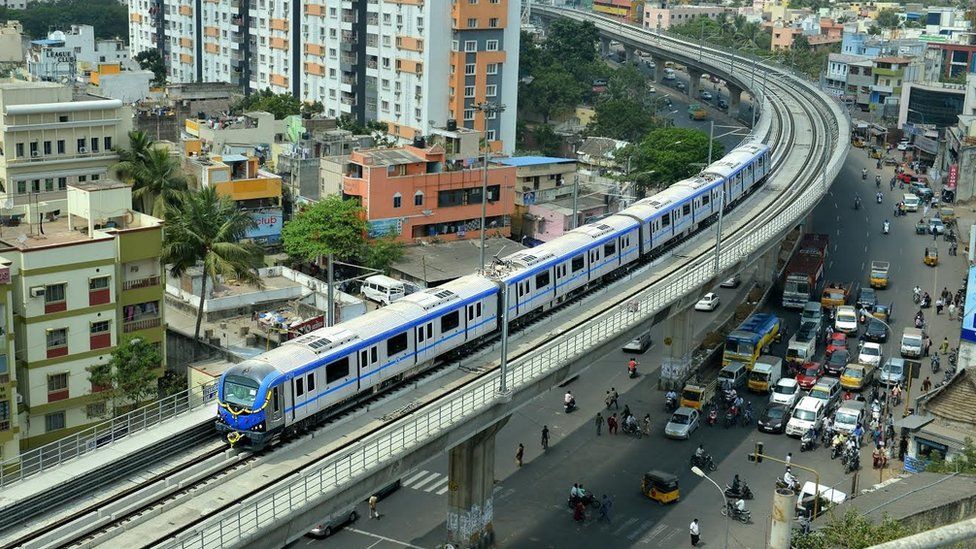
Chennai is moving towards a unified mobility system with plans to introduce a single smart card for travel across metro rail, buses, suburban trains, and even parking facilities.The proposed “Singara Chennai” card is expected to streamline commuting by allowing residents to access multiple transport services through one payment platform, marking a significant step towards integrated urban mobility.
The initiative aims to simplify fare systems in a city where commuters often rely on a combination of transport modes to complete daily journeys.By consolidating payments into a single card, authorities hope to reduce friction in last-mile connectivity and improve the overall efficiency of public transport usage.Urban mobility experts note that seamless ticketing systems are critical to encouraging a shift away from private vehicles.For Chennai, where congestion and rising vehicle ownership continue to strain road networks, integrated ticketing could help strengthen the appeal of public transport. A unified system allows commuters to transition easily between metro lines, buses, and suburban rail services, reducing travel time and improving reliability. It also enables better data collection, helping planners understand travel patterns and optimise routes.However, the success of the Chennai mobility card will depend on effective implementation across multiple agencies. Integrating different transport networks—each with its own operational and financial structures—requires strong coordination and standardisation.
Experts highlight the need for clear governance frameworks to ensure interoperability and consistent user experience.From a sustainability perspective, the move aligns with broader goals of reducing carbon emissions and promoting low-impact mobility.By making public transport more accessible and convenient, cities can encourage higher ridership and decrease reliance on private vehicles. This is particularly important in rapidly urbanising regions where transport demand is rising sharply.There are also inclusivity considerations. While digital and card-based systems improve efficiency, ensuring accessibility for all users—including those without access to banking or digital tools—will be essential. Providing multiple recharge options and maintaining alternative payment methods can help prevent exclusion.The integration of parking into the same system adds another dimension, potentially enabling better management of urban space.By linking parking payments with public transport, authorities can design policies that discourage excessive private vehicle use while supporting multimodal travel.As Chennai advances towards a unified mobility framework, the initiative reflects a broader shift in how cities approach transport planning.
Moving beyond isolated systems to integrated networks is key to building efficient, sustainable, and user-friendly urban environments.The long-term impact will depend on how well the system is scaled, maintained, and adapted to the needs of a diverse commuter base, ensuring that technological upgrades translate into tangible improvements in everyday mobility.
Also Read:Chennai Senior Living Project Reflects Housing Shift
