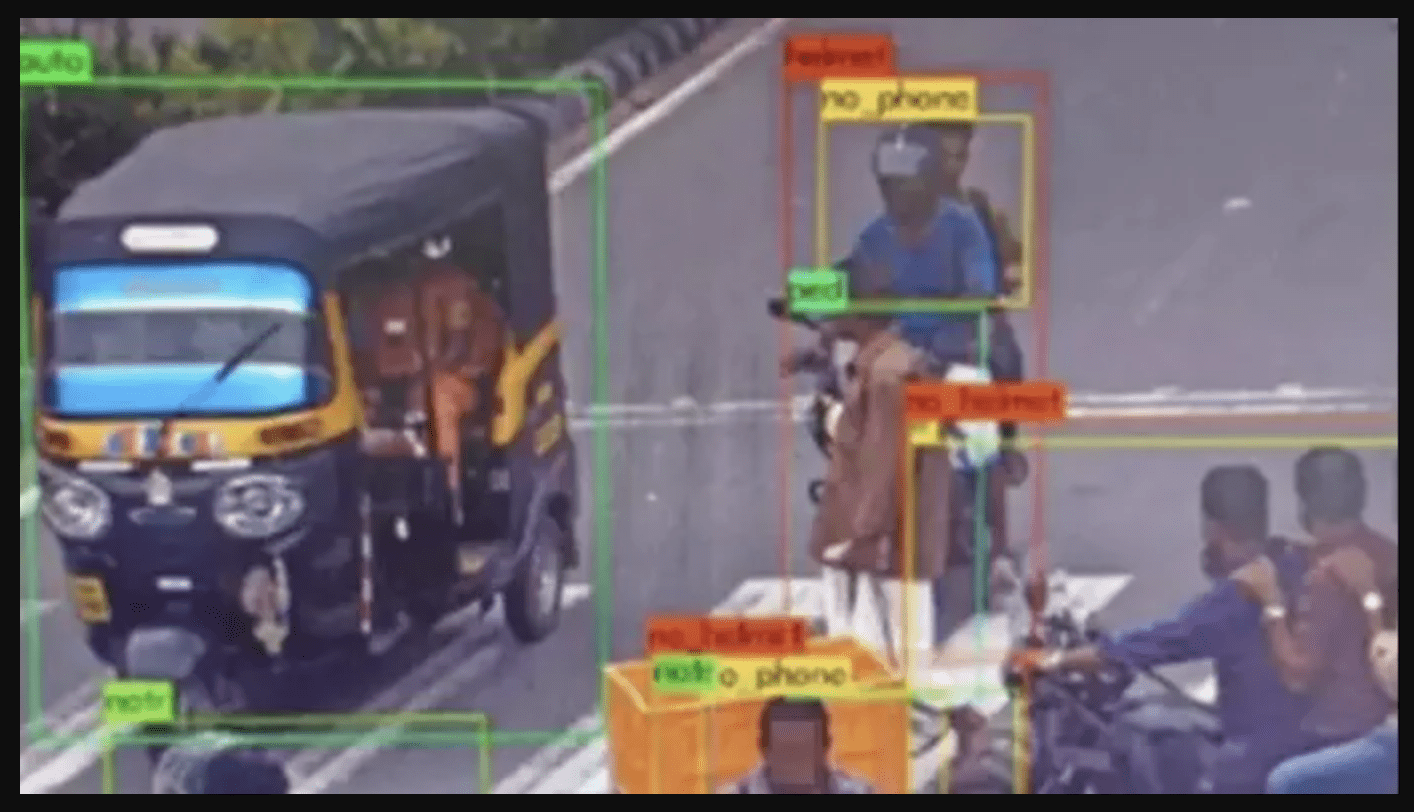
Nearly 99 percent of traffic challans in the city will soon be generated not by a police officer, but by an algorithm. The Intelligent Traffic Management System, deploying AI-powered cameras across 500 locations, marks a fundamental shift in how Pune enforces road discipline — moving from sporadic human intervention to automated, near-certain detection of violations including signal jumping, overspeeding, wrong-side driving, illegal parking, and helmet or seatbelt non-compliance.
The technology relies on Automatic Number Plate Recognition to identify vehicles in real time. When a violation is detected, an e-challan with photographic or video evidence is generated and sent directly to the registered owner. A senior official described this as the “certainty of punishment” model — the principle that when breaking a rule leads to predictable and immediate consequences, compliance naturally rises. Pune’s traffic problems are structural. The city has approximately 78 lakh registered vehicles but only about 7 percent of its land allocated to roads — a ratio that guarantees congestion regardless of enforcement levels. Roads and bridges designed for thousands of vehicles now handle several times that capacity. Infrastructure expansion has not kept pace with vehicle growth, and in a densely built city, widening roads is often impossible.
This is where AI enforcement becomes analytically interesting. It does not solve the fundamental problem of too many vehicles chasing too little road space. What it does is change driver behaviour within that constrained system. Wrong-side driving, red-light jumping, and illegal parking are not caused by lack of road width; they are caused by weak enforcement. Automated systems close that gap. Urban observers note that AI traffic management, paired with real-time data from navigation platforms, can also enable smarter planning. Congestion hotspots can be identified and redesigned. Signal timings can be optimised dynamically. But enforcement alone is not a substitute for investing in public transit, walkability, and cycling infrastructure. A city where driving is made miserable by automated fines but where the Metro and bus network remain incomplete has not solved mobility — it has merely made private transport more expensive and unpredictable.
The cameras will be deployed across nearly 500 locations. For Pune’s 78 lakh vehicle owners, the message is clear: the era of casual violations is ending. For urban planners, the challenge remains unchanged — how to move people, not just punish cars.
Pune Rolls Out AI Cameras For Automatic Traffic Challans