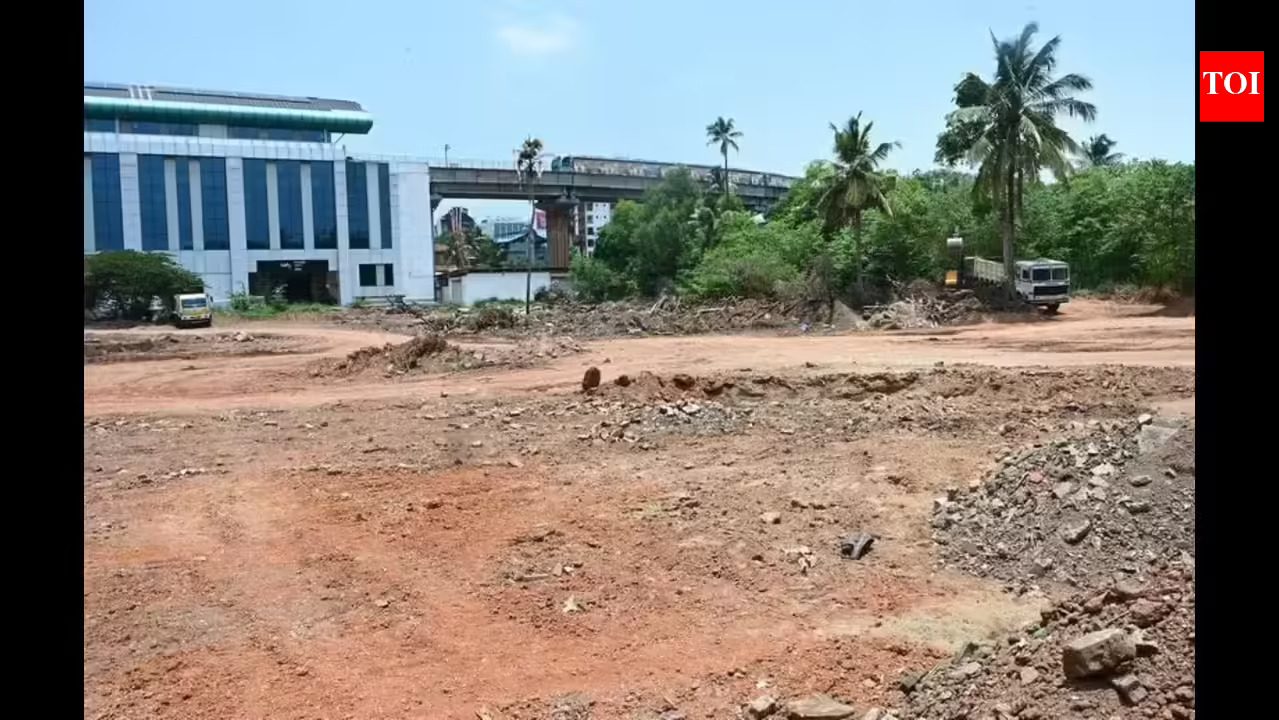
After 15 years of stalled promises, the second phase of the Vyttila Mobility Hub is being pulled from limbo — not with a groundbreaking, but with a quiet administrative reset. The agency overseeing the project confirmed it will seek a fresh detailed project report once the election model code lifts, effectively scrapping two earlier, failed blueprints.
The 25-acre site, envisioned as a seamless junction for Kochi Metro, water ferries, and long-distance buses, has remained largely barren for over a decade. Meanwhile, traffic at Vyttila Junction has worsened, and commuter habits have shifted with the completion of Metro Phase I and the rollout of the Water Metro. Urban planners say the earlier feasibility studies — one from 2014 pegged at ₹433 crore, another from 2019 at ₹590 crore — are now obsolete. What makes this revival attempt different is a quiet but critical land correction. A proposed swap of hub land for 2.9 acres elsewhere has been dropped. That land will now anchor Phase II expansion. Equally significant, officials are leaning toward a transit-oriented development model, using commercial spaces — malls, offices, hotels — to fund public infrastructure without direct budget support. Previous attempts at public-private partnerships failed to attract investors, and a proposed French Development Agency loan collapsed after NITI Aayog raised objections.
Local civic representatives are now pushing for an even deeper shift. The Vyttila ward councillor confirmed that the hub expansion should be merged with the local area plan covering 105 hectares around the metro station. That plan, drafted by the Kochi corporation, could channel municipal funds into the project — potentially bridging the chronic funding gap that no single agency has solved. For citizens, the stakes are simple: a fully integrated mobility hub means fewer roadblocks, faster transfers between modes, and reduced private car dependence. But the history of Vyttila Phase II offers a cautionary tale. Two detailed project reports, two funding routes, and two governments later, the site remains underutilised. The transit-oriented development model has worked in cities like Stockholm and Tokyo, but its success in Kochi will depend on whether commercial revenue truly serves public mobility — or overtakes it.
Kochi Revives Vyttila Transit Hub After Fifteen Years