


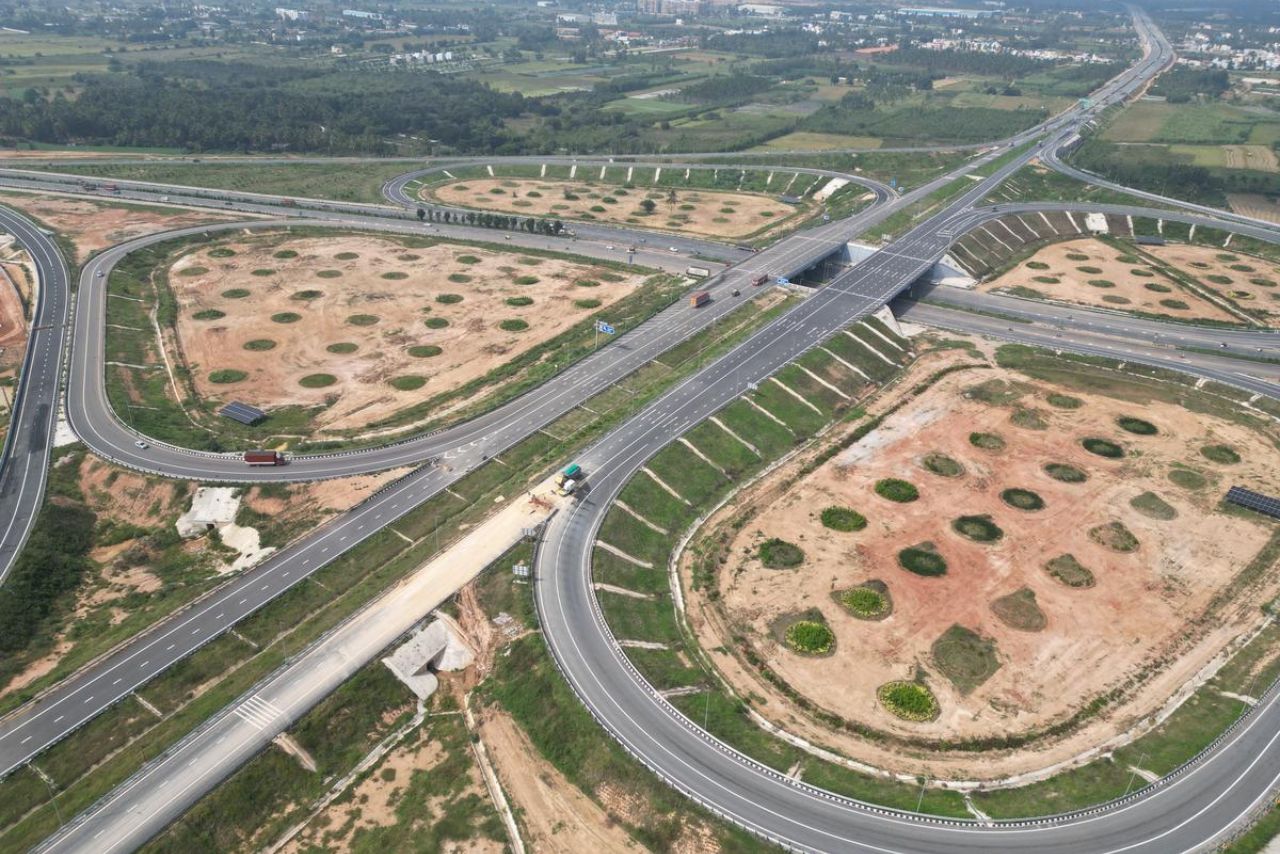
Ongoing upgrades along the Chennai–Bengaluru corridor via Chittoor and Ranipet are gradually reshaping one of southern India’s most critical intercity road networks. Improvements to road conditions, traffic flow, and connectivity are expected to reduce travel time while strengthening economic linkages between two major urban centres and their surrounding industrial regions.
The corridor serves as a vital artery for passenger movement and freight transport, connecting Chennai’s port-led economy with Bengaluru’s technology and manufacturing base. Recent updates indicate smoother stretches, better lane management, and incremental easing of congestion bottlenecks, particularly along segments that previously experienced heavy delays.Infrastructure analysts note that such corridor enhancements play a key role in supporting regional development. Faster and more predictable travel can improve supply chain efficiency, benefiting industries reliant on timely logistics, including automotive, electronics, and perishable goods. For commuters and business travellers, improved road conditions can also make intercity mobility more viable on a daily or weekly basis.However, the expansion of highway infrastructure also brings challenges.Increased road capacity often leads to higher vehicle volumes over time, a phenomenon known as induced demand.
Without parallel investments in sustainable transport options—such as rail connectivity or electric mobility infrastructure—corridor upgrades may contribute to rising emissions and long-term congestion pressures.From an urban planning perspective, the Chennai–Bengaluru route is increasingly influencing the growth of intermediate towns like Chittoor and Ranipet.Improved accessibility can attract industrial investment, real estate development, and population inflows, transforming these areas into secondary growth hubs. Experts suggest that managing this expansion will require careful land-use planning to avoid unregulated sprawl and environmental degradation.Safety remains another critical consideration. While better road conditions can reduce travel time, higher speeds and increased traffic volumes necessitate stronger enforcement of safety measures, including signage, monitoring systems, and emergency response infrastructure.Environmental concerns also come into play. Road expansion projects can impact local ecosystems, particularly if they involve land acquisition or changes to natural drainage patterns. Integrating green corridors, noise barriers, and sustainable construction practices is increasingly seen as essential to balancing infrastructure growth with ecological preservation.
As upgrades along the Chennai–Bengaluru corridor continue, the route’s evolution reflects a broader shift towards enhancing regional connectivity to support economic growth. The long-term success of such projects will depend on aligning infrastructure improvements with sustainable mobility strategies, ensuring that faster connectivity does not come at the cost of environmental and urban resilience.
Also Read:Chennai Healthcare Expansion Improves Regional Medical Access
