


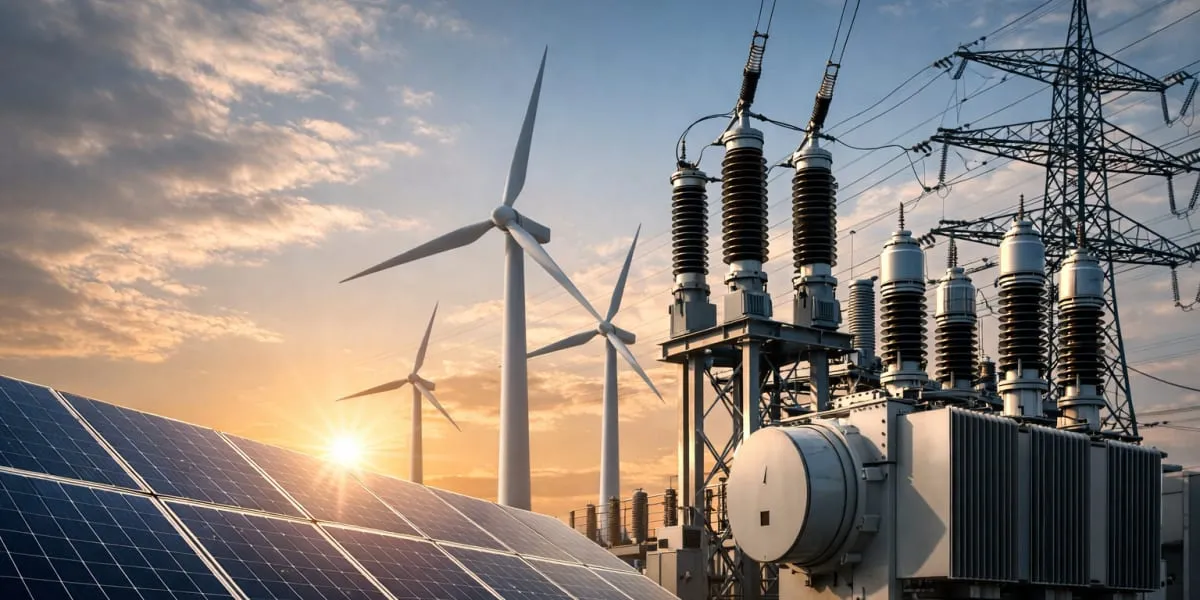
India’s renewable energy sector is poised for a major investment surge, with projections indicating capital inflows of ₹6–7 lakh crore in the coming years. For Chennai, a key industrial and coastal urban hub, this anticipated growth signals both opportunity and urgency in aligning infrastructure, energy systems, and urban expansion with clean power transitions.
Energy analysts suggest that the investment wave will be driven by large-scale solar and wind projects, grid modernisation, and emerging technologies such as green hydrogen. Tamil Nadu, already a leader in wind energy, is expected to play a central role, with Chennai acting as a strategic node for manufacturing, logistics, and policy coordination within the renewable ecosystem.The implications for urban development are significant. As clean energy capacity expands, cities like Chennai will need to upgrade transmission infrastructure, integrate decentralised power systems, and ensure reliable distribution networks. Experts note that without parallel investments in urban grids, the benefits of increased renewable generation may not fully reach end-users, particularly in rapidly growing metropolitan areas.The projected investment also carries economic potential. The renewable sector is expected to generate employment across manufacturing, installation, maintenance, and research. For Chennai’s industrial corridors, this could translate into new business opportunities and the strengthening of supply chains linked to solar panels, wind turbines, and associated components.
However, the scale of investment raises questions about land use, environmental impact, and equitable growth. Large renewable projects often require significant land parcels, which can lead to competing demands between energy infrastructure, agriculture, and urban expansion. Urban planners emphasise the need for balanced development strategies that minimise ecological disruption while maximising energy output.From a climate perspective, the expansion of renewable energy is central to reducing carbon emissions and meeting national sustainability targets. For coastal cities like Chennai, which are particularly vulnerable to climate risks such as sea-level rise and extreme weather, transitioning to cleaner energy sources is both an environmental and economic imperative.There are also challenges around financing, policy consistency, and technology adoption.Ensuring that investments translate into long-term, resilient infrastructure will require stable regulatory frameworks and coordination between public and private stakeholders.Additionally, integrating renewable energy into existing grids without compromising reliability remains a technical hurdle.
As the renewable sector enters a phase of accelerated growth, Chennai’s role will likely extend beyond consumption to becoming a key enabler of India’s clean energy transition. The coming years will test how effectively the city can harness investment momentum while building infrastructure that supports sustainable, inclusive, and climate-resilient urban development.
Also Read:Bengaluru Seasonal Dining Trends Reshape Urban Food Culture

