Delhi Expressway Cuts Travel Time Transforms Access
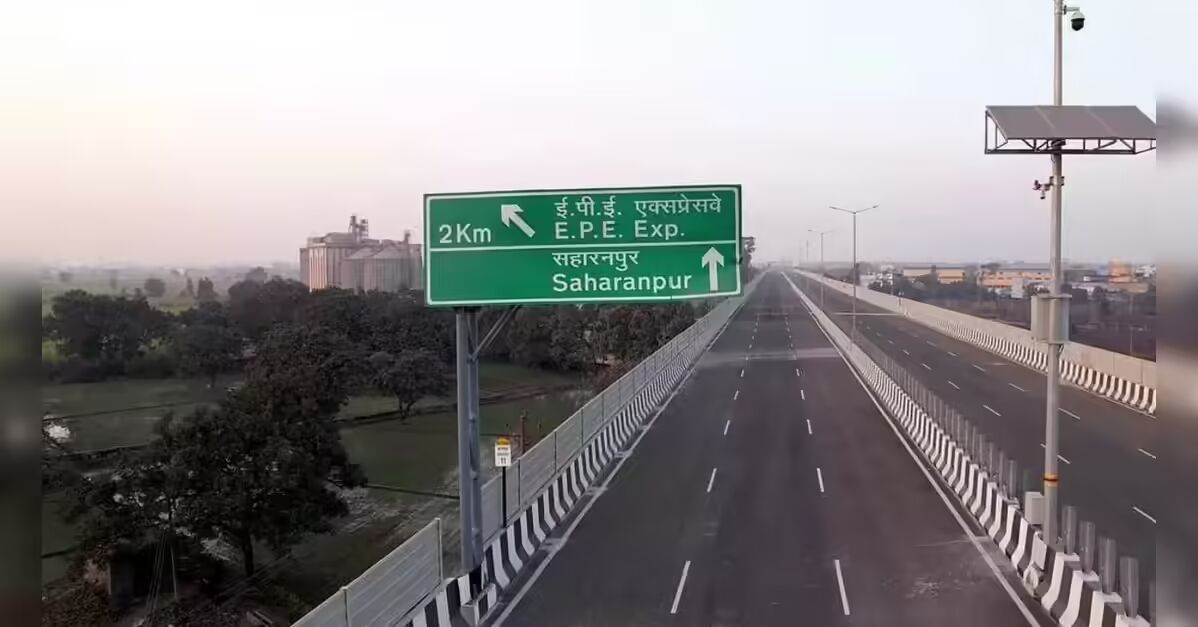
A newly operational high-speed corridor linking Delhi and Dehradun is beginning to reshape travel patterns across northern India, cutting journey times to under three hours while opening up new economic and spatial linkages across the National Capital Region (NCR) and beyond. The 210–213 km access-controlled expressway, inaugurated earlier this month, reduces travel time between the two cities from over six hours to roughly 2.5 hours. This sharp compression of distance is expected to alter not only inter-city travel behaviour but also the economic geography of adjoining regions.
Stretching across Delhi, Uttar Pradesh and Uttarakhand, the corridor integrates multiple industrial and semi-urban nodes, including towns in western Uttar Pradesh that have historically remained outside mainstream growth circuits. By improving freight and passenger movement, the project is likely to accelerate the emergence of a contiguous economic belt connecting logistics hubs, manufacturing clusters and tourism destinations. For the NCR, the implications are immediate. The diversion of long-distance traffic to a high-speed corridor could ease congestion on legacy highways and arterial routes, particularly those connecting eastern Delhi to neighbouring states. This redistribution of traffic is being viewed as a potential “network reset,” where pressure on saturated corridors may reduce, at least in the short term. However, early usage patterns suggest that last-mile connectivity remains a critical challenge. While the expressway enables high-speed travel across long distances, bottlenecks at city entry and exit points—both in Delhi and Dehradun—continue to disrupt seamless movement.
Urban transport experts caution that without parallel investments in feeder roads, public transport integration and urban traffic management, the full benefits of the corridor may not be realised. The infrastructure also carries broader economic implications. Improved connectivity to Uttarakhand’s tourism circuits, including religious destinations, is expected to increase visitor flows, while enhanced accessibility may attract investment into logistics, warehousing and real estate along the route. At the same time, planners highlight the need to manage speculative development to prevent unregulated urban sprawl around new highway nodes. From a sustainability perspective, the project incorporates design elements aimed at reducing ecological disruption, including dedicated wildlife crossings in sensitive zones. Yet, experts argue that long-term environmental outcomes will depend on how induced traffic demand is managed, particularly as faster highways often lead to higher vehicle usage.
The corridor’s launch reflects a broader shift towards high-speed, inter-regional connectivity as a driver of economic growth. But it also underscores a recurring challenge in Indian urbanisation—aligning large-scale infrastructure with local mobility systems, land-use planning and environmental safeguards. As traffic volumes build up and surrounding regions respond to improved access, the corridor will serve as a test case for whether expressway-led development can deliver balanced outcomes. The next phase of attention will likely focus on integrating this high-speed spine with inclusive, low-carbon urban mobility systems that extend benefits beyond long-distance travellers to everyday city users.