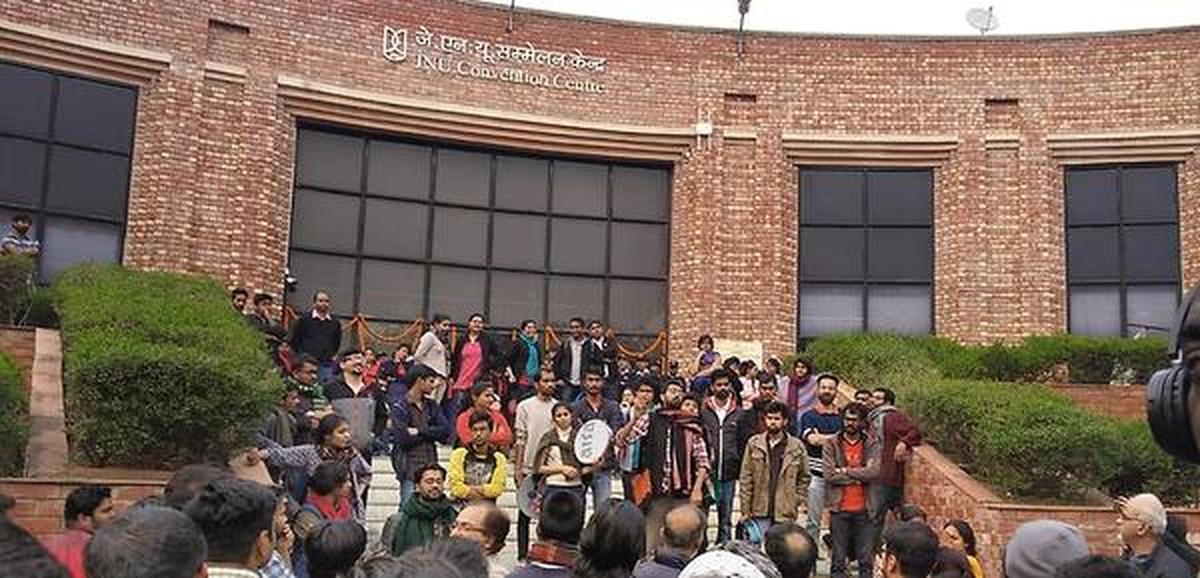
A recent decision by Jawaharlal Nehru University to introduce a 5% supernumerary quota for the children of its teaching and non-teaching staff has reignited debate around equity, access, and institutional priorities in India’s higher education landscape. The policy, cleared by the university’s executive body earlier this month, will come into effect from the 2026–27 academic cycle and apply across undergraduate and postgraduate programmes.
The additional seats will be created over and above the existing intake, ensuring that the general admission pool remains unchanged. While the administration frames the move as an expansion of an existing benefit—previously limited to a small share of non-teaching staff wards—its extension to teaching staff marks a structural shift in admission policy. The revised quota increases the allocation from less than 1% to 5%, aligning the university with practices already seen in some other central institutions. However, the introduction of the JNU staff quota has prompted questions about fairness in a highly competitive admissions ecosystem. With entry to programmes largely determined through national-level examinations such as the Common University Entrance Test, critics argue that any form of preferential access—regardless of scale—can influence perceptions of merit and equal opportunity.
Urban education analysts view the development through a broader lens of institutional equity. Universities in major cities like Delhi serve as gateways to upward mobility, especially for students from diverse socio-economic backgrounds. Policy shifts that prioritise internal stakeholders, even through additional seats, raise concerns about the long-term balance between inclusivity and institutional privilege. There is also a spatial dimension to the debate. Campus-based universities function as self-contained urban ecosystems, where staff housing, educational access, and community networks are closely intertwined. Providing admission advantages to staff wards may strengthen internal cohesion, but could also deepen perceived boundaries between campus communities and the wider urban population they serve. Student groups and sections of the academic community have already signalled unease, pointing to the risk of normalising preferential categories in public institutions. Some faculty representatives have also expressed reservations, suggesting that such measures may conflict with the university’s historical emphasis on social justice and open access. At the same time, supporters argue that the policy recognises the contribution of university employees, particularly in a city where the cost of living and access to quality education remain significant challenges. Ensuring educational continuity for staff families, they contend, can enhance institutional stability and workforce retention.
The debate around the JNU staff quota reflects a larger national conversation on how public universities balance competing priorities—merit, inclusion, and institutional welfare—within limited capacity. As higher education demand continues to outpace supply, such policy decisions are likely to face increasing scrutiny. Going forward, the effectiveness of the new quota will depend on how transparently it is implemented and whether it coexists with broader efforts to expand access. In rapidly urbanising regions, where education is closely tied to economic opportunity, maintaining public trust in admission systems remains central to building equitable and resilient knowledge ecosystems.