


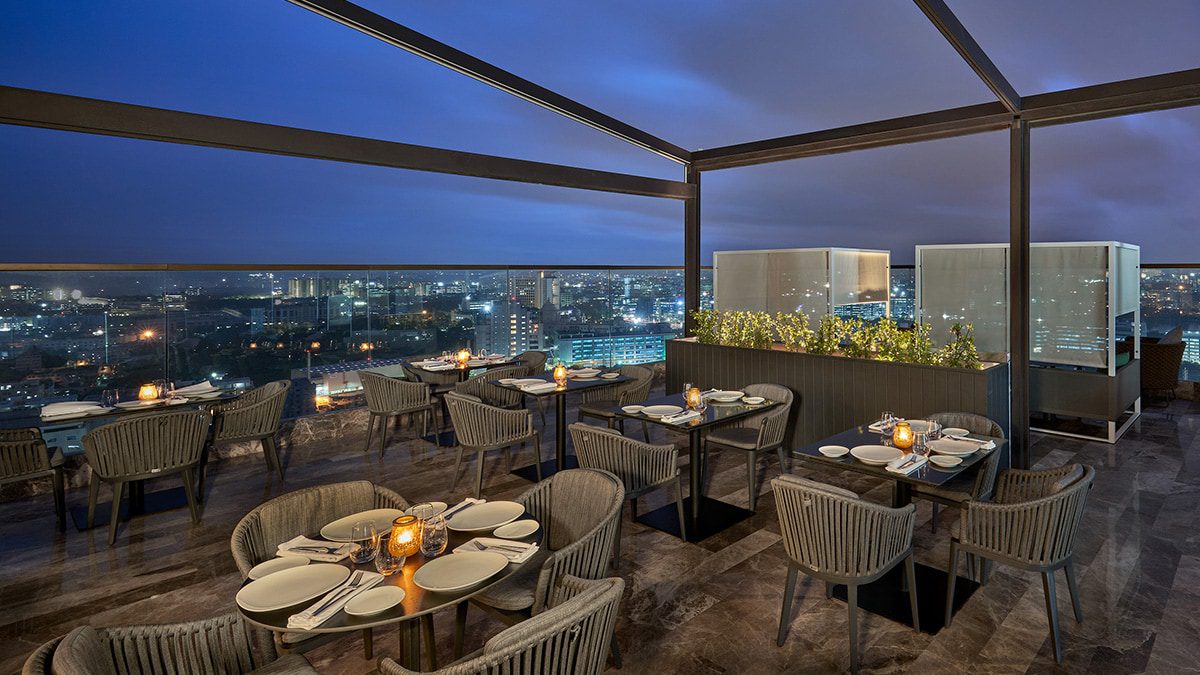
In Bengaluru’s central business district, the opening of a rooftop dining venue on Vittal Mallya Road signals the continued evolution of high-value urban spaces into lifestyle and hospitality hubs.
Novakan has launched in one of the city’s most premium corridors, reflecting growing demand for experiential dining in proximity to commercial and upscale residential zones.Vittal Mallya Road, long associated with luxury retail and office developments, is increasingly positioning itself as a destination for curated hospitality experiences. Urban economists note that such micro-markets tend to attract high-income consumers and global brands, reinforcing their status as economic anchors within the city. The clustering of fine dining, retail, and office spaces contributes to higher land valuations and sustained investor interest.The rise of rooftop venues also reflects changing urban consumption patterns. As dense city environments limit horizontal expansion, developers and operators are turning to vertical spaces to create differentiated experiences. Rooftop formats not only maximise land use efficiency but also cater to a clientele seeking open-air environments within compact urban settings.However, the expansion of premium hospitality infrastructure raises questions about inclusivity and resource use.
Central districts like Vittal Mallya Road already face pressure on traffic, parking, and utilities.Increased commercial activity can intensify these challenges unless supported by robust urban management systems, including efficient public transport and sustainable waste practices.From a real estate perspective, the growth of such establishments often correlates with rising property values in surrounding areas.High-end hospitality acts as a catalyst for further investment, attracting both domestic and international stakeholders. Yet, this can also contribute to the exclusion of smaller businesses and limit accessibility for a broader segment of the population.Urban planners emphasise the importance of integrating sustainability into these developments. Energy-efficient building designs, responsible water usage, and waste reduction strategies are critical as cities like Bengaluru seek to balance economic growth with environmental resilience. Rooftop spaces, in particular, offer opportunities for incorporating green design elements such as urban gardens and passive cooling systems.
The emergence of new dining destinations in Bengaluru’s core reflects a broader transformation of urban spaces into multi-functional environments that combine work, leisure, and social interaction. As the city continues to grow, ensuring that such developments align with inclusive and sustainable planning principles will be key to maintaining long-term urban balance.
Also Read:Bengaluru CBSE results highlight education gaps
