


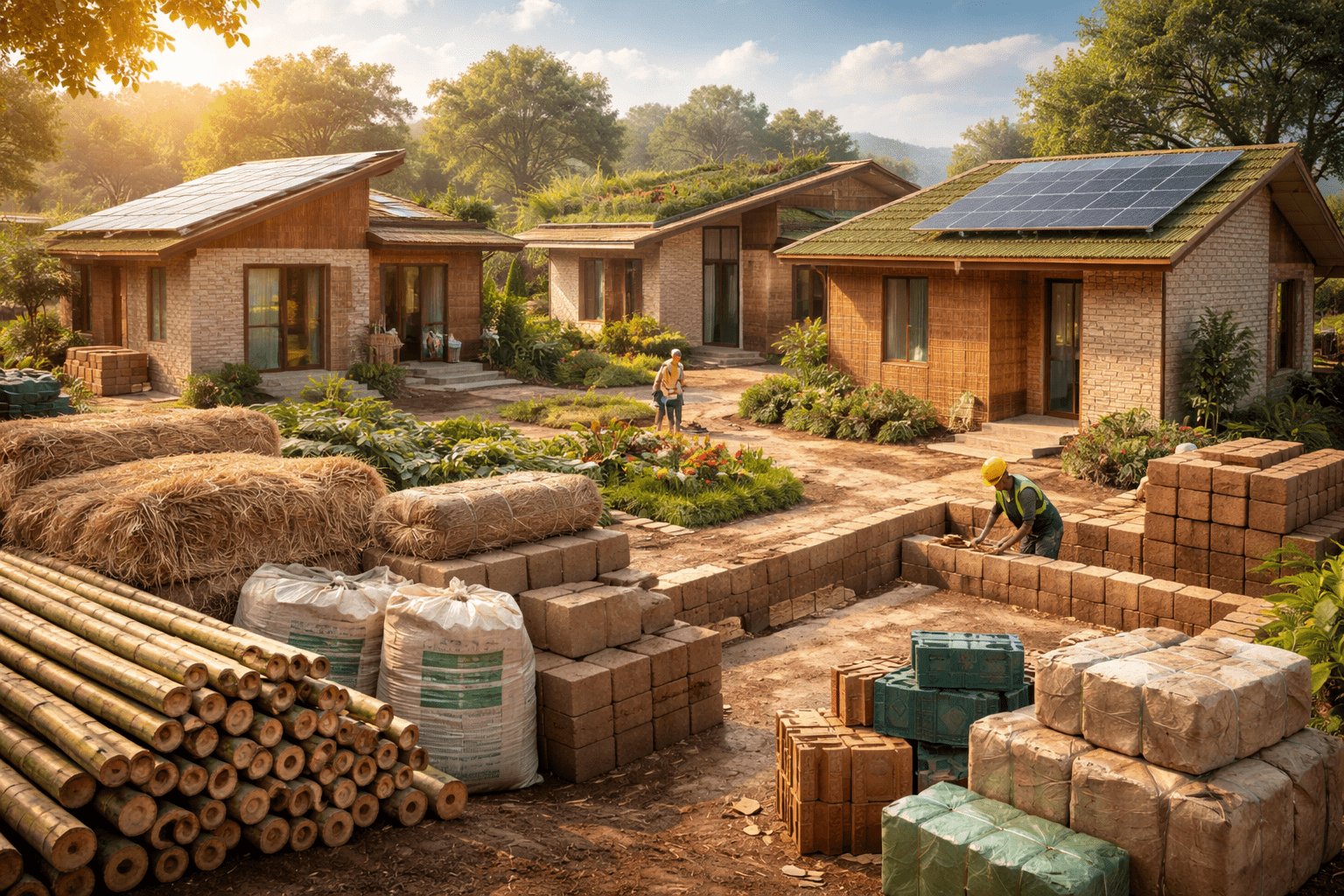
In Bengaluru, a growing focus on alternative materials is beginning to influence how buildings and interiors are designed, reflecting a wider shift towards sustainability in the urban built environment.
Design practitioners such as Vystrit are experimenting with unconventional resources to create structures and products that respond to both environmental concerns and changing urban lifestyles.This emerging approach centres on the use of recycled, bio-based, and low-impact materials that reduce dependence on traditional construction inputs. Industry experts highlight that conventional materials such as concrete and steel contribute significantly to carbon emissions, making innovation in material science critical for achieving climate-resilient cities. By contrast, newer materials aim to minimise waste, lower embodied carbon, and improve energy efficiency across the lifecycle of buildings.Bengaluru’s position as a technology and innovation hub has created fertile ground for such experimentation. Designers and architects are increasingly collaborating with material scientists and manufacturers to develop solutions tailored to local conditions.These include materials that respond to heat, humidity, and resource constraints—factors that are becoming more important as cities confront the realities of climate change.Urban planners note that material innovation is not limited to aesthetics but has broader implications for infrastructure and real estate development. Sustainable materials can reduce construction costs over time, improve durability, and enhance environmental performance.
This is particularly relevant in rapidly expanding cities where the scale of construction amplifies environmental impact.The shift also aligns with changing consumer preferences. Homebuyers and commercial tenants are showing greater interest in environmentally responsible spaces, prompting developers to incorporate green design elements into projects. However, adoption remains uneven, with cost perceptions and limited awareness acting as barriers to wider implementation.There are also opportunities to integrate such materials into public infrastructure, from affordable housing to civic buildings. Experts suggest that government incentives and updated building codes could accelerate adoption, ensuring that sustainability becomes a standard rather than a niche feature in urban development.From a broader perspective, the focus on materials reflects a deeper transformation in how cities approach growth.Rather than relying solely on expansion, there is increasing emphasis on building smarter, using fewer resources, and reducing environmental footprints.
As Bengaluru continues to evolve, innovations in material use could play a defining role in shaping a more sustainable and resilient urban landscape. The challenge ahead will be to scale these practices while maintaining affordability and accessibility, ensuring that the benefits of sustainable design extend across all segments of the city.
Also Read:Bengaluru rooftop restaurant boosts urban lifestyle
