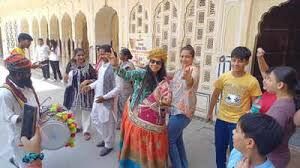
Jaipur marked World Heritage Day with a series of public events centred around its historic Walled City, reinforcing the role of heritage in shaping sustainable and inclusive urban futures. As one of India’s designated UNESCO World Heritage cities, Jaipur’s celebrations reflect a growing effort to connect conservation with civic participation and urban planning.
The programme included heritage walks, curated museum activities, and awareness campaigns aimed at encouraging residents and visitors to engage more deeply with the city’s built and cultural environment. Activities were concentrated in key heritage zones, including the Walled City precinct and museum spaces, drawing attention to both architectural landmarks and living traditions. World Heritage Day, observed annually on April 18, is intended to promote awareness around the preservation of cultural and natural assets. The 2026 theme emphasises safeguarding “living heritage” in the face of environmental and social disruptions, highlighting the need for cities to integrate resilience into conservation strategies. For Jaipur, this message carries particular significance. Recognised globally for its planned urban layout, architectural coherence, and craft traditions, the city represents a model of heritage-led urban development. Its grid-based planning, mixed-use streets, and integration of public spaces have long been cited by planners as early examples of climate-responsive design.
However, maintaining this legacy amid rapid urbanisation remains a challenge. Increasing tourist footfall, vehicular congestion, and pressure on civic infrastructure are placing strain on historic precincts. Experts note that while heritage status can boost economic activity through tourism, it also demands stricter governance to protect fragile built environments. The Jaipur World Heritage Day celebrations also reflect a broader shift towards community-led conservation. Heritage walks and public programmes are being used not only as tourism tools but as platforms for citizen awareness, encouraging local stewardship of historic spaces. This approach aligns with evolving urban policy frameworks that emphasise participatory planning and shared responsibility. From an economic perspective, heritage continues to be a key asset for Jaipur’s urban ecosystem. Tourism, handicrafts, and cultural industries form a significant part of the city’s economy, supporting livelihoods while reinforcing its global identity. However, planners caution that unmanaged growth can dilute the very character that attracts investment and visitors.
Sustainability experts highlight the need to balance conservation with infrastructure upgrades. Issues such as waste management, pedestrianisation, and restoration of traditional water systems are increasingly being seen as integral to heritage planning. Integrating these elements can help ensure that historic areas remain both functional and resilient. The Jaipur World Heritage Day events also underscore the importance of linking heritage with climate resilience. Traditional building materials, shaded streets, and passive cooling techniques embedded in the city’s design offer valuable lessons for modern urban development, particularly in regions facing rising temperatures.
As Jaipur continues to evolve, the focus is shifting from preservation alone to adaptive reuse and integrated planning. The challenge ahead lies in ensuring that heritage zones are not treated as isolated enclaves but as active, living parts of the city. By bringing citizens, planners, and institutions together, the Jaipur World Heritage Day initiative highlights a key urban insight: sustainable cities are not built only through new infrastructure, but through the careful preservation and integration of their historical foundations.
Jaipur Marks World Heritage Day With Civic Engagement