Delhi Urban Renewal Links Heritage And Modern Growth
Delhi is entering a renewed phase of urban transformation where heritage conservation and modern infrastructure are being developed in parallel, reflecting an attempt to reposition the capital as both a cultural asset and a functional global city. The latest redevelopment approach focuses on integrating historic precincts with upgraded civic systems, signalling a shift from isolated restoration to coordinated urban renewal.
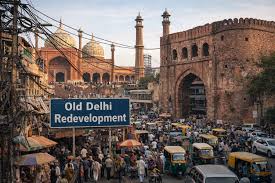
At the centre of this strategy is the Walled City of Shahjahanabad, where authorities are prioritising infrastructure upgrades without compromising its architectural identity. Plans include undergrounding overhead electricity lines, improving traffic circulation in congested lanes, and restoring traditional structures such as havelis and community spaces. The objective is to reduce visual clutter and enhance safety while retaining the dense cultural fabric of Old Delhi. Officials associated with the redevelopment programme have emphasised that the Walled City is not being treated as a museum zone but as a living urban ecosystem. This distinction is important in a city where over a thousand years of layered history coexist with modern infrastructure pressures. Beyond heritage zones, broader urban infrastructure interventions are being planned across Delhi. These include improvements in traffic management systems, upgraded public utilities, and enhanced connectivity within older commercial districts. The intent is to address long-standing challenges such as congestion, inefficient service delivery, and ageing infrastructure that often coexist with high-density urban settlements.
Urban planners note that Delhi’s approach reflects a growing global trend where historic cities are no longer preserved in isolation but integrated into contemporary urban systems. This involves balancing tourism potential with resident needs, ensuring that heritage areas remain functional rather than becoming static monuments. However, the integration of heritage and infrastructure is not without challenges. In dense urban cores like Old Delhi, even small-scale interventions can disrupt livelihoods, traffic patterns, and informal economic systems. Experts highlight that successful redevelopment depends on continuous coordination between municipal bodies, heritage agencies, and local communities. Environmental considerations also play a growing role in this transformation. Upgrading older urban areas provides an opportunity to introduce more efficient energy systems, reduce visual pollution from overhead wiring, and improve walkability. Such measures align with broader goals of building more climate-resilient and inclusive cities.
At the same time, Delhi’s modern infrastructure expansion—ranging from transport corridors to utility upgrades—continues to reshape its urban footprint. The challenge lies in ensuring that rapid development does not erode the historical identity that defines the capital’s spatial character. As implementation progresses, the success of Delhi’s urban strategy will depend on how effectively it can merge preservation with progress. The outcome will determine whether the city evolves into a model of integrated heritage-led development or remains divided between conservation zones and high-intensity modern infrastructure corridors.