NCR Factory Closures Signal Stricter Air Quality Action
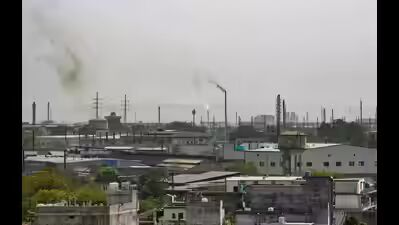
The National Capital Region has intensified its pollution control measures after authorities ordered the closure of multiple non-compliant industrial units following a series of inspections, signalling a sharper enforcement approach to air quality management. The action reflects growing regulatory pressure to ensure industries adhere to emission norms amid persistent pollution challenges.
According to official assessments by the Commission for Air Quality Management (CAQM), closure has been proposed for nine industrial units after inspections revealed violations of environmental standards. The enforcement drive also extended beyond factory closures, with additional actions including sealing of diesel generator sets, issuance of show-cause notices, and environmental penalties across multiple sectors. The Delhi NCR pollution control push is part of a broader strategy to address industrial emissions—one of the key contributors to particulate pollution in the region. Experts note that industries, along with transport and dust, form a significant share of PM2.5 levels, particularly during peak pollution seasons. Strengthening compliance among industrial units is therefore seen as critical to improving baseline air quality. Inspections have increasingly adopted a targeted approach, focusing on clusters with a history of non-compliance or high emission intensity. Violations typically include failure to install or operate pollution control devices, use of unapproved fuels, and operating without mandatory environmental clearances. Similar enforcement actions earlier this year led to closures of several units across NCR for comparable lapses.
Urban environmental analysts suggest that such crackdowns indicate a shift from reactive emergency measures—such as those triggered under the Graded Response Action Plan (GRAP)—to more continuous, year-round enforcement. This transition is crucial in a region where air quality deterioration is no longer seasonal but increasingly persistent. However, enforcement alone may not deliver sustained improvements. Experts argue that long-term impact depends on complementary measures, including cleaner industrial technologies, transition to approved fuels, and real-time emissions monitoring. Digital compliance systems, such as continuous emissions tracking, are being promoted to reduce reliance on periodic inspections and improve transparency. The Delhi NCR pollution control push also intersects with economic considerations. Industrial activity remains a major employment driver in several NCR districts, making regulatory action a delicate balance between environmental protection and economic continuity. Policymakers are increasingly under pressure to ensure that compliance frameworks are both stringent and supportive of cleaner industrial transitions.
From an urban sustainability perspective, the crackdown underscores the need for integrated air quality management. Pollution in NCR is driven by multiple sources across state boundaries, requiring coordinated action between Delhi, Haryana, Uttar Pradesh, and Rajasthan. Enforcement actions against industrial units are one component of a broader strategy that also includes transport regulation, dust mitigation, and waste management reforms. For residents, the closures highlight a more visible shift towards accountability in environmental governance. Yet, the effectiveness of such measures will ultimately depend on consistency—ensuring that violations are not only penalised but prevented through systemic improvements. As inspections continue, the Delhi NCR pollution control push is likely to expand further, with authorities signalling zero tolerance for non-compliance. The next phase will test whether stricter enforcement can translate into measurable and sustained improvements in air quality across one of the world’s most polluted urban regions.