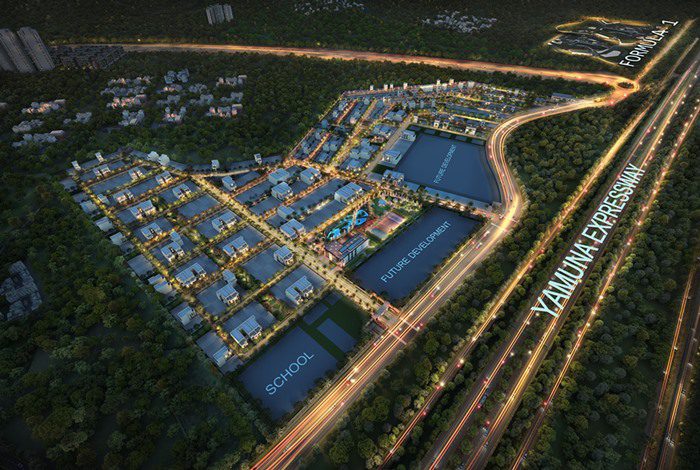
Noida is recalibrating its development strategy as it completes five decades, with a renewed focus on infrastructure expansion and governance reforms aimed at sustaining its rapid urban growth. The milestone marks a transition from a planned industrial township to a complex metropolitan economy, where institutional efficiency and service delivery are becoming as critical as physical infrastructure.
Established in 1976 to ease pressure on Delhi, Noida has evolved into a major economic hub driven by manufacturing, IT, and real estate growth. Over the years, investments in expressways, metro networks, and emerging projects such as the international airport have significantly enhanced regional connectivity, attracting both businesses and residential demand. At the centre of this transformation is the Noida Authority, which is now placing greater emphasis on administrative reforms alongside infrastructure delivery. Plans for a new integrated headquarters in Sector 96 are expected to consolidate departments and improve coordination, reflecting a broader push towards streamlined governance. Urban policy experts note that such institutional restructuring is essential as cities scale, helping reduce delays, improve accountability, and support faster decision-making. The Noida Authority governance push is also addressing long-standing issues related to land management and citizen grievances. Policy adjustments, including revised plot schemes and more responsive administrative processes, aim to resolve disputes with landowners and improve transparency in development decisions. However, these efforts come against a backdrop of persistent challenges.
Despite its planned layout and infrastructure advantages, Noida continues to face pressure from traffic congestion, stalled housing projects, and uneven civic service delivery. Recent citizen feedback and localised reports highlight gaps in drainage, road maintenance, and neighbourhood-level amenities, underscoring the need for more consistent last-mile governance. Urban planners argue that the next phase of growth will depend less on expansion and more on management. As population density increases and economic activity intensifies, the effectiveness of governance systems—ranging from waste management to transport regulation—will shape the city’s liveability and resilience. From a sustainability perspective, Noida’s evolution presents both opportunity and risk. The city already benefits from significant green cover and planned sectors, but maintaining environmental balance amid rapid construction and rising resource demand remains a key concern. Experts suggest that integrating climate-responsive infrastructure, such as water recycling systems and green mobility networks, will be crucial in the coming decade.
The Noida Authority governance push also reflects a broader trend across Indian cities, where urban local bodies are being compelled to move beyond project execution towards holistic city management. This includes leveraging data, improving citizen engagement, and ensuring equitable access to services across formal and informal settlements. As Noida enters its sixth decade, the focus is shifting towards consolidating its gains while addressing structural gaps. The challenge ahead lies in aligning infrastructure growth with transparent governance and inclusive planning—ensuring that the city’s next phase is not just faster, but more sustainable and citizen-centric.