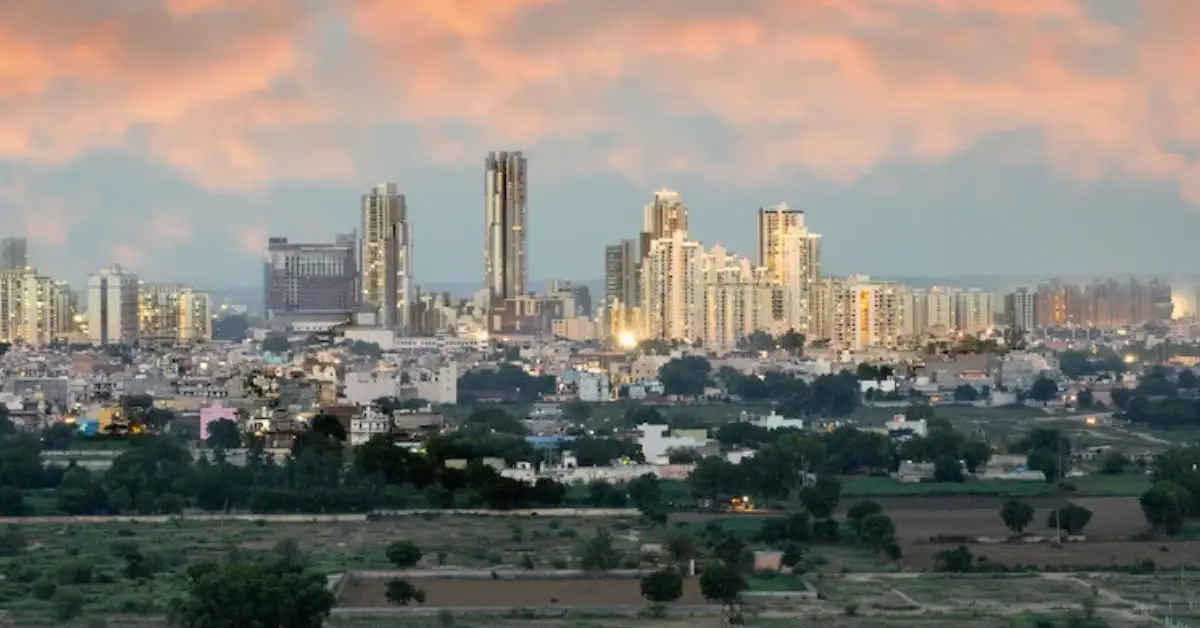
Noida is entering a new phase of urban and economic relevance as it marks 50 years of planned development, with its real estate sector increasingly emerging as a central driver of the National Capital Region’s growth. What began as an industrial extension to ease pressure on Delhi has evolved into a multi-sector urban hub, reshaping investment flows, job creation, and housing demand across NCR.
The Noida real estate growth trajectory is now closely linked to large-scale infrastructure and global business integration. Over the past decade, improvements in expressway connectivity, metro expansion, and upcoming projects such as the international airport in Jewar have transformed the city’s accessibility and economic appeal. These factors are expected to continue driving property demand and price appreciation in the coming years. A key shift lies in Noida’s transition from a relatively affordable housing market to a more diversified real estate ecosystem. Industry observers note a steady rise in demand for premium residential developments, alongside the expansion of Grade-A office spaces and integrated townships. This evolution reflects the growing presence of multinational companies, technology firms, and global capability centres, which are reshaping both the city’s skyline and its workforce profile. The Noida real estate growth story is also underpinned by employment generation and industrial expansion. The region has become a major hub for electronics manufacturing, IT services, and data infrastructure, supporting thousands of jobs and attracting a skilled workforce.
This employment base is directly feeding into end-user housing demand, shifting the market from speculative investment to occupancy-driven growth. Importantly, the city’s planned layout continues to distinguish it from other NCR markets. Wider roads, sector-based zoning, and relatively better land-use planning have allowed Noida to scale without the same degree of congestion seen in older urban centres. However, urban experts caution that maintaining this advantage will require sustained investment in public transport, environmental infrastructure, and social amenities as density increases. From a regional perspective, Noida’s rise is recalibrating the NCR’s real estate balance, traditionally dominated by corporate hubs in neighbouring cities. Recent years have seen stronger capital inflows and increasing buyer interest, supported by infrastructure-led growth corridors. Yet, the rapid pace of development also raises questions around sustainability and inclusivity. Expanding high-end housing and commercial projects must be matched with equitable access to affordable housing, green spaces, and climate-resilient infrastructure.
As urban heat, resource demand, and mobility pressures grow, the long-term success of the Noida real estate growth model will depend on how effectively it integrates environmental and social considerations. Looking ahead, Noida’s next phase of development appears set to be shaped by global connectivity, technology-driven industries, and infrastructure-led planning. For policymakers and urban planners, the challenge will be to ensure that growth remains balanced—supporting economic expansion while preserving liveability and resilience in an increasingly competitive urban landscape.