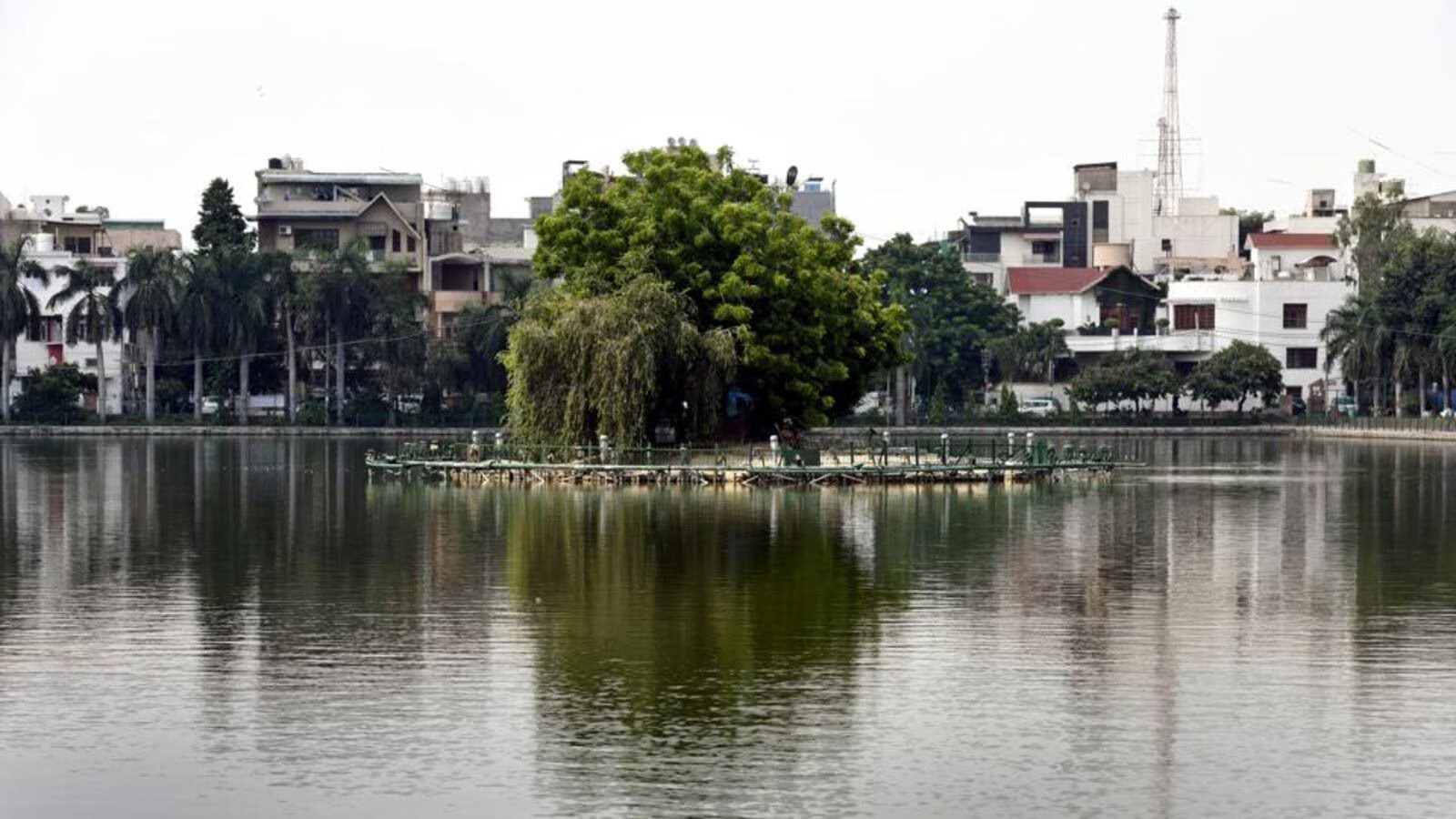
Delhi’s municipal authorities have reopened the bidding process for the long-delayed restoration of Naini Lake in Model Town, reviving a project that has remained stalled for nearly a decade. The renewed tender for the Naini Lake revival reflects a broader attempt to address urban water degradation while improving public spaces in densely populated neighbourhoods. The proposed intervention targets a 6.5-acre waterbody that has gradually lost its ecological function, now relying heavily on groundwater extraction to sustain water levels. Urban planners highlight that such dependence is unsustainable in a city already facing aquifer stress, making the Naini Lake revival critical from both environmental and water management perspectives.
Officials familiar with the project indicate that earlier attempts were hindered by procedural and governance bottlenecks, including delays in administrative approvals and limited bidder participation. With revised tender conditions now in place, authorities expect to appoint an executing agency, with a one-year timeline for completion once work begins. At the core of the restoration strategy is a shift from groundwater dependence to treated wastewater reuse. The plan proposes channelling highly treated water from an existing treatment facility through a dedicated pipeline network, ensuring a more reliable and sustainable water source. Experts view this approach as aligned with circular water management practices increasingly adopted in water-stressed cities. Beyond hydrological restoration, the project includes measures aimed at improving the lake’s ecological and social value. These involve clearing accumulated waste, strengthening stormwater drainage systems, and introducing extensive plantation along the periphery. Public infrastructure such as walkways, seating, and lighting is also planned, signalling a move towards integrating environmental assets with accessible urban design.
However, some urban development specialists caution against overemphasis on aesthetic upgrades without ensuring ecological integrity. Features like fountains and decorative elements, while enhancing visual appeal, may not contribute significantly to biodiversity or long-term sustainability if not carefully designed. The success of the project, they suggest, will depend on balancing recreation with ecosystem restoration. The lake’s prolonged stagnation since its initial proposal in the mid-2010s reflects a recurring challenge in urban infrastructure delivery—projects often falter due to institutional gaps rather than funding constraints. Even after financial approval under a national urban water initiative, execution remained elusive, highlighting the need for stronger coordination across civic bodies. For local residents, the revival carries implications beyond environmental improvement. Functional urban waterbodies can help moderate microclimates, support groundwater recharge indirectly, and offer inclusive public spaces in areas with limited green cover. If executed effectively, the project could also reduce reliance on freshwater for nearby landscaping by enabling reuse of treated lake water.
As Delhi continues to confront air pollution and water scarcity, the outcome of the Naini Lake project may serve as a test case for similar urban restoration efforts. Its progress will be closely watched to assess whether governance reforms and technical planning can finally translate into tangible improvements on the ground.