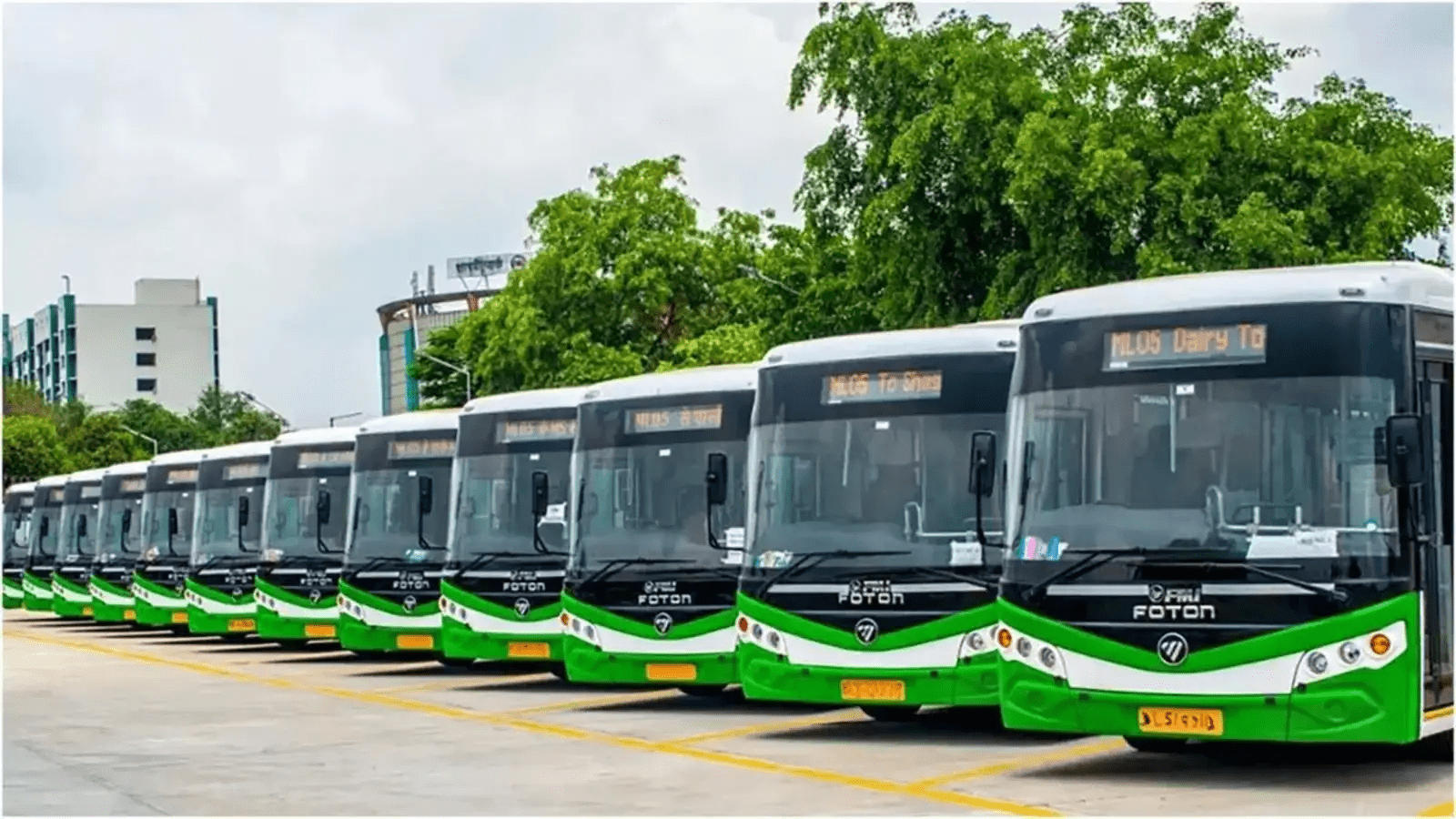
Hyderabad Electric Bus Rollout Targets Cleaner Commutes
Delhi has widened its low-emission transport footprint with the rollout of an interstate electric bus service connecting the capital to Rohtak, alongside the addition of 200 battery-powered buses to its public fleet. The move signals a growing emphasis on clean mobility solutions while addressing rising commuter demand across the National Capital Region (NCR). The new electric bus corridor links major transit nodes such as Kashmere Gate and Peeragarhi before crossing into Haryana via the Tikri border, serving towns including Bahadurgarh and Sampla. Urban planners note that this extension reflects a gradual shift from city-centric electrification to region-wide integration, where daily commuters often travel across state lines for work and education.
With this expansion, Delhi’s electric bus fleet now forms a significant share of its overall public transport capacity. Officials indicate that electrification is central to long-term transport planning, aimed at lowering vehicular emissions and improving air quality in one of the world’s most pollution-stressed urban regions. The electric bus programme has also been positioned as a way to modernise ageing fleets while reducing dependence on fossil fuels. However, experts caution that scaling electric mobility requires more than fleet additions. Charging infrastructure, grid readiness, and depot capacity remain critical challenges. While new depots and terminals have been introduced in areas such as Madanpur Khadar and East Vinod Nagar, sustained investment will be necessary to support a projected fleet expansion to nearly 14,000 buses by the end of the decade. The interstate dimension of the electric bus service is equally significant. It operates under a reciprocal transport framework involving neighbouring states, pointing to the need for coordinated policy and infrastructure planning across jurisdictions.
Transport analysts suggest that such agreements could pave the way for a unified, low-emission mobility network across northern India, reducing reliance on private vehicles and easing highway congestion. For commuters, the benefits extend beyond environmental gains. Electric buses are typically quieter, smoother, and more accessible, which can improve travel experience, particularly for elderly passengers and women. Accessibility features and predictable schedules are increasingly being seen as essential elements of inclusive urban transport systems. Yet, questions remain about affordability and service frequency. Public transport advocates stress that maintaining reasonable fares while ensuring operational viability will be key to long-term success. Without this balance, the transition risks excluding lower-income commuters who rely most on public systems.
Delhi’s electric bus initiative, now extending beyond city limits, reflects a broader attempt to align infrastructure growth with sustainability goals. The coming years will test whether such expansions can deliver consistent service quality while supporting cleaner, more equitable urban mobility across the region.