


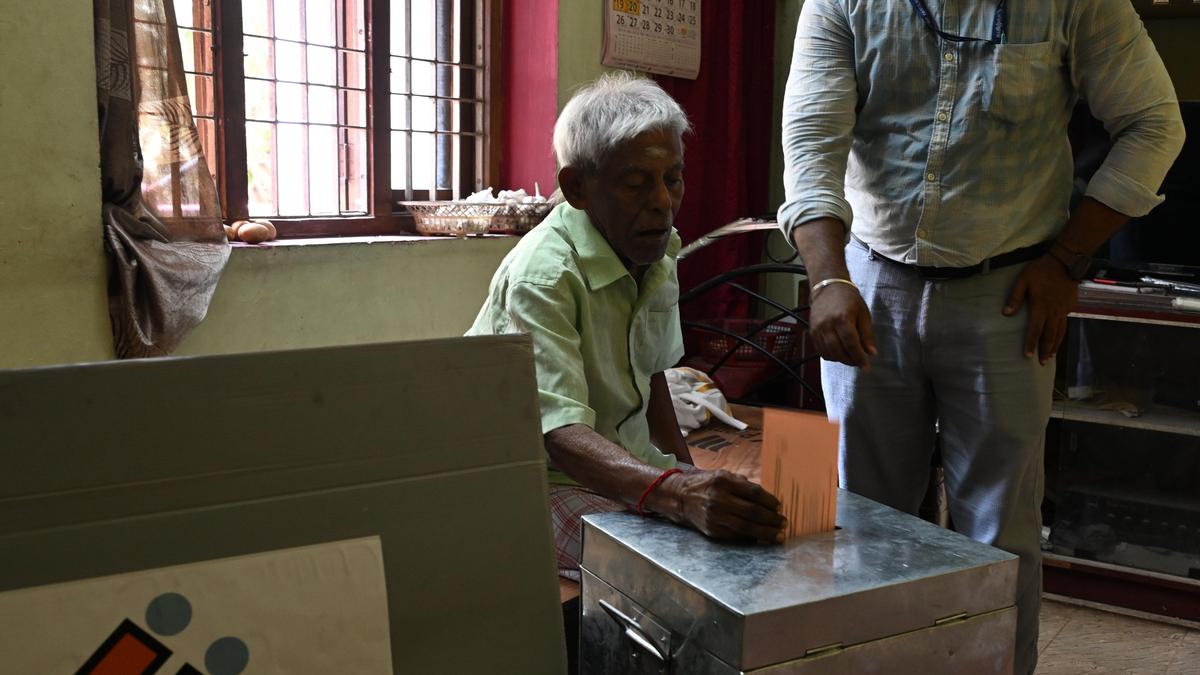
Chennai has expanded its home voting initiative for the ongoing Tamil Nadu polls, enabling elderly citizens and persons with disabilities to cast their ballots from their residences.
The move reflects a growing emphasis on inclusive electoral practices, particularly in urban centres where accessibility barriers can limit participation in traditional polling processes.Under the initiative, election teams visit registered voters at home with secure ballot systems, ensuring confidentiality and procedural integrity. The approach is designed to reduce physical and logistical challenges faced by vulnerable groups, especially in a city like Chennai where mobility constraints, traffic congestion, and extreme weather conditions can hinder access to polling stations.The rollout of Chennai home voting facility marks a shift towards more citizen-centric governance in electoral management. By bringing the voting process directly to individuals, authorities are addressing long-standing gaps in accessibility while also strengthening democratic participation. Urban policy experts view this as a critical step in aligning civic systems with the needs of diverse populations.In dense metropolitan environments, traditional polling infrastructure often struggles to accommodate all voters efficiently. Long queues, travel distances, and limited accessibility features can discourage participation among senior citizens and those with disabilities. The introduction of home-based voting offers a practical solution, reducing dependency on physical infrastructure while maintaining electoral inclusivity.
The Chennai home voting facility also reflects broader trends in public service delivery, where decentralisation and doorstep services are gaining traction. Similar models have been adopted in areas such as healthcare and public distribution systems, indicating a shift towards more responsive and adaptive governance frameworks.From a planning perspective, the initiative demonstrates how administrative innovation can enhance urban resilience. By reducing the need for large gatherings at polling stations, home voting can also contribute to better crowd management and public safety—an aspect that has gained importance in recent years.However, experts highlight the need for robust monitoring to ensure transparency and prevent misuse. Maintaining the integrity of the voting process, including secure handling of ballots and proper verification mechanisms, remains essential for public trust. Scaling such initiatives will require careful balancing of accessibility with accountability.The economic and social implications are equally significant. Greater voter participation can lead to more representative governance, influencing policy decisions that shape urban development, infrastructure investment, and welfare programmes. Ensuring that all segments of society have a voice is central to building equitable cities.
As Chennai continues to refine its electoral processes, the focus is likely to remain on expanding access while safeguarding credibility. The success of such initiatives could serve as a model for other cities seeking to make democratic participation more inclusive and resilient in an increasingly complex urban landscape.
Also Read:Chennai NBFC Asset Growth Targets Rapid Expansion
