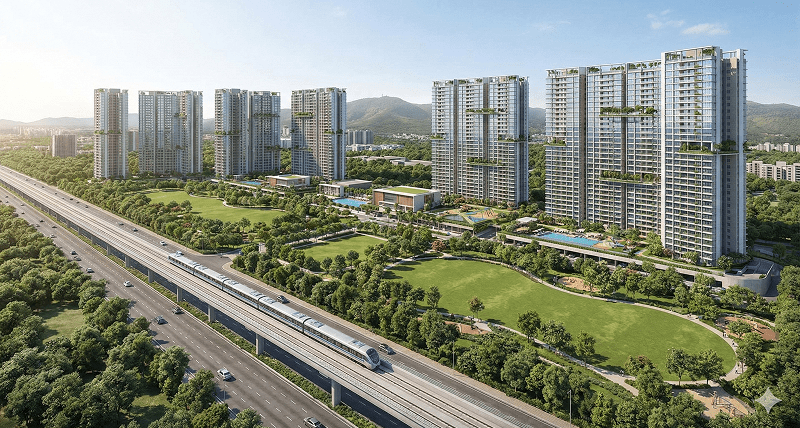
Mumbai Mulund Enclave To Influence Property Trends
A new approval for a mid-sized redevelopment scheme in Mulund West is drawing attention to how Mumbai’s suburban housing transformation is accelerating, particularly in older cooperative housing clusters. The project, cleared to begin construction, is expected to add both residential and commercial floor space, reflecting a broader shift in how land-starved neighbourhoods are being reimagined.
The development, located in a dense residential pocket of Mulund West, underscores the rising importance of Mumbai redevelopment projects in addressing ageing housing stock while unlocking higher land value. With over 1.5 lakh square feet of planned built-up area across housing and commercial segments, the project signals the continued pivot towards vertical redevelopment rather than horizontal expansion in the city. Urban planners note that such Mumbai redevelopment projects are increasingly shaping suburban growth corridors, especially in areas like Mulund, which offer a balance between connectivity and liveability. Improved access to arterial roads and suburban rail networks has made the locality attractive to both end-users and investors, even as central Mumbai faces saturation and affordability constraints.
However, the implications extend beyond real estate economics. Redevelopment in older neighbourhoods often raises concerns around infrastructure stress, including water supply, waste management, and traffic congestion. Without parallel upgrades in civic systems, densification could strain already stretched municipal services. Experts suggest that approvals for such projects must be tied to clear commitments on sustainable infrastructure, including energy-efficient construction and better stormwater management. There is also a social dimension. Redevelopment typically replaces low-rise cooperative housing with high-density towers, altering community dynamics. While residents often gain larger homes and modern amenities, the transition can disrupt long-standing social networks. Inclusive planning such as ensuring adequate common spaces and accessibility remains critical in maintaining neighbourhood cohesion.
From a market perspective, the project’s projected revenue potential points to steady demand in this micro-market. Analysts believe Mulund West could see a gradual uptick in property values as more redevelopment schemes reach completion. This may encourage additional proposals in nearby pockets, further intensifying development activity. Yet, the long-term success of such projects will depend on how well they align with Mumbai’s broader sustainability goals. As the city grapples with climate risks, including flooding and heat stress, future redevelopment must prioritise resilient design, reduced carbon footprints, and equitable access to urban services. For now, the latest approval adds momentum to Mulund’s transformation story but also reinforces the need for a more integrated approach where housing growth, infrastructure capacity, and environmental safeguards evolve together.