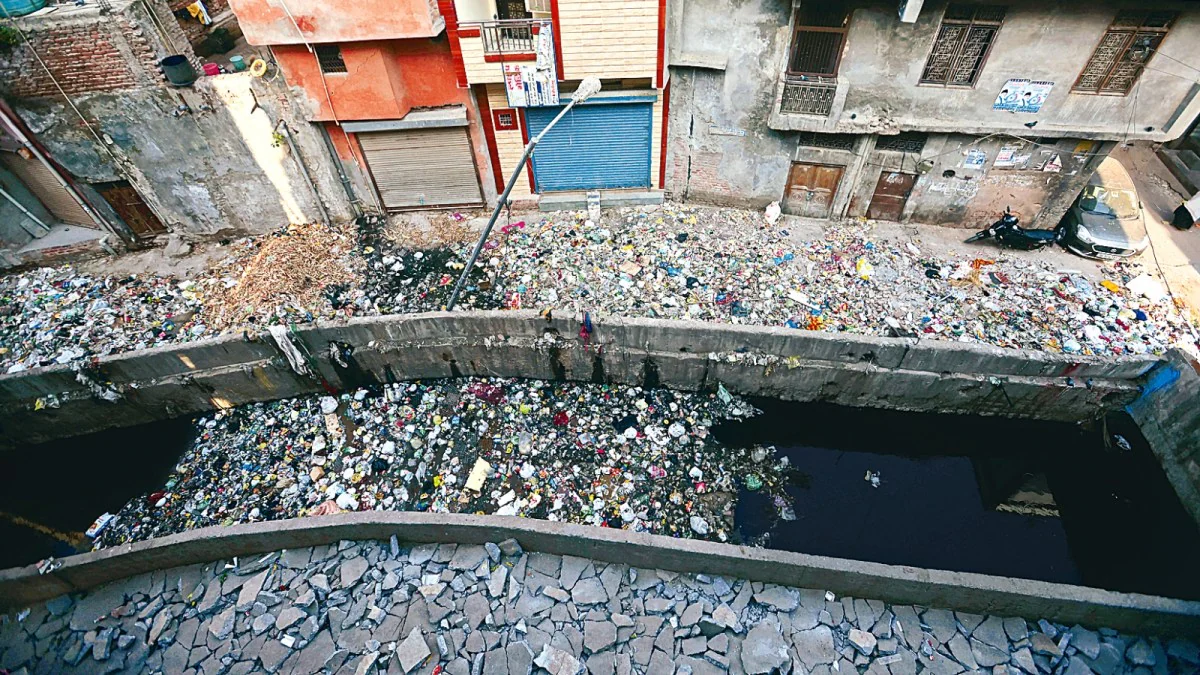
Authorities in Delhi have begun introducing Precast Drain Technology across several parts of the capital as part of a broader effort to modernise stormwater infrastructure and reduce recurring waterlogging during the monsoon. The shift marks a move away from traditional on-site construction of drains towards factory-manufactured reinforced concrete systems that can be installed faster and are designed to last significantly longer. Urban infrastructure officials say the initiative forms part of a larger drainage modernisation programme aimed at strengthening the capital’s flood management capability over the coming decades. The city’s road infrastructure agency, Public Works Department Delhi, oversees more than two thousand kilometres of stormwater drains and is responsible for upgrading large sections of this network under the ongoing drainage master plan.
The introduction of Precast Drain Technology is intended to address two long-standing urban challenges: the limited lifespan of conventional drainage structures and the disruption caused by prolonged construction work on busy roads. Unlike the traditional cast-in-place method—where concrete drains are built directly on site—precast units are manufactured in controlled factory conditions and transported to the installation location. Infrastructure specialists note that this approach improves structural quality while allowing quicker assembly. The modular units can be placed and connected more rapidly, reducing construction timelines and minimising the need for storing building materials along congested city streets. For a dense metropolis such as Delhi, where road closures often lead to severe traffic delays, faster construction can significantly reduce the impact on daily commuting. Several neighbourhoods in the northern and north-western parts of the city have been identified for early implementation of the technology. Drain remodelling works are currently underway in key traffic corridors and residential areas where monsoon flooding has historically disrupted mobility and local commerce.
Urban planners argue that upgrading drainage systems is becoming increasingly important as climate variability intensifies rainfall events across Indian cities. Older drainage infrastructure, originally designed for lower rainfall intensity and smaller populations, is struggling to cope with current urban conditions. Introducing durable materials and improved design standards can help cities adapt to changing weather patterns. Alongside infrastructure upgrades, authorities are also scaling up maintenance operations ahead of the monsoon season. Large-scale desilting of drains has been undertaken to remove accumulated sludge and debris that often restrict water flow during heavy rain. Officials say millions of tonnes of silt are being cleared as part of the annual preparedness exercise. Experts emphasise that while engineering upgrades such as Precast Drain Technology are essential, long-term flood resilience will also depend on integrated urban planning. Preserving natural drainage channels, protecting floodplains and improving stormwater management across new real estate developments remain critical elements of sustainable city growth.
For Delhi, where seasonal flooding frequently disrupts mobility and urban life, the adoption of modern drainage construction methods represents a step towards building infrastructure that can better withstand the pressures of rapid urbanisation and climate change.