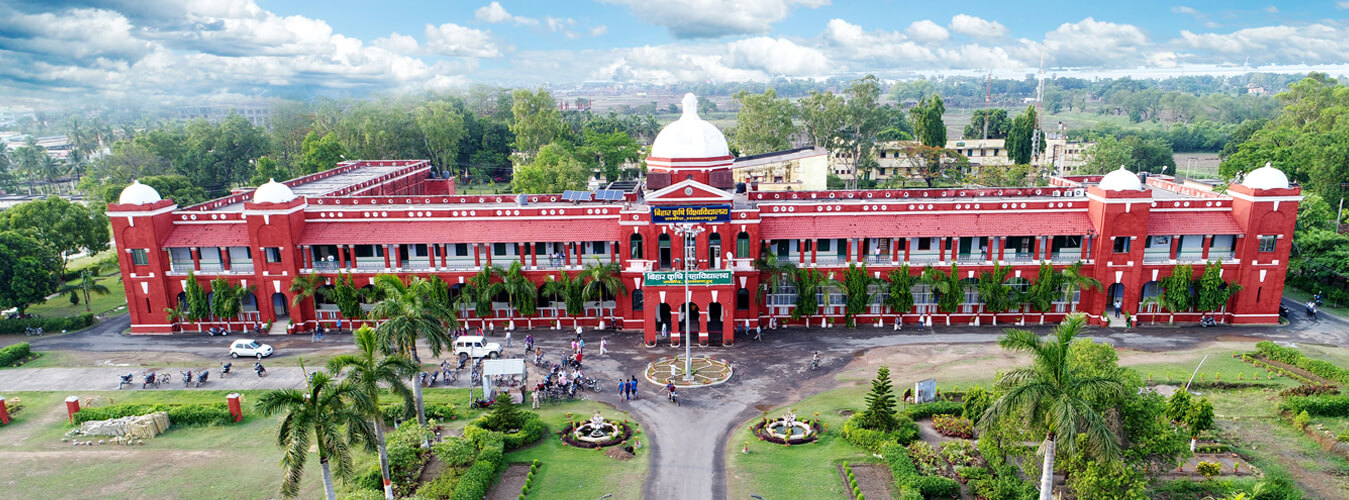
Bihar’s agricultural education ecosystem has received a significant boost with Bihar Agricultural University (BAU), Sabour securing an ‘A’ grade accreditation from the Indian Council of Agricultural Research (ICAR), marking a notable improvement in institutional quality and research capability. The recognition positions the university among leading agricultural institutions in India and signals a broader shift in the state’s approach to knowledge-led rural and regional development.
The accreditation follows a comprehensive evaluation process that assessed academic programmes, research output, infrastructure and governance systems. The upgrade is particularly significant as the institution had previously been rated at a lower grade, indicating a substantial transformation in its academic and operational standards over a relatively short period. For Bihar, where agriculture remains a primary economic driver, the development has implications beyond academia. Strengthening institutions like BAU is central to improving farm productivity, climate resilience and rural incomes. Experts note that universities play a critical role in bridging the gap between scientific research and on-ground agricultural practices, particularly in states with high dependence on smallholder farming. The improved rating reflects sustained investments in research quality, laboratory infrastructure and innovation-led teaching models. Evaluators examined parameters such as curriculum relevance, faculty output, extension services and student support systems—key indicators of how effectively an institution contributes to both education and field-level impact.
Urban and regional planners increasingly view agricultural universities as part of a wider development ecosystem. In regions like eastern India, where peri-urban expansion intersects with agrarian economies, such institutions can influence land use patterns, agri-logistics networks and food supply chains. Strengthened research capacity can support climate-adaptive farming, water management and crop diversification—critical in flood-prone and resource-stressed geographies. The accreditation is also expected to unlock greater access to national-level research funding, collaborations and technology transfer initiatives. Institutional credibility often determines the scale of partnerships with public agencies, private sector stakeholders and international research bodies. This, in turn, can accelerate innovation in areas such as precision agriculture, soil health and sustainable cropping systems. From a human capital perspective, improved academic standards may enhance the university’s ability to attract students, researchers and faculty talent. Recent trends suggest that higher accreditation scores correlate with increased student interest, particularly in specialised agricultural and allied disciplines that are gaining relevance in the context of food security and climate change.
However, experts caution that institutional upgrades must translate into measurable outcomes at the farm and community level. Strengthening extension services, farmer training programmes and last-mile knowledge dissemination will be essential to ensure that research outputs benefit rural populations equitably. The development also aligns with a broader national push to modernise agricultural education under evolving policy frameworks, which emphasise interdisciplinary learning, digital integration and sustainability-focused curricula. As Bihar continues to invest in infrastructure and governance reforms, the elevation of its academic institutions could play a pivotal role in shaping a more resilient and productive rural economy—one that is better integrated with urban markets and future-ready supply chains.