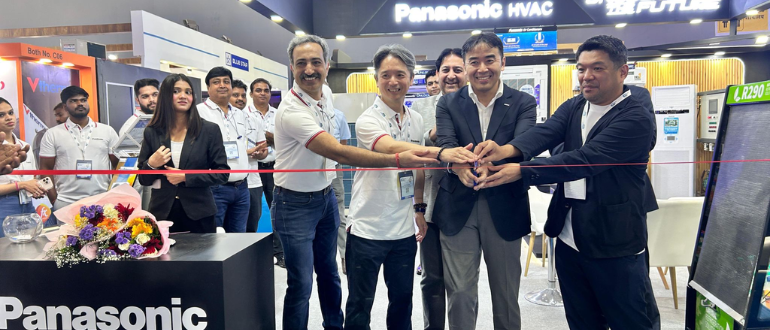
Panasonic has expanded its presence in India’s climate control and refrigeration segment with a new suite of smart cooling and cold chain technologies, signalling a shift towards more energy-efficient and digitally integrated infrastructure. The development comes as rising temperatures, urban density, and evolving consumption patterns place increasing pressure on cooling systems across residential, commercial, and logistics sectors.
The latest portfolio spans intelligent air-conditioning systems, connected variable refrigerant flow (VRF) solutions, and scalable cold chain infrastructure aimed at sectors such as food retail, healthcare, and e-commerce. Industry experts view this as part of a broader transition in the cooling industry, where efficiency, adaptability, and environmental performance are becoming central to product design. A key highlight is the company’s move to integrate connected ecosystems into cooling solutions. Its smart platform enables remote monitoring, automation, and usage-based optimisation, allowing users to regulate energy consumption more effectively. Urban planners note that such technologies are increasingly relevant in cities where cooling demand is surging due to heat stress and changing building typologies.
The residential segment has also seen a push towards systems designed for extreme weather resilience. With several Indian cities experiencing prolonged heatwaves, air-conditioning units are now being engineered to operate efficiently even under high ambient temperatures while minimising energy use. Features such as adaptive cooling modes and dust management mechanisms are expected to extend equipment life cycles and reduce maintenance requirements in challenging urban environments. In commercial and large-format spaces, the integration of VRF systems with smart control platforms reflects a growing demand for centralised and flexible climate management. These systems allow multiple indoor units to be controlled independently, enabling tailored temperature settings across zones. Experts say this is particularly relevant for mixed-use developments, where offices, retail, and residential spaces coexist within the same footprint.
Beyond comfort cooling, the company’s expanded cold chain portfolio underscores the importance of reliable temperature-controlled logistics in a rapidly urbanising economy. Efficient refrigeration systems are critical for reducing food wastage, maintaining pharmaceutical integrity, and supporting last-mile delivery networks. The introduction of inverter-based condensing units and multi-refrigerant systems aligns with industry efforts to improve energy performance while preparing for transitions to more sustainable refrigerants. From a sustainability perspective, the evolution of smart cooling systems is closely linked to India’s climate goals. Cooling already accounts for a significant share of urban energy demand, and inefficient systems can exacerbate both emissions and operational costs. By incorporating energy-saving technologies and intelligent controls, manufacturers are attempting to balance comfort with environmental responsibility.
As Indian cities continue to expand and climate variability intensifies, the demand for efficient and scalable cooling infrastructure is expected to grow. The focus, industry observers suggest, will increasingly be on solutions that integrate seamlessly with smart buildings while addressing long-term sustainability and resilience challenges.
Panasonic Launches Smart Cooling And Cold Chain Systems