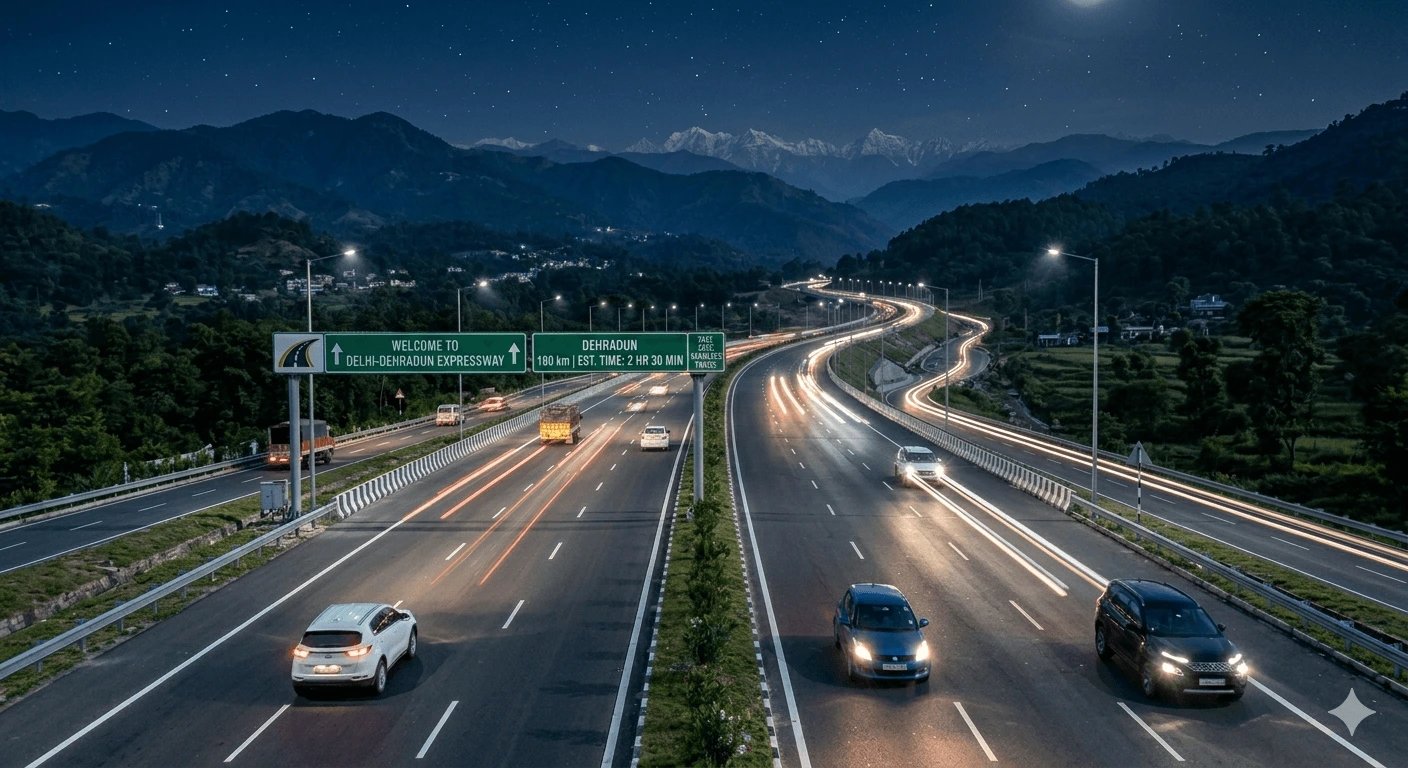
The opening of the Delhi Dehradun Expressway is expected to trigger a fresh wave of real estate activity across northern India, with property consultants and market analysts projecting notable price appreciation and increased development along the emerging infrastructure corridor. Stretching more than 200 kilometres and designed as an access-controlled highway, the new corridor significantly shortens travel time between the national capital and Uttarakhand’s capital city. The improved connectivity is already drawing attention from developers, investors and urban planners who view the project as a catalyst for new residential, commercial and logistics hubs along its route.
Industry analysts tracking regional housing markets indicate that property prices in several micro-markets linked to the expressway could increase between 15 and 25 per cent over the next two years. Localities on the eastern edges of the National Capital Region, including parts of Ghaziabad and East Delhi, are expected to see heightened demand from both homebuyers and investors seeking better connectivity to the hills and neighbouring economic centres. Urban planners say such infrastructure corridors often reshape development patterns by extending metropolitan influence into previously underdeveloped regions. With travel times to Uttarakhand now reduced by nearly half, cities such as Dehradun are expected to witness a surge in second-home purchases, plotted developments and low-density residential projects aimed at urban buyers seeking weekend or retirement homes. Beyond residential growth, analysts also anticipate a rise in industrial and logistics investments along the corridor. The expressway improves road access between established NCR industrial hubs and emerging markets in western Uttar Pradesh and Uttarakhand, making it attractive for warehousing and distribution facilities. Market research groups estimate that the region could attract several million square feet of new Grade A warehousing and industrial space over the coming years as logistics networks expand.
Hospitality and tourism-linked real estate are also expected to benefit. Faster road connectivity to destinations such as Haridwar, Rishikesh and Dehradun could encourage weekend tourism and short-stay travel from Delhi, increasing demand for resorts, homestays and hospitality projects across the Himalayan foothill belt. Urban economists note that expressway-led growth corridors often encourage diversified development ecosystems, including retail, healthcare, education and office spaces. As accessibility improves, previously peripheral towns along the route may begin attracting commercial investment and service-sector employment, gradually transforming them into regional economic nodes. However, experts caution that infrastructure-driven property growth must be accompanied by careful urban planning to avoid uncontrolled sprawl. Sustainable development strategies—such as integrated land-use planning, improved public transport links and climate-resilient infrastructure—will be essential to ensure that new real estate growth aligns with environmental protection and long-term urban liveability.
For the wider region, the Delhi Dehradun Expressway represents more than a transport upgrade. It signals the emergence of a new economic and development corridor that could reshape land markets, tourism flows and industrial supply chains across northern India. How cities along the route manage this transition will determine whether the corridor evolves into a balanced growth belt or another example of infrastructure-driven urban sprawl.