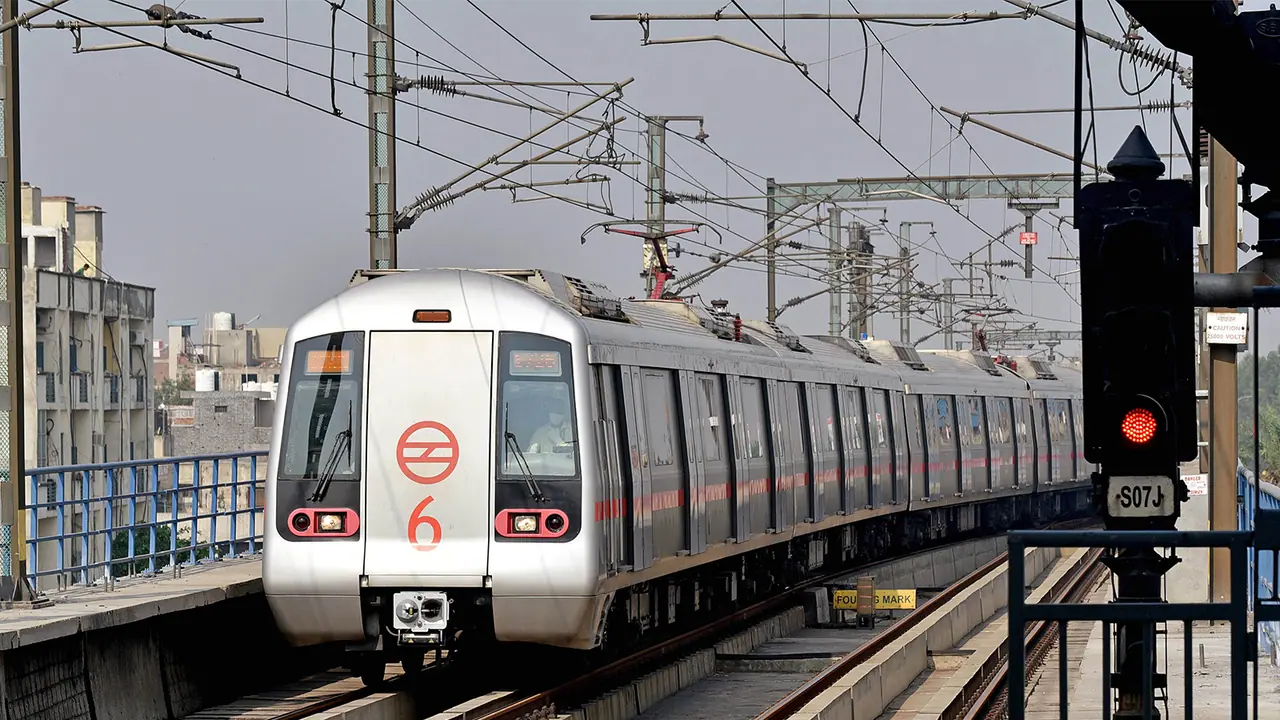
Delhi Metro Safety Campaign Targets Escalator Risks
Delhi’s mass transit system has launched a network-wide public awareness initiative aimed at reducing accidents linked to escalators and lifts at metro stations. The Delhi Metro Safety Campaign, conducted across multiple high-footfall stations, reflects growing attention on passenger behaviour and vertical mobility safety as ridership steadily rises across the capital’s expanding metro network. Officials overseeing operations say the campaign focuses on practical safety guidance for passengers using escalators, lifts and travelators inside stations. Staff members and volunteers have been positioned near these installations to share visual instructions and encourage commuters to follow safe practices during daily travel.
The awareness drive arrives at a time when metro ridership in the capital has recovered strongly after pandemic disruptions. As passenger volumes grow, infrastructure such as escalators and lifts—essential for movement between platforms, concourses and entry points—has become critical to the smooth functioning of the network. Transport analysts note that the Delhi Metro Safety Campaign addresses a frequently overlooked aspect of urban mobility: the safe use of vertical transport systems. Large transit networks rely heavily on escalators and lifts to handle high passenger volumes efficiently. However, misuse or overcrowding can lead to sudden stoppages, minor injuries or operational delays. The Delhi Metro system currently operates one of the largest sets of vertical mobility infrastructure in India. Stations across the network collectively host hundreds of lifts and more than a thousand escalators, particularly at busy interchanges where passenger circulation takes place across several levels. Infrastructure experts say that such systems require constant maintenance alongside public awareness. Several older escalators within the network have recently entered mid-life refurbishment cycles after years of continuous operation. These upgrades typically involve replacing mechanical components, strengthening safety mechanisms and recalibrating operational systems to meet updated performance standards.
The Delhi Metro Safety Campaign also emphasises passenger etiquette and accessibility considerations. Commuters are being encouraged to hold handrails, stand facing forward on escalators and avoid behaviours such as rushing, running or standing near step edges. Advisory messages highlight the importance of using lifts when travelling with children, elderly family members, heavy luggage or mobility equipment. Urban mobility specialists say these behavioural guidelines mirror safety practices followed in international metro systems. In cities such as Tokyo, London and Singapore, passenger education campaigns are regularly used to reduce accidents in crowded transit environments. Beyond individual safety, proper use of escalators and lifts plays a wider role in maintaining passenger flow inside stations. Even minor disruptions at vertical transport points can quickly create congestion during peak travel hours. For this reason, transport authorities increasingly treat passenger awareness as a key component of operational reliability.
The campaign is part of a broader safety and infrastructure modernisation effort across the network, which includes train refurbishment, station upgrades and the installation of improved accessibility features on newer corridors. As Delhi’s metro system continues to expand into new urban districts, authorities say maintaining a culture of safe equipment use will be essential. Through the Delhi Metro Safety Campaign, transit managers are seeking to ensure that growing passenger numbers are matched by improved awareness of everyday safety practices that keep the system moving efficiently.