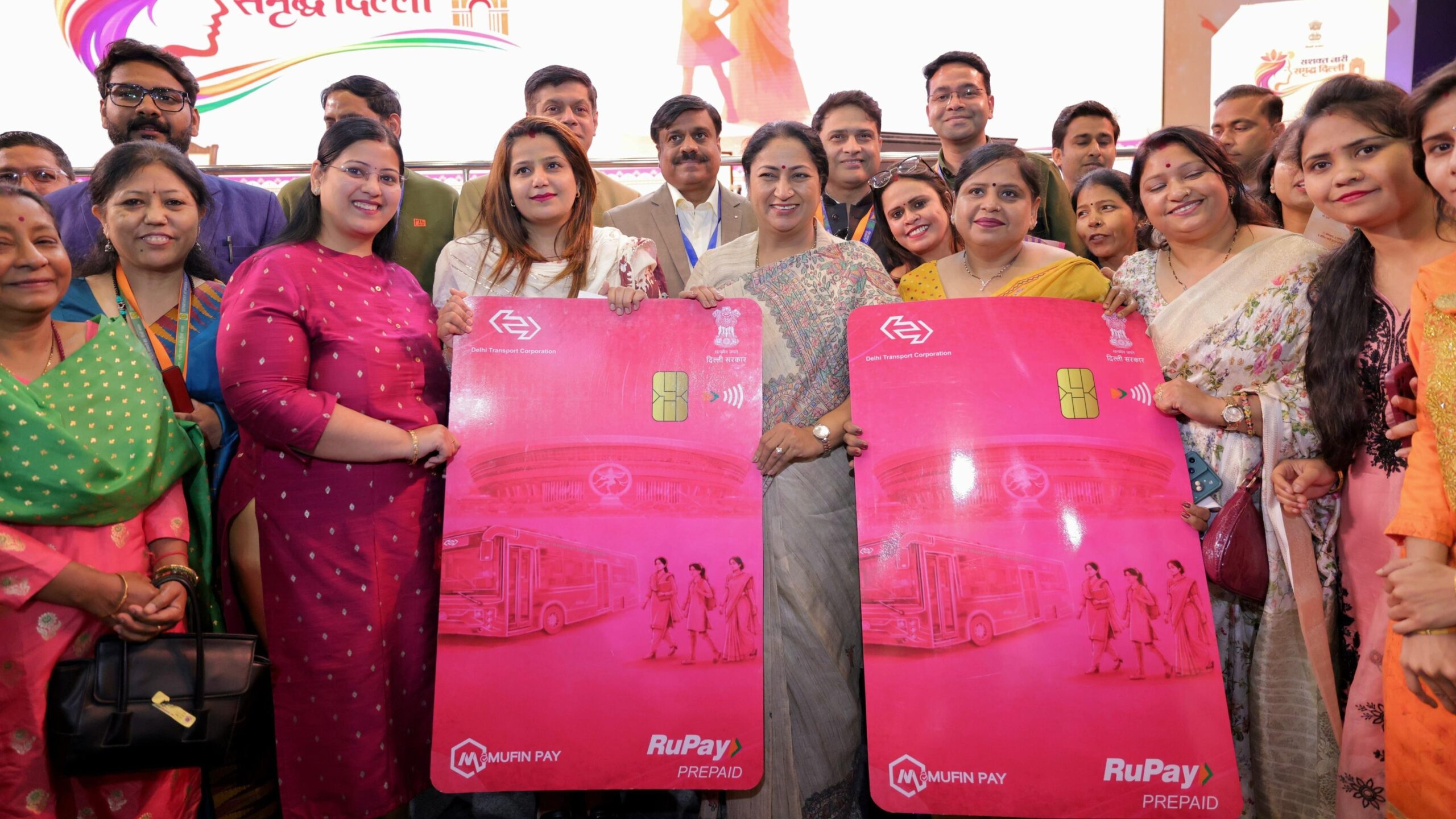
Delhi’s public transport network is witnessing a rapid expansion of a key welfare initiative aimed at improving mobility access for women. Authorities have already distributed more than four lakh cards under the Delhi Pink Card Scheme, a system designed to enable free travel for women on city buses while streamlining ticketing through digital registration and verification. Transport officials say the rollout is accelerating as the city expands its issuance infrastructure. The number of enrolment centres has increased across the capital, allowing thousands of new cards to be generated daily. The effort is intended to ensure that eligible commuters receive the travel card within a defined timeline as the transport authority works toward citywide coverage.
The Delhi Pink Card Scheme forms part of a broader approach to strengthen inclusive urban mobility in a rapidly growing metropolitan region. Public transport planners emphasise that improving safe and affordable mobility for women can significantly increase workforce participation, enhance access to education and healthcare, and support economic activity across the city. To simplify enrolment, authorities have introduced a digital registration system based on QR code technology. Applicants can complete most of the onboarding process remotely using mobile phones, including identity verification through one-time password authentication. Once the digital verification is completed, commuters can collect the physical card from the nearest distribution centre. Urban mobility experts say digitised registration systems can play an important role in reducing administrative bottlenecks. Previously, long queues and repeated document checks slowed the issuance process, particularly during peak registration periods. By shifting verification online, transport agencies aim to reduce waiting times while expanding access to the programme. Officials overseeing the scheme have also introduced operational safeguards to prevent misuse of the cards. Automated ticketing systems restrict repeated ticket generation within a short time window on the same bus route.
However, authorities clarify that this rule applies only to duplicate transactions in a single vehicle and does not prevent commuters from transferring between buses during a journey. The Delhi Pink Card Scheme also highlights how targeted public transport policies can address wider urban development goals. Cities worldwide are increasingly recognising that mobility inequality—particularly affecting women, elderly passengers and lower-income residents—can limit access to employment and social services. In Delhi, where bus services remain a critical component of the public transport system alongside the metro network, ensuring equitable access to buses is considered essential for maintaining inclusive urban growth. Analysts note that improving ridership among women may also strengthen the financial sustainability of bus operations by increasing overall usage of public transport infrastructure. Beyond social inclusion, expanding bus usage supports environmental objectives as well. Transport researchers point out that higher public transport ridership can help reduce dependence on private vehicles, contributing to lower traffic congestion and reduced emissions in a city grappling with persistent air quality challenges.
As enrolment continues across additional centres, transport planners will be monitoring how effectively the Delhi Pink Card Scheme translates into increased bus ridership and improved mobility outcomes for women. The programme may ultimately serve as a policy reference point for other urban regions exploring ways to combine social welfare initiatives with sustainable transport planning.