Delhi Transport Projects Expand Metro And Flyover Network
Delhi’s ongoing infrastructure push is entering a critical phase as authorities review the progress of major rail and road developments designed to reshape daily commuting across the capital. With more than 100 kilometres of new metro corridors currently under construction alongside key flyover projects, officials say the combined initiatives aim to improve mobility, reduce congestion and support a more sustainable urban transport ecosystem. Senior transport and infrastructure officials recently assessed the status of several projects being executed by the city’s metro authority and allied urban agencies. The review focused on timelines, engineering progress and integration between rail corridors and road infrastructure to ensure smoother movement across the densely populated National Capital Territory.
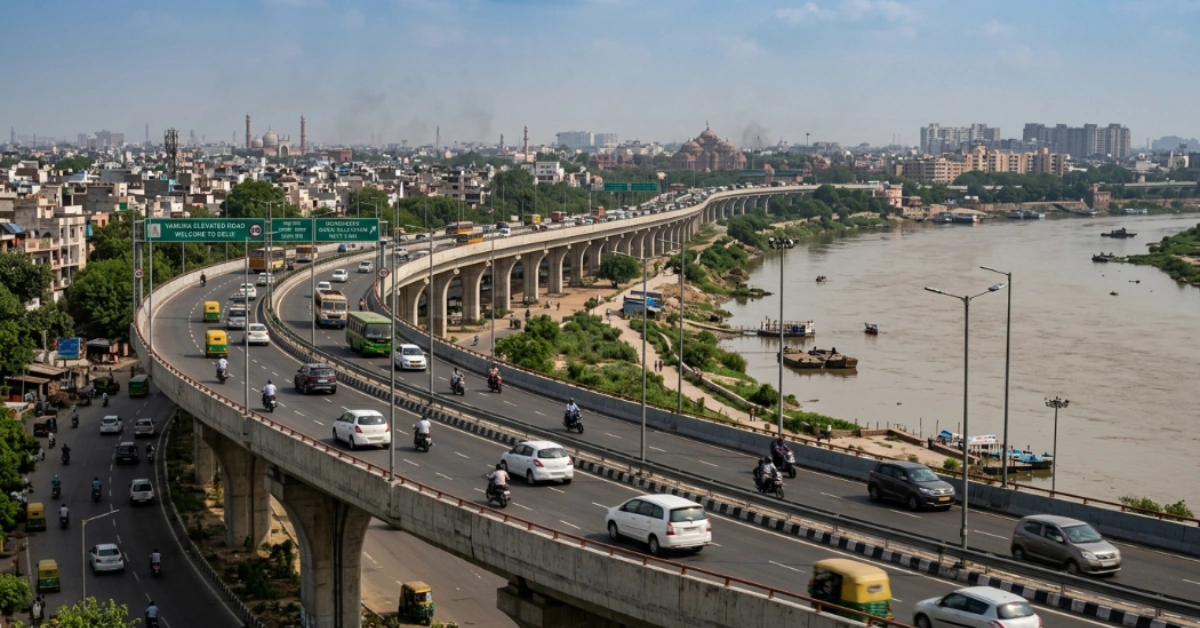
According to officials involved in the review process, approximately 104 kilometres of new metro alignment with more than 80 stations is under development across multiple corridors. These links are expected to connect several densely populated neighbourhoods with commercial districts, airports and interchange stations, potentially reducing dependency on private vehicles. Among the sections under construction are extensions linking residential pockets in north and west Delhi to central transit nodes, along with corridors that will connect southern neighbourhoods to airport access routes. Urban mobility experts note that expanding rapid transit networks in high-density areas helps shorten commute times while supporting lower carbon transport systems — a growing priority for cities managing rising emissions and traffic pressure. In parallel, the city administration is evaluating a 19-kilometre elevated road corridor along the Yamuna riverfront, planned to be executed in three stages. The route is expected to link northern and eastern sections of Delhi with major arterial roads further south, potentially creating an alternative traffic channel for vehicles that currently crowd central roadways.
Urban planners believe that such parallel corridors can help redistribute traffic flows if combined with public transport expansion. However, they also caution that road infrastructure must be carefully integrated with sustainable mobility strategies, including metro connectivity, bus networks and pedestrian-friendly access points. Several flyover developments are also progressing across the capital. A double-decker structure connecting major intersections in north Delhi is nearing three-quarters completion, while another elevated corridor in the eastern part of the city is approaching final construction stages. Additionally, a six-lane flyover linking residential areas in south Delhi with arterial routes is currently under construction. Officials involved in project monitoring say the emphasis is not only on faster travel but also on designing transport infrastructure that complements urban growth patterns. Integrating rail corridors, roads and last-mile connectivity systems is increasingly viewed as essential for cities experiencing population growth and expanding economic activity.
For Delhi, where congestion, pollution and urban sprawl remain persistent challenges, the expansion of Delhi transport projects could play a significant role in shaping the capital’s future mobility landscape. If delivered within projected timelines, the network of metro corridors and elevated roads may help create a more efficient, accessible and environmentally responsive transport framework for one of India’s fastest-growing metropolitan regions.