


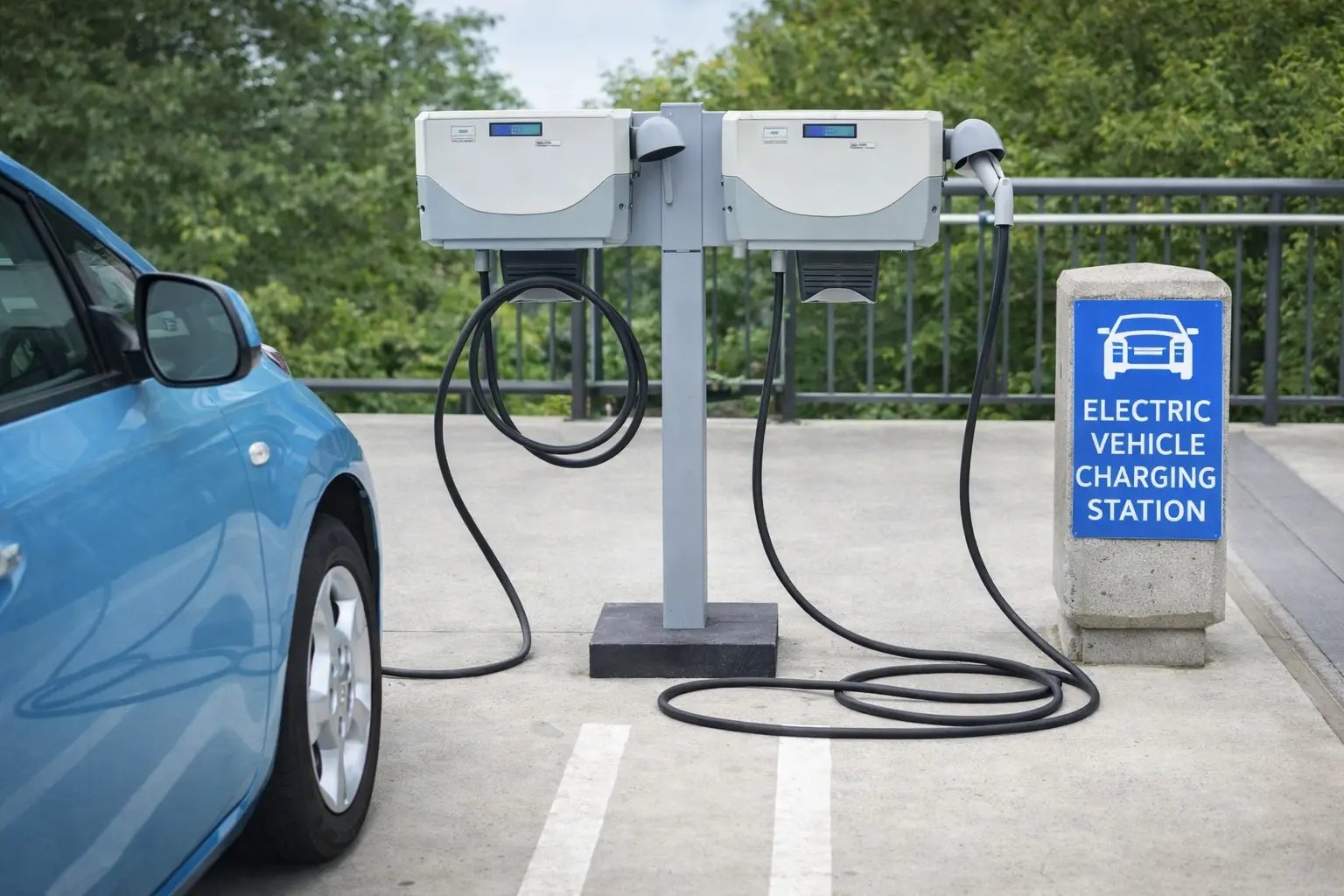
Nagpur is accelerating its transition towards electric mobility, with a district-wide rollout of 307 public charging stations aimed at supporting a rapidly growing base of electric vehicles and reducing urban pollution.The network, developed by Maharashtra State Electricity Distribution Company Limited (MSEDCL), spans both urban and rural areas, positioning the city as a key node in the state’s clean mobility strategy. With over 49,000 electric vehicles already on the road, the expansion of Nagpur EV charging infrastructure is emerging as a critical enabler for sustained adoption.
The distribution of charging stations reflects a deliberate attempt to ensure accessibility across geographies. Dense urban zones such as Mahal, Congress Nagar, and Civil Lines account for a significant share, while rural pockets including Mouda and Saoner are also being integrated into the network. This spatial spread is essential in addressing “range anxiety”—a key barrier to EV adoption—particularly for inter-city and peri-urban travel.As the nodal agency under Maharashtra’s EV policy, MSEDCL is not only deploying its own infrastructure but also enabling private participation. The utility is prioritising electricity connections for charging stations and offering technical support to private developers, petroleum firms, and housing societies. This hybrid model signals a shift towards ecosystem-based infrastructure development rather than state-led expansion alone.The rollout also introduces digital integration into mobility systems. A dedicated mobile application allows users to locate nearby charging points, check real-time availability, and reserve slots, indicating a move towards more user-centric urban services.
Urban mobility experts suggest that the strengthening of Nagpur EV charging infrastructure comes at a crucial time. As Indian cities grapple with rising vehicular emissions and congestion, electrification of transport is being positioned as a central pillar of climate-responsive urban planning. However, the success of this transition depends heavily on reliable and widely accessible charging networks.Nagpur’s approach also reflects a broader policy direction—integrating energy distribution utilities into mobility planning. By aligning power infrastructure with transport demand, cities can create more efficient and scalable systems for EV adoption.That said, past experiences indicate that infrastructure rollout alone may not be sufficient. Operational reliability, maintenance, and integration with renewable energy sources remain ongoing challenges. Experts caution that without ensuring uptime and grid decarbonisation, the environmental benefits of EV adoption could be partially diluted.
From an economic perspective, the initiative is opening up new avenues for entrepreneurship. Simplified processes for setting up charging stations are encouraging private investment, potentially creating a distributed network of service providers across the city and beyond. As Nagpur continues to expand, the evolution of Nagpur EV charging infrastructure will play a defining role in shaping its mobility systems. The current expansion marks a significant step, but long-term impact will depend on how effectively infrastructure, policy, and user behaviour align to deliver a cleaner and more resilient urban transport ecosystem.
Also Read: Nagpur Human Animal Conflict Raises Public Safety Concerns
Nagpur EV Charging Network Expands With 307 Stations
