Pune Infrastructure Plan Sets Two Year Mobility Reset
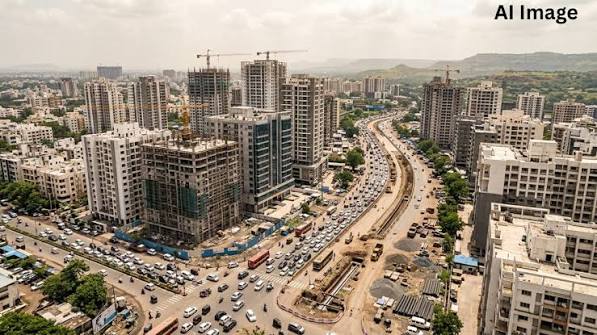
Pune and its metropolitan region are set for a major infrastructure push, with the Maharashtra government outlining a two-year programme centred on roads, tunnels and mass transit. The plan comes as urban growth has outpaced infrastructure delivery, raising questions over whether faster connectivity can be matched by better planning, public transport capacity and climate-resilient development.
The proposed programme covers Pune, Pimpri-Chinchwad and the wider Pune Metropolitan Region (PMR). State authorities say implementation is expected to begin within the next two months, with several projects forming part of a broader mobility network intended to improve movement across the expanding urban area. Among the projects identified are the inner and outer ring roads, the High Capacity Mass Transit Route (HCMTR) and new tunnels. Together, these interventions are intended to reduce pressure on existing corridors and provide alternative routes as development continues to spread beyond Pune’s traditional urban core. The scale of the proposed investment reflects a structural challenge facing the region.
Pune has expanded rapidly as a technology, manufacturing and services centre, while residential development has moved further into peripheral areas. Urban planners say transport infrastructure that arrives after large-scale development can lock cities into longer commutes, higher road dependence and expensive retrofitting. Mass transit will therefore be central to whether the infrastructure programme produces lasting gains. The Shivajinagar-Hinjawadi Metro corridor is expected to begin operations this month, according to the state government. The line is particularly significant for workers travelling between established employment districts and the large technology cluster around Hinjawadi.The government has set 2029 as a broader completion horizon for the mobility programme. That timeline places pressure on agencies responsible for planning, land acquisition, construction and coordination across multiple jurisdictions. Effective integration between municipal bodies, the metropolitan authority and state agencies will be important if new roads and transit projects are to function as one network rather than disconnected infrastructure.
The economic stakes are also considerable. Pune remains a major destination for global capability centres (GCCs), which bring higher-value employment and demand for offices, housing and supporting services. Industry analysts note that corporate investment increasingly depends on access to reliable transport, skilled workers and liveable neighbourhoods rather than office supply alone. Yet a mobility-led expansion also carries environmental and social risks. New road capacity can encourage outward development unless supported by compact planning, public transport and walkable neighbourhoods. For a region already experiencing congestion and rapid land-use change, the measure of success will not simply be faster vehicle movement. The next phase will depend on execution. If transport investment is coordinated with housing, public spaces, drainage, green infrastructure and employment growth, Pune’s expansion could become more resilient and inclusive. If infrastructure continues to follow development, congestion and uneven access may simply shift to new parts of the metropolitan region.