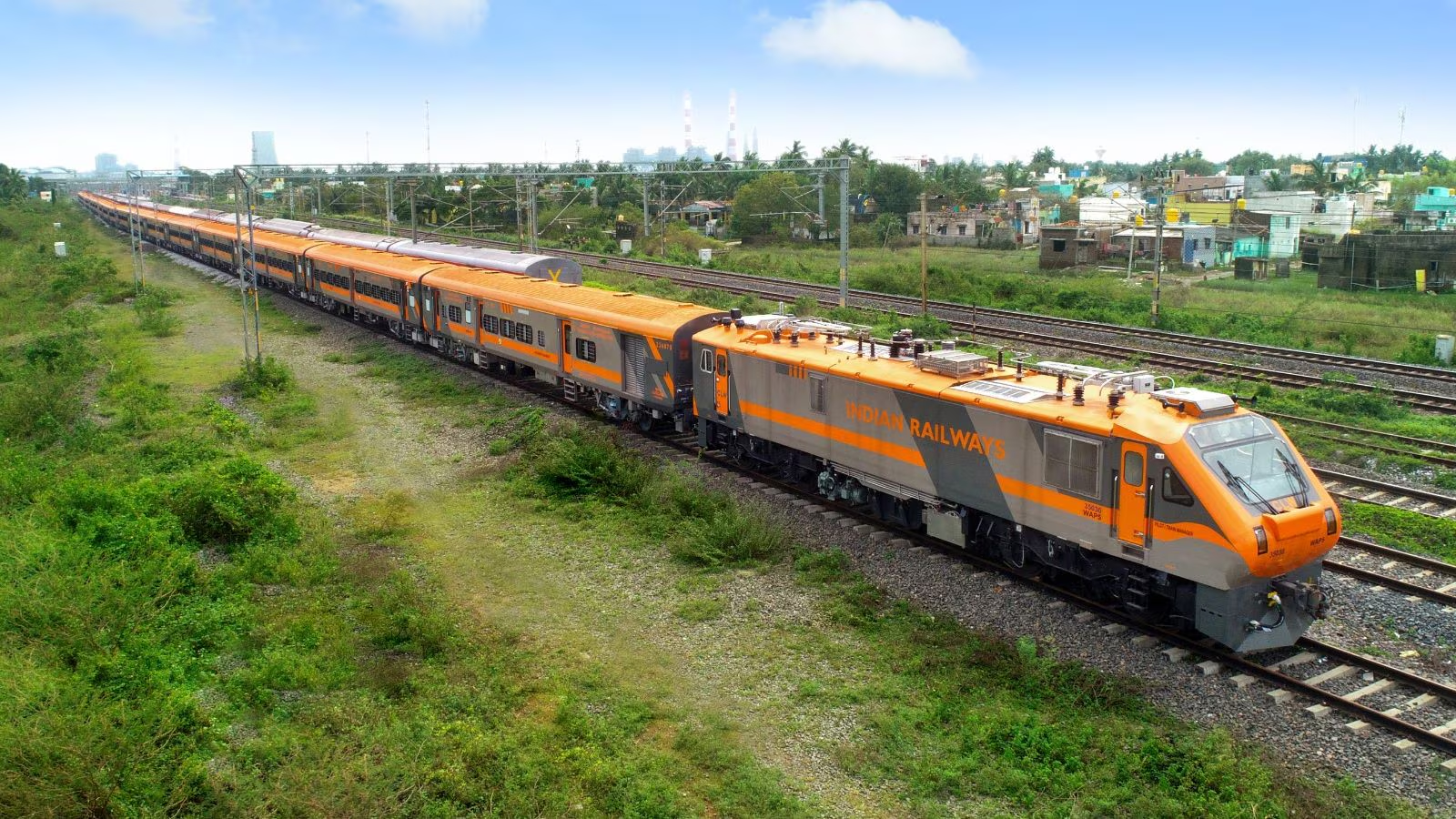
Ahmedabad is set to be integrated into India’s expanding semi-modern rail network with the introduction of its first Amrit Bharat service, marking a shift in long-distance connectivity between western and eastern regions. The newly designated weekly train linking Ahmedabad and Patna signals a move towards formalising high-demand routes while improving travel reliability for inter-state пассажир flows.
The Ahmedabad Amrit Bharat Express will operate on a fixed weekly schedule, replacing an earlier special service that catered to periodic demand. By converting it into a regular train, railway authorities aim to provide predictable connectivity across a corridor that sees significant migration, business travel, and family movement between Gujarat and Bihar.
Railway planners indicate that the introduction of the Ahmedabad Amrit Bharat Express reflects a broader effort to standardise services on busy routes that have historically depended on temporary or seasonal trains. The shift is expected to improve capacity planning, streamline maintenance cycles, and enhance passenger experience through more consistent operations.
The route traverses several key urban and industrial nodes across multiple states, linking mid-sized cities and regional centres that play a growing role in India’s economic geography. Stops across Gujarat, Madhya Pradesh, Rajasthan, and Uttar Pradesh ensure that the service is not limited to end-to-end travel but also supports intermediate mobility—an important factor in regional economic integration.
From an infrastructure perspective, the designation of Ahmedabad as the maintenance base for the train underscores the city’s growing importance within the national rail network. Supporting facilities such as water replenishment and operational halts along the route are being aligned to ensure smoother long-distance operations, particularly for non-premium passenger segments. Urban development experts highlight that improved rail connectivity can have a multiplier effect on both origin and destination cities. For Ahmedabad, stronger links to eastern India could support labour mobility and trade linkages, while also influencing real estate demand near transport nodes. For cities along the route, reliable train services often act as catalysts for local commerce and service-sector growth.
The environmental dimension is also significant. Rail transport remains one of the more energy-efficient modes for long-distance travel, especially when compared with road-based alternatives. Expanding such services aligns with broader goals of reducing transport emissions while maintaining accessibility across regions. However, analysts note that frequency remains a key limitation. A once-a-week schedule may not fully address demand on a corridor with high passenger volumes. Over time, scaling up frequency or adding parallel services could be necessary to maximise the benefits of the route. As the service prepares for rollout, the focus will be on operational consistency and passenger uptake. The move signals a gradual shift towards more structured and sustainable mobility systems, where long-distance rail continues to play a central role in connecting India’s evolving urban landscape.
Ahmedabad Amrit Bharat Express Connects Key Cities