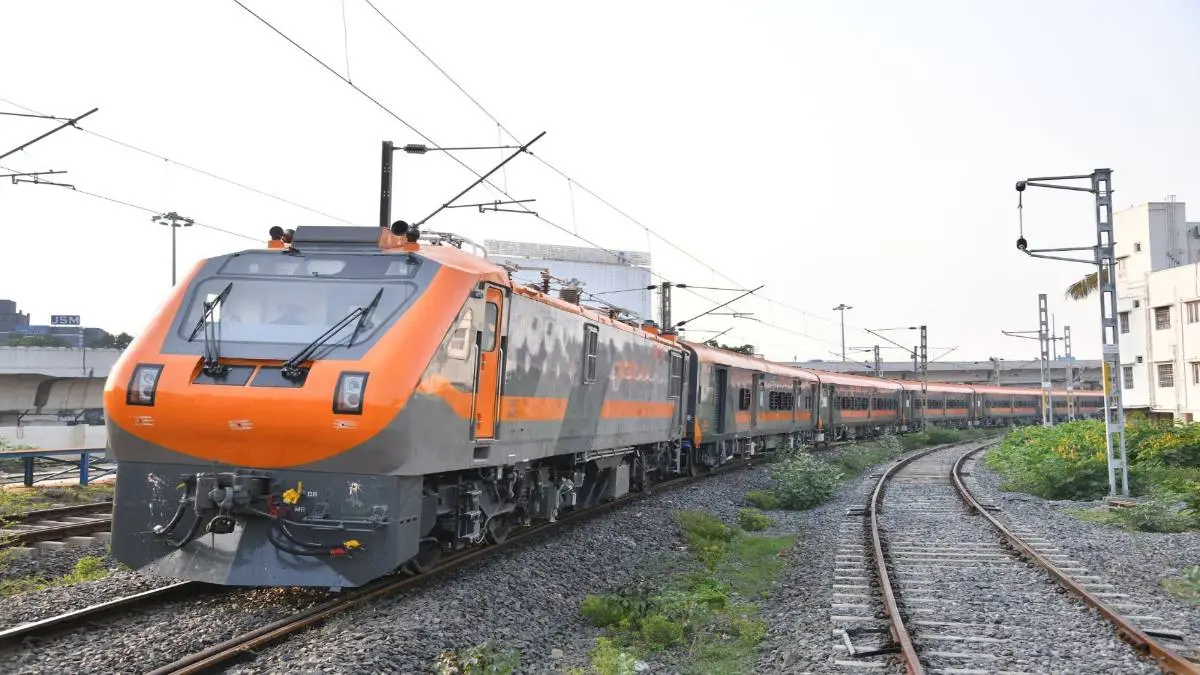
Delhi is set to gain another direct rail connection with Gorakhpur after the Railway Board approved a new weekly Amrit Bharat Express. The service will connect the national capital with several towns across eastern Uttar Pradesh, potentially making long-distance travel more accessible for workers, students and families while strengthening links between Delhi and the wider eastern UP economic corridor.
The approved service will operate as train numbers 14046 and 14045. According to the reported Railway Board schedule, the train will run weekly, with departures from both ends on Tuesdays. From Delhi, the service is scheduled to leave at 12:40am and reach Gorakhpur at 3:50pm the following day. In the opposite direction, the Gorakhpur-bound service is scheduled to depart at 9:40pm and arrive in Delhi at 12:50pm the next day. The route is notable because it serves more than the two terminal cities. Planned stops include Ghaziabad, Moradabad, Bareilly, Shahjahanpur, Sitapur, Burhwal, Gonda, Balrampur, Barhni, Siddharth Nagar and Anand Nagar. For smaller cities and towns along the corridor, additional long-distance rail capacity can reduce the need for multiple connections when travelling towards Delhi. The new Delhi Amrit Bharat service also has a wider urban significance.
Delhi’s transport demand extends far beyond its municipal boundaries, with large volumes of daily and periodic movement linked to employment, education, healthcare and family networks across northern India. Strengthening rail links with eastern Uttar Pradesh can support this wider regional mobility system. For lower-income passengers, the relevance is particularly strong. Amrit Bharat services are designed as non-AC, long-distance trains, placing them in a different segment from premium services. A reliable direct connection can therefore provide an additional option for passengers who prioritise affordability and connectivity over premium travel features. There is also a capacity question. Better inter-city rail links can support more compact travel patterns and reduce dependence on road-based long-distance journeys. However, the environmental benefit depends on occupancy, service reliability and the ability of stations to handle passenger flows efficiently.
The next challenge will be integrating the new service with local transport. Better rail connectivity has limited value if passengers face difficult last-mile journeys, overcrowded station approaches or inadequate pedestrian access. For Delhi and the towns along the route, the new Delhi Amrit Bharat connection is therefore more than another train announcement. Its real impact will be measured by how reliably it expands affordable mobility and connects smaller urban centres to jobs, education and services.
Also Read: Pune Rail Disruption Exposes Gaps In Trackside Safety
Delhi Amrit Bharat Train Expands UP Connectivity