India Coal Output Strengthens Power Supply Stability
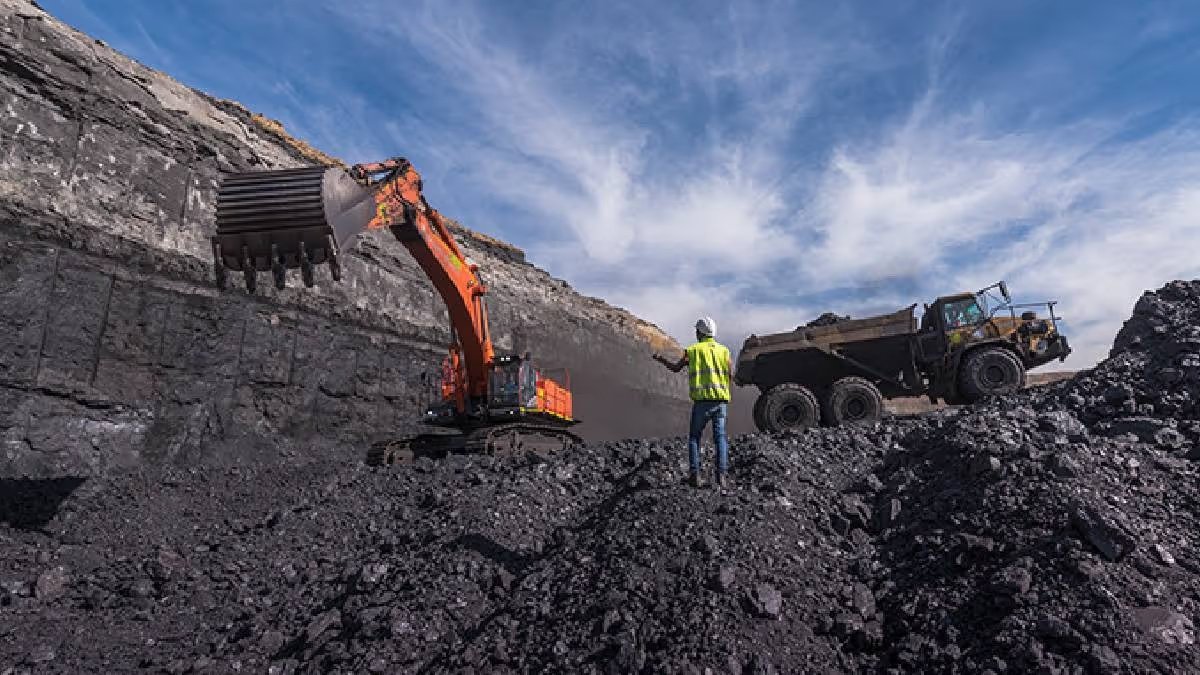
India is accelerating efforts to expand domestic coal production as global energy supply uncertainties intensify, signalling a strategic shift towards resource security in a volatile geopolitical environment. The move follows high-level consultations between government officials and industry stakeholders aimed at scaling up output, fast-tracking mine development, and strengthening the domestic coal value chain.
The push comes at a time when global fuel supply routes—particularly those linked to West Asia—are facing disruptions, impacting the availability of imported energy sources. As a result, coal is re-emerging as a critical buffer for India’s energy system, especially for sectors dependent on continuous and reliable power. Coal remains central to India’s energy mix, accounting for nearly three-fourths of electricity generation. In this context, increasing domestic output is not merely a supply-side decision but a structural necessity to maintain grid stability, industrial productivity, and urban infrastructure growth.Government discussions have emphasised the need to move beyond incremental gains and adopt a more systemic approach to coal sector expansion. This includes accelerating approvals for new mining projects, improving operational efficiency in existing mines, and increasing private sector participation to enhance production capacity.
For cities and infrastructure systems, the implications are immediate. Coal underpins electricity generation for transport networks, construction activity, and industrial clusters. A stable domestic supply reduces exposure to global price volatility and supply disruptions, ensuring that urban development projects can proceed without energy-related delays.The current strategy also highlights the role of coal gasification—an emerging focus area aimed at converting coal into cleaner fuels and industrial inputs. Policymakers see this as a pathway to maximise the value of domestic reserves while gradually aligning with environmental goals. At the same time, the expansion of domestic coal production raises important sustainability considerations. While coal offers short-term energy security, it also contributes significantly to emissions and urban air quality challenges. India’s long-term urban strategy will need to balance this increased reliance with parallel investments in renewable energy and cleaner technologies.
Recent production data indicates that captive and commercial coal output has already crossed significant milestones, reflecting growing capacity within the sector. This momentum is expected to continue as policy reforms and market incentives encourage greater participation and efficiency.The renewed focus on domestic coal also aligns with broader economic priorities, including reducing import dependence and strengthening supply chain resilience. In an environment of global uncertainty, such measures are increasingly seen as essential to safeguarding both industrial growth and energy access.
Looking ahead, the success of this strategy will depend on how effectively India can integrate increased coal production with its climate commitments. As cities expand and energy demand rises, the challenge will be to ensure that short-term energy security does not come at the cost of long-term sustainability—requiring a calibrated transition that balances reliability, affordability, and environmental responsibility.