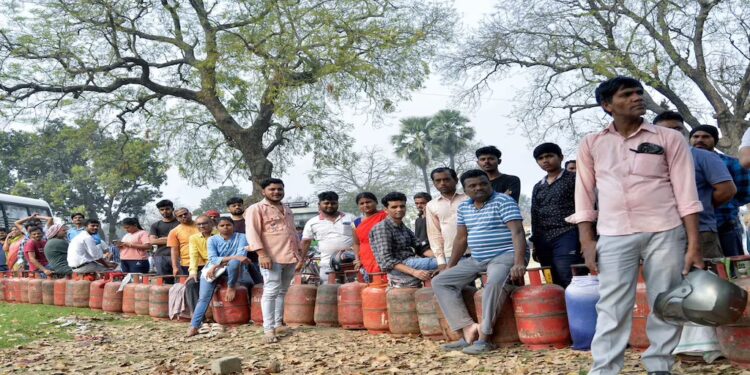
A sharp rise in household demand has pushed Patna into a prolonged LPG crisis, with residents across multiple neighbourhoods reporting delays in cylinder deliveries and long waiting periods despite confirmed bookings.
The situation is increasingly being viewed not just as a supply disruption but as a wider urban-infrastructure challenge affecting cooking fuel access, small businesses and low-income households in one of eastern India’s fastest-growing cities. According to the latest city-level reports, distributors are struggling to keep pace with demand as the number of refill requests has surged in recent weeks. Many households have reported waiting several days beyond normal delivery timelines, while others have been forced to rely on alternative fuels or reduce cooking frequency. The shortage has also triggered long queues outside distribution centres, reflecting the pressure on the city’s fuel-supply network.
The LPG crisis has already begun to spill over into other sectors. In Bodh Gaya and nearby districts, hospitality businesses dependent on bulk LPG supply have reported disruptions, forcing some establishments to cut operations temporarily. Authorities have also taken action against hoarding and illegal storage in nearby districts, suggesting that the shortage is being intensified by black-marketing and uneven distribution rather than a single supply-chain issue. Recent developments across eastern India indicate that the problem is not confined to Patna alone. Reports from Ranchi and other cities in the region show a similar backlog in bookings, with distributors acknowledging that demand has grown faster than supply in the short term. National-level reports have also linked the current shortage to global supply concerns and panic booking in several states, which has put additional pressure on distribution networks in urban areas.
Urban planners say the crisis highlights a structural issue in the way essential services are delivered in expanding cities. As urban populations grow and more households shift from traditional fuels to LPG, the last-mile delivery system—distributor networks, storage capacity and booking infrastructure—often struggles to expand at the same pace. In dense urban neighbourhoods, this can quickly turn a temporary supply gap into a broader civic problem affecting food security, small businesses and everyday household functioning. The issue is also raising questions about energy resilience in rapidly urbanising regions. Cities like Patna are witnessing rising population density and increasing dependence on a single cooking fuel source. Without diversified energy options—such as piped natural gas, electric cooking infrastructure or community-level backup systems—short-term disruptions can have a disproportionate impact on vulnerable households.
The current LPG crisis therefore reflects more than a seasonal increase in demand. It highlights the growing need for resilient urban energy planning that treats cooking fuel as a critical service. As authorities step up monitoring and attempt to stabilise supply, the focus is likely to shift toward strengthening distribution systems and preventing similar disruptions in the future.