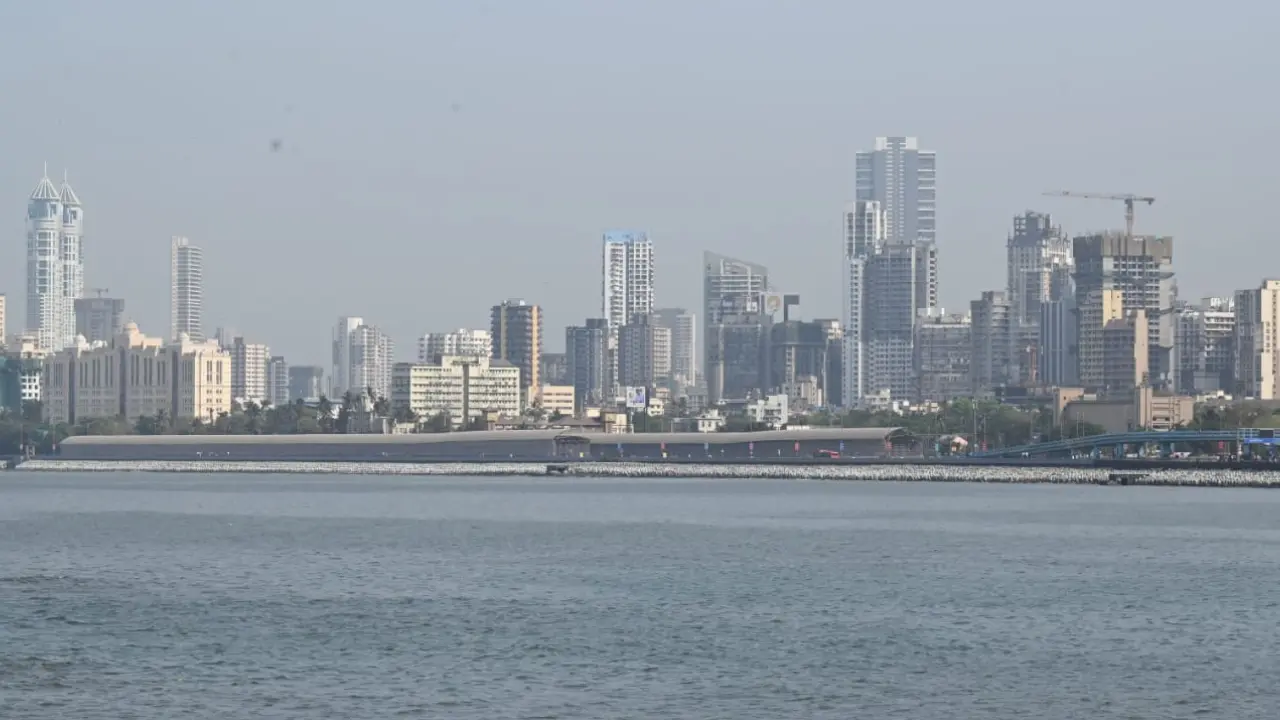
Residents across Mumbai began the week under clear skies and marginally cooler conditions, as early summer heat eased slightly across the city on Monday. While daytime temperatures remain warm, the modest decline compared with last week has coincided with a noticeable improvement in Mumbai air quality, offering a brief window of relief for a metropolis that frequently grapples with heat and pollution pressures during the pre-monsoon period.
According to weather monitoring data from the national meteorological agency, the city is expected to experience stable conditions through the day, with maximum temperatures likely to hover around the low-to-mid thirties Celsius while minimum temperatures remain in the early twenties. No weather advisories have been issued, suggesting relatively stable atmospheric conditions for now. Morning observations showed temperature differences across the wider metropolitan region. Coastal areas recorded comparatively milder readings, while inland urban zones such as neighbouring satellite cities experienced warmer conditions. Such micro-climatic variations are typical in dense coastal metros where sea breeze patterns, urban heat retention, and built density shape local weather behaviour.
Urban climate researchers note that these subtle shifts are closely linked to the evolving heat dynamics of large cities. In rapidly expanding metropolitan regions like Mumbai, the concentration of concrete surfaces, transport infrastructure and high-density housing amplifies the urban heat island effect. Even small reductions in temperature can therefore influence daily comfort levels, electricity demand and outdoor economic activity. At the same time, monitoring networks tracking Mumbai air quality indicate that pollution levels have improved across most parts of the city over the past 24 hours. Current readings place the city’s overall Air Quality Index within the ‘moderate’ band, marking a visible improvement from earlier fluctuations this month.
Several coastal and southern neighbourhood monitoring stations reported AQI levels comfortably within the ‘good’ range, suggesting relatively cleaner air in those pockets. However, the data also highlights how uneven air quality remains across the metropolitan landscape. Certain dense residential and industrial clusters recorded significantly higher readings, including levels classified as unhealthy or even severe. Experts say this disparity reflects the complex interaction between traffic emissions, localised construction activity, industrial sources and meteorological conditions that influence pollutant dispersion.
Urban planners argue that these patterns underline the importance of city-scale climate and mobility strategies. Cleaner transport systems, stricter construction dust control, expanded urban tree cover and improved public transport networks are increasingly viewed as essential tools for stabilising Mumbai air quality while supporting long-term climate resilience. The improvement observed this week may be temporary, but it offers a glimpse of how quickly air conditions can shift when atmospheric circulation and local emissions align favourably.
For a city balancing rapid urban growth with environmental stress, the coming weeks will test how weather variability, urban planning decisions and pollution management strategies shape daily life for millions of residents heading into the hotter months.
Mumbai Weather Shift Brings Cooler Air And Cleaner Skies