


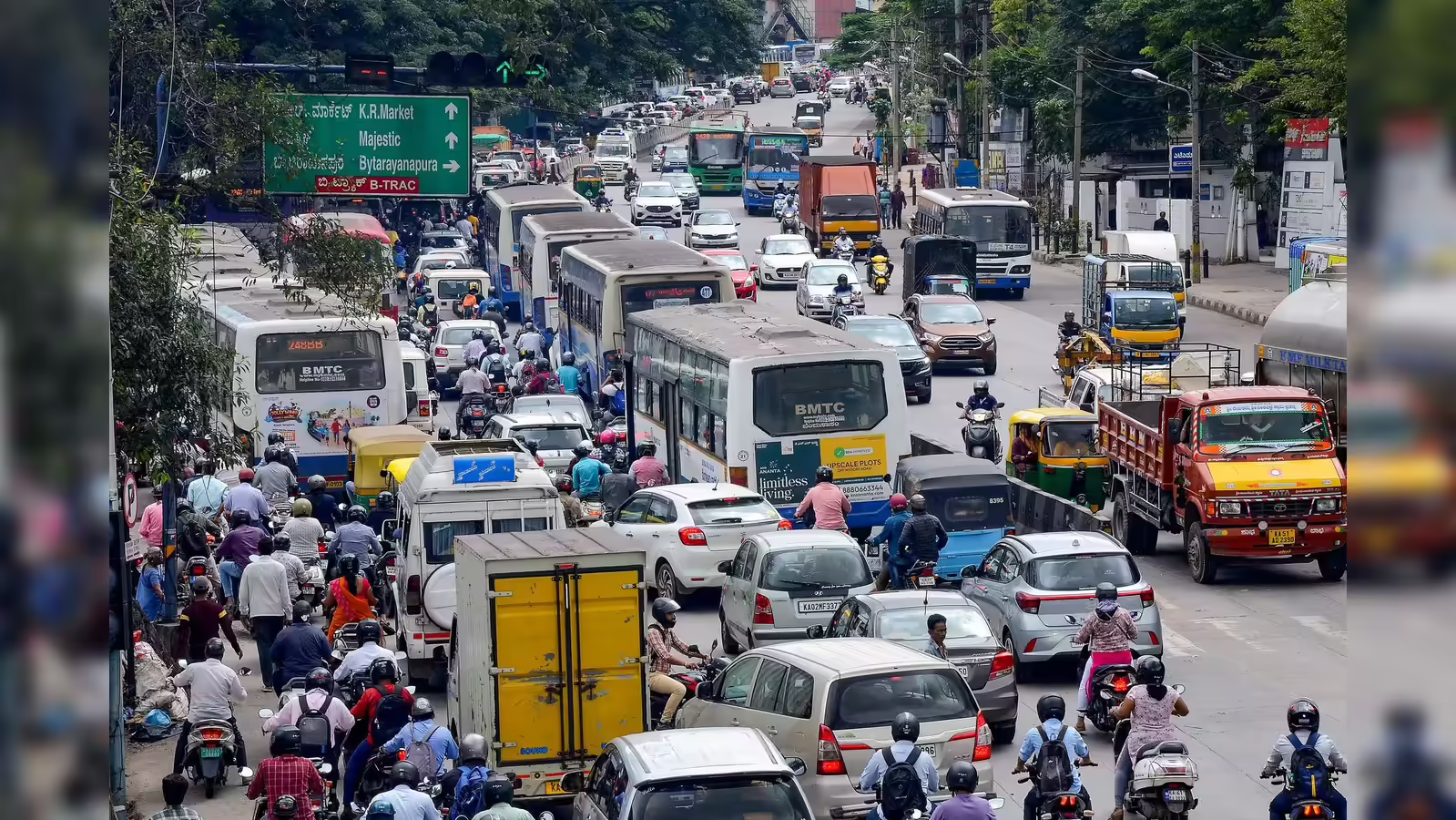
A financial advisory panel examining urban governance in the Greater Bengaluru region has proposed introducing a Bengaluru congestion tax on heavily trafficked road corridors, positioning the measure as a potential tool to reduce traffic pressure while strengthening municipal finances.
The recommendation focuses particularly on busy transport arteries such as the Outer Ring Road and other high-volume commuter routes that experience daily gridlock. By introducing a congestion pricing system, vehicles entering these corridors during peak periods could face a usage charge, encouraging motorists to reconsider travel timing, route choices or transport modes.Urban mobility specialists say congestion pricing is increasingly being studied by rapidly growing metropolitan regions worldwide. The approach works by attaching a cost to road space in highly congested areas, thereby reducing unnecessary trips while generating revenue for transport improvements.The proposal suggests that the Bengaluru congestion tax could be implemented using digital tolling technologies similar to those already used on highways. Such systems allow automatic deduction through electronic vehicle identification, reducing the need for physical toll plazas and minimising traffic disruptions.Financial analysts advising urban authorities emphasise that the goal is not solely revenue generation. The broader objective is to manage demand on overstretched road infrastructure in a city where vehicle ownership has expanded far faster than road capacity. Bengaluru’s technology-driven economy attracts a large workforce, resulting in heavy commuting flows between residential districts and employment hubs.Urban planners argue that congestion pricing can influence long-term behavioural shifts if the revenue is transparently reinvested in public transport, pedestrian infrastructure and sustainable mobility systems.
Strengthening bus networks, expanding metro connectivity and improving last-mile transit options are often cited as the most effective ways to reduce car dependency in dense cities.Alongside the congestion pricing proposal, the financial review also examined alternative mechanisms for strengthening municipal finances. One approach under consideration involves leveraging environmental initiatives to generate carbon credits. Projects such as urban forestry programmes and waste recovery facilities could potentially be registered under carbon markets, allowing the city to earn revenue while supporting climate goals.Experts say this approach reflects a broader shift towards climate-aligned urban finance. Cities are increasingly exploring green revenue streams to support investments in infrastructure that reduce emissions, improve resilience and enhance urban liveability.The panel also suggested that metropolitan authorities could consider raising capital through municipal or green bonds to fund infrastructure upgrades. Bengaluru has historical precedent in this area, having issued an early municipal bond to finance public works decades ago.If implemented together, such financial tools could diversify funding sources for the metropolitan region. A combination of congestion pricing, carbon finance and bond-based funding may help cities manage infrastructure demands without relying entirely on traditional tax sources.However, urban economists caution that any Bengaluru congestion tax proposal would require careful design to ensure fairness and transparency. Measures would likely need to consider exemptions, public transport alternatives and clear communication with citizens before implementation.
As Bengaluru continues to expand into a global technology and innovation hub, the challenge facing policymakers is balancing mobility, economic productivity and environmental sustainability. The debate around congestion pricing signals a growing recognition that managing urban growth will require both new financial models and smarter transport strategies.
Also Read:Chennai EV Charging Stations Expand Urban Mobility Infrastructure
