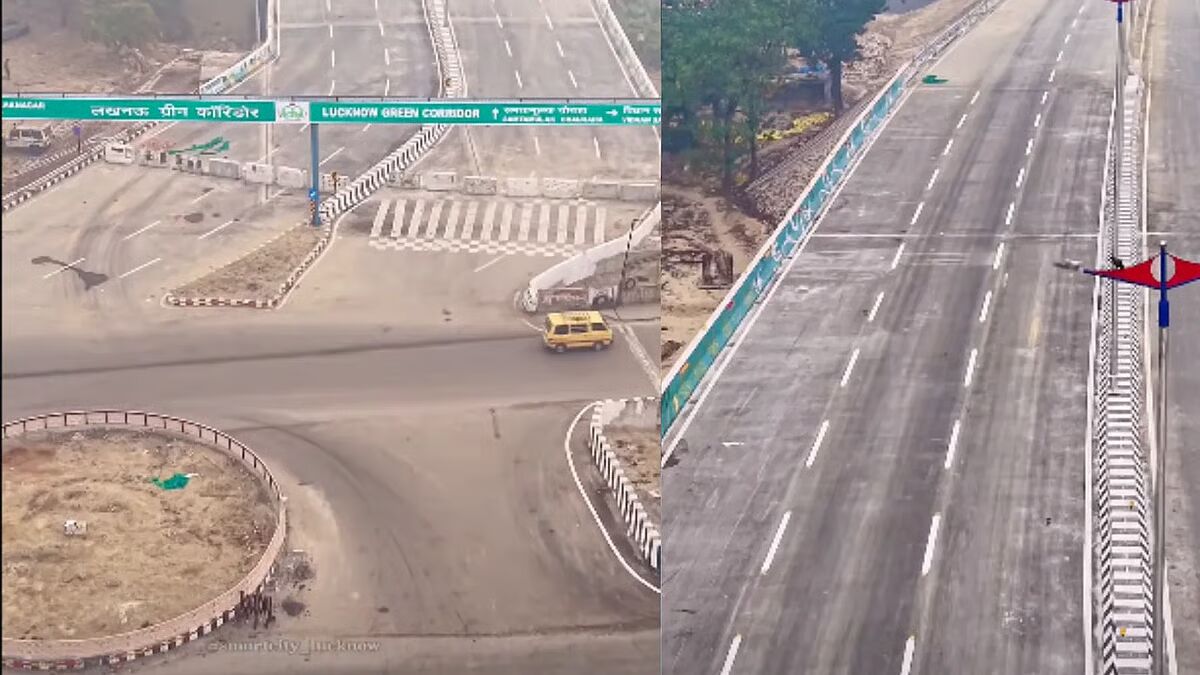
Lucknow is set to activate a major new transport link aimed at easing congestion and improving cross-city connectivity as a newly built Green Corridor is scheduled to open to traffic this week.
The signal-free road network, developed by the city’s planning authorities, is designed to streamline vehicle movement through several high-traffic zones connecting Samta Mulak Square to the Daliganj Bridge area. Urban infrastructure planners say the project represents an important mobility intervention for a city experiencing rising population growth, vehicle ownership and expanding economic activity.
The corridor forms part of a broader urban mobility plan intended to reduce travel delays along routes linking neighbourhoods such as Nishatganj, Hanuman Setu and Daliganj—areas known for heavy daily traffic and complex intersections. By enabling uninterrupted vehicle movement along key stretches, the project is expected to shorten travel times and reduce bottlenecks during peak commuting hours. Urban transport experts note that signal-free corridors are increasingly being adopted in rapidly expanding Indian cities to manage traffic flows while avoiding the high cost of building entirely new road networks. Instead, existing corridors are redesigned with grade separations, widened carriageways and improved junction management.
In Lucknow’s case, the corridor links residential neighbourhoods with educational institutions, commercial centres and administrative districts located along the Gomti River corridor. These areas experience heavy traffic volumes from daily commuters travelling between northern residential zones and the central city. City officials say the project was implemented after years of traffic studies that highlighted severe congestion across key intersections along the route. The upgraded corridor aims to ensure smoother vehicle flow and provide a faster north–south link across central Lucknow.
The initiative is also expected to complement other ongoing urban transport investments, including road upgrades, flyover construction and expansion of public transport infrastructure across the state capital. Such projects are increasingly viewed as necessary to accommodate the city’s rapid spatial expansion and rising demand for efficient mobility systems. However, transport planners caution that road infrastructure alone cannot solve long-term congestion challenges. While signal-free corridors can improve travel speeds in the short term, sustained improvements in urban mobility often depend on integrated planning that includes public transport, pedestrian infrastructure and non-motorised mobility.
Environmental planners also emphasise the importance of integrating green buffers, improved drainage systems and urban tree cover within road projects to minimise heat and pollution impacts in dense urban environments. As Lucknow continues to evolve into a major administrative and economic centre in northern India, infrastructure projects like the Lucknow Green Corridor highlight the balancing act faced by city planners—expanding road capacity to meet immediate mobility needs while simultaneously building more sustainable, multimodal transport systems.
With the corridor ready for operational use, authorities expect the new route to significantly improve daily travel conditions for commuters moving through some of the city’s most congested traffic zones.