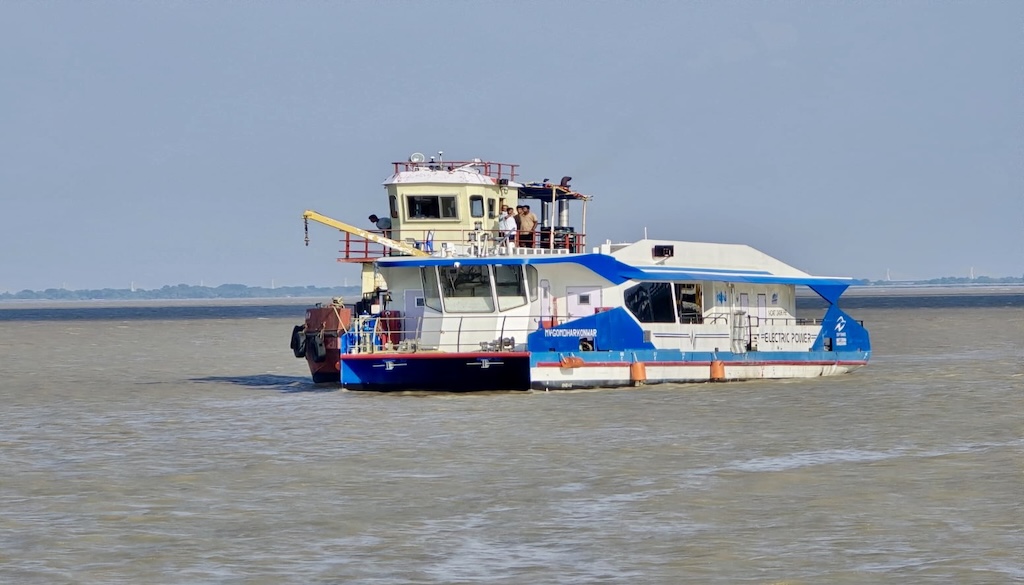
Patna Takes First Step Toward Water Metro with Electric Ferry Charging Hub
Work has begun on a key piece of infrastructure for the upcoming Patna Water Metro, with construction starting on a charging station for electric ferries at Gandhi Ghat along the Ganga River. The facility will power a fleet of electric boats planned for the city’s proposed river-based urban transport system.
The charging station marks one of the first on-ground developments for the project, which aims to introduce a modern water-based public transport network in Bihar’s capital. Authorities say the system will operate electric ferries to connect major ghats along the Ganga, offering commuters an alternative to congested city roads. The water metro project is estimated to cost around ₹908 crore and is expected to combine urban transport with tourism development along the riverfront. In the initial phase, the service will cover a 10.5-kilometre stretch between Gandhi Ghat and Gaighat, providing a fast and scenic route for daily commuters and visitors.
Officials said the first operational routes are likely to include connections between Digha Ghat and Kangan Ghat, linking key parts of Patna located along the riverbank. The boats planned for the system will be fully air-conditioned hybrid or electric vessels equipped with CCTV surveillance, automatic location tracking and modern safety systems. The initiative is being implemented jointly by the Inland Waterways Authority of India (IWAI) and the Bihar government. Besides easing traffic congestion, the project is expected to promote environmentally friendly transport by using electric ferries that produce minimal emissions compared to traditional diesel-powered boats.
Urban transport planners say river-based transit systems are gaining attention in Indian cities that lie along major waterways. The success of the Kochi Water Metro in Kerala has encouraged other cities to explore similar models to integrate waterways into their public transport networks. For Patna, the water metro could help address the city’s growing mobility challenges. The capital’s road network often faces heavy congestion due to rapid population growth and increasing vehicle numbers. A ferry-based transit option could provide quicker east-west connectivity along the river while reducing pressure on road infrastructure.
In addition to commuter transport, the project is expected to enhance tourism along the Ganga. River cruises and ferry routes linking historical ghats could attract visitors while also supporting local businesses along the riverfront. Future phases of the project may extend the network to neighbouring cities such as Hajipur and Sonepur, strengthening connectivity between north and south Bihar through inland waterways.
Infrastructure experts note that the start of charging infrastructure at Gandhi Ghat signals tangible progress toward launching the water metro. Once completed, the system could transform how residents and tourists move along Patna’s historic riverfront while positioning the city as one of India’s emerging hubs for sustainable urban transport.