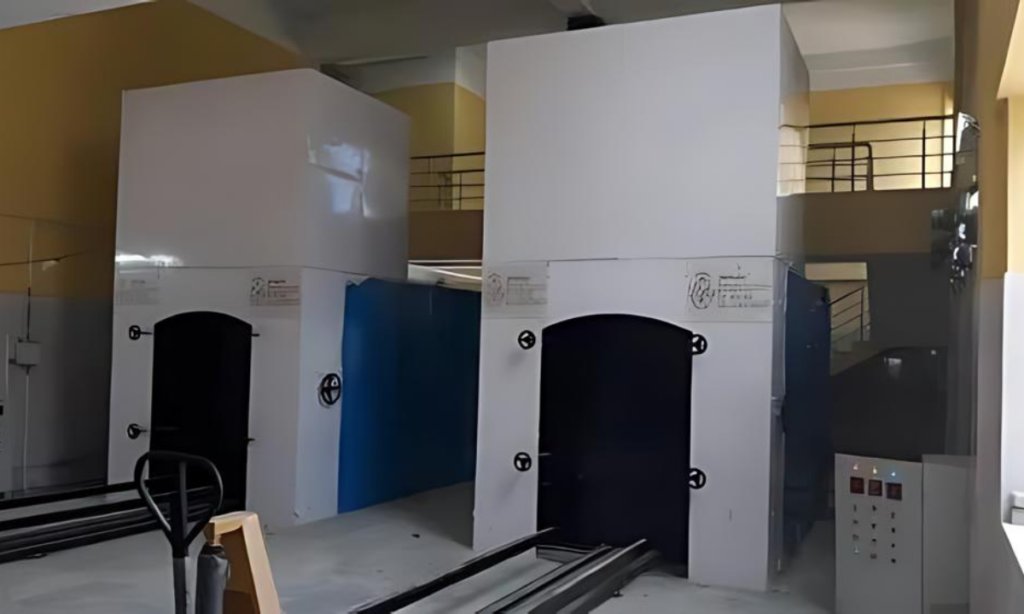
Kolkata Region Expands Electric Crematoria Network
Authorities in the Kolkata metropolitan region have commissioned two modern cremation facilities along the banks of the Hooghly River in an effort to reduce pollution from traditional funeral pyres and improve environmental management around riverfront settlements. The new systems in Kalyani and Barrackpore are designed to enable low-emission cremation while limiting the ecological stress placed on one of eastern India’s most heavily used river corridors. Urban administrators involved in the project say the facilities represent a shift toward cleaner funeral infrastructure in towns that depend on riverbanks for ceremonial practices. The initiative has been implemented by the state mission responsible for restoring the Ganges River basin, reflecting a broader push to curb untreated waste, ash residues and smoke emissions that historically accompany open-air cremation near water bodies.
The newly built installation in Kalyani sits along the municipal riverfront and is expected to serve residents across the township once operations formally begin. The system uses an electric furnace supported by air pollution control equipment and a tall chimney designed to disperse treated emissions safely above ground level. Civic engineers indicate that the arrangement significantly reduces particulate release compared with conventional wood-based cremation methods. A second facility in Barrackpore has been developed at a major riverbank ghat and incorporates additional emission management features. According to officials overseeing the project, the design includes multiple filtration stages intended to capture carbon particles and other pollutants before they reach the atmosphere. The installation also reportedly requires considerably less power than older electric cremation units used in several Indian cities.
Environmental planners say the introduction of electric crematoria Hooghly infrastructure is particularly significant because cremation sites along the river historically contributed to air pollution and water contamination during peak usage periods. By shifting toward energy-efficient systems, urban authorities aim to limit smoke, reduce the consumption of firewood and prevent partially burned remains or ash from entering the river ecosystem. The development is part of a wider river restoration agenda that seeks to combine sanitation upgrades, waste management improvements and sustainable infrastructure along the Ganga’s urban stretches. As cities across India face increasing pressure to balance cultural practices with environmental safeguards, planners are exploring technologies that maintain ritual dignity while lowering ecological impact.
Officials also confirmed that the state programme is expanding cooperation with international technical partners to study river basin management strategies in parts of the upper delta. The collaboration focuses on pollution control, erosion mitigation and data-driven planning for tributaries feeding the Ganga system.Urban policy experts note that integrating electric crematoria Hooghly facilities into riverfront planning could gradually reshape how densely populated towns manage end-of-life rituals in environmentally sensitive areas. If the model proves operationally viable, similar projects may be replicated across municipalities situated along major river systems where cremation infrastructure remains under environmental scrutiny.