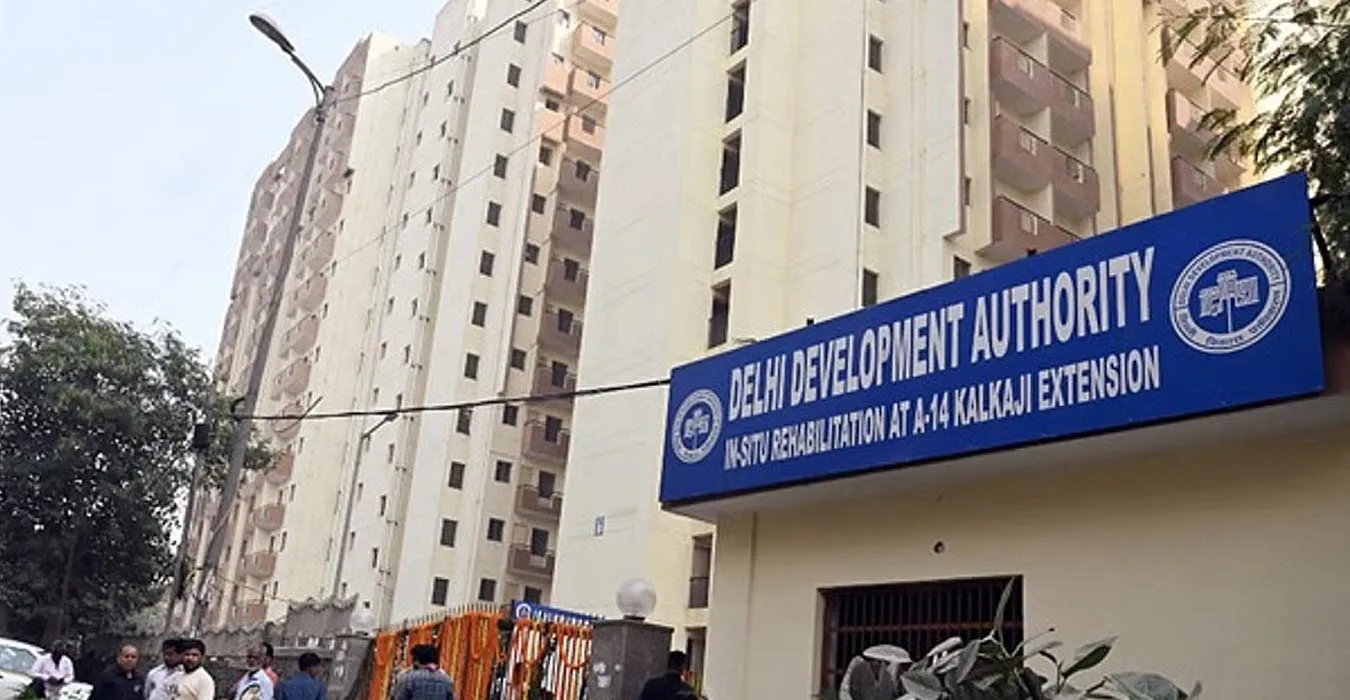
The central government has unveiled development projects worth ₹33,500 crore in Delhi, covering government housing modernisation, metro expansion, and urban infrastructure upgrades. Officials highlight that the initiative aims to replace ageing General Pool Residential Accommodation (GPRA) colonies with modern residential and office complexes, while integrating sustainable urban planning measures to support Delhi’s growing population and economic activity.
Under the programme, more than 2,700 newly constructed government flats and office spaces have been inaugurated, with foundation stones laid for an additional 6,600 units under the proposed Bharat Business Park in Sarojini Nagar. Urban planners note that the redevelopment is structured to optimise land use, enhance density without compromising quality, and generate commercial revenue to fund housing initiatives. The project covers seven GPRA colonies—Mohammadpur, Thyagraj Nagar, Kasturba Nagar, Sriniwaspuri, Nauroji Nagar, Sarojini Nagar, and Netaji Nagar—with a total projected built-up area exceeding 65 lakh square metres. Implementation is split between NBCC (India) Ltd and the Central Public Works Department (CPWD), with NBCC managing redevelopment in Sarojini Nagar, Netaji Nagar, and Nauroji Nagar, and CPWD overseeing Kasturba Nagar, Thyagraj Nagar, Sriniwaspuri, and Mohammadpur.
Experts indicate that modern construction techniques, energy-efficient systems, and green building features incorporated in office and residential towers—such as solar rooftops, rainwater harvesting, and electric vehicle charging—could serve as a model for climate-resilient urban infrastructure. The initiative aligns with broader national urban development goals, emphasising compact, sustainable, and technologically enabled cityscapes. Economists and urban development specialists point out that the self-financing model, which monetises commercial space to fund residential redevelopment, supports long-term fiscal sustainability while creating employment opportunities. Official data show that the redevelopment programme has already generated roughly 3.55 crore man-days of employment, highlighting its impact on both construction activity and local labour markets.
In addition to housing, the central government has advanced transport infrastructure with metro network expansion and the deployment of electric buses, signalling an integrated approach to sustainable urban mobility. A senior official noted that the combination of upgraded housing, office infrastructure, and low-carbon transport facilities is designed to reduce urban congestion, improve liveability, and strengthen Delhi’s resilience to climate stressors. As Delhi prepares for the next phase of urban redevelopment, experts stress the importance of continued monitoring, adoption of sustainable construction standards, and engagement with residents to ensure equitable access to housing and amenities. The programme could redefine government housing delivery and establish a benchmark for integrated, climate-conscious urban planning in India’s capital.
Centre Approves Delhi Housing And Infrastructure Upgrades