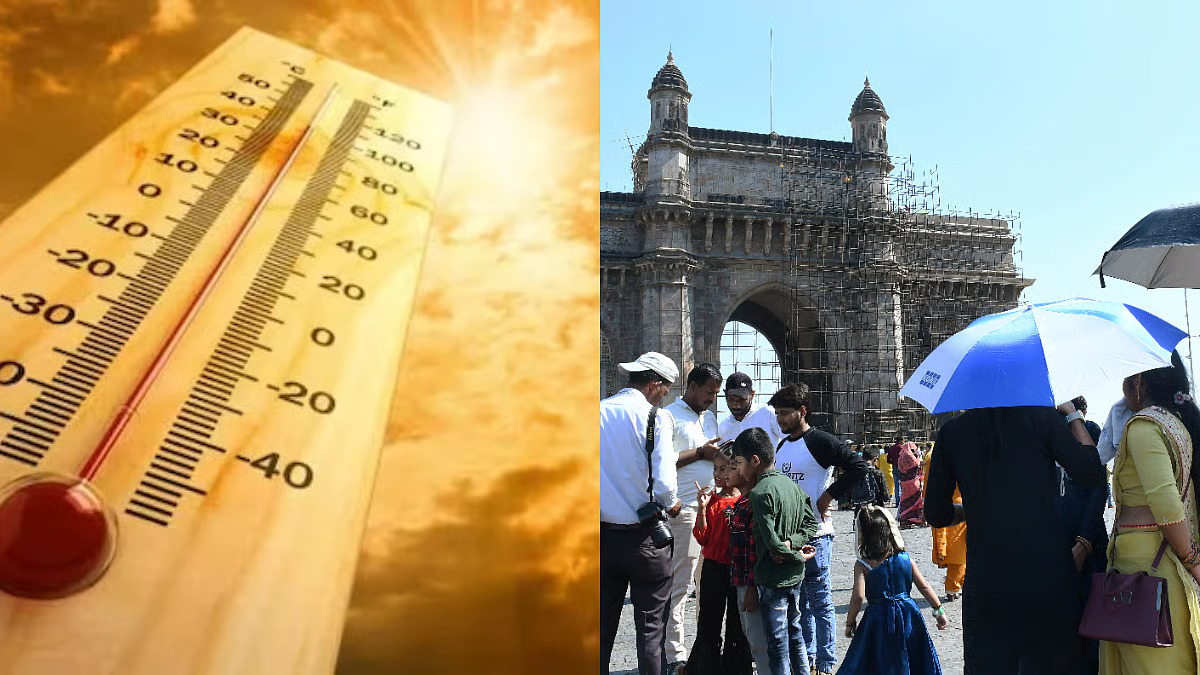
Navi Mumbai experienced an early-season temperature spike, reaching 40°C on Sunday afternoon, while coastal Mumbai recorded significantly lower highs, underlining the sharp microclimatic differences across the Mumbai-Konkan region. The divergence highlights how geography, sea breezes, and local wind patterns influence urban heat distribution and urban comfort levels in densely populated coastal cities.
Weather data indicated that humidity in Navi Mumbai dropped to around 17% under persistent north-easterly winds, amplifying daytime heat. In comparison, coastal areas of Mumbai, such as Juhu, recorded 32°C with 59% humidity, while Chhatrapati Shivaji Maharaj International Airport (CSMIA), slightly inland, registered 35°C, reflecting intermediate conditions. Experts note that this 8°C variation over a 26 km distance illustrates a classic Konkan microclimate phenomenon, where inland locations heat rapidly before the sea breeze mitigates temperatures along the coast. Urban climatologists explain that Navi Mumbai’s mainland location leaves it more exposed to hot, dry land winds during mornings and early afternoons, delaying the cooling effect of marine air. The result is a sharp rise in temperatures, combined with lower humidity, which can increase heat stress for residents, workers, and commuters in the region. Meanwhile, the early arrival of the Arabian Sea breeze along Mumbai’s coast moderates daytime highs and raises humidity, creating a more comfortable microclimate despite the broader regional heat wave.
This variation is particularly significant for city planners, infrastructure managers, and public health authorities. Rising inland temperatures can increase energy demand for cooling, strain urban transport systems, and pose health risks, especially for outdoor workers and vulnerable populations. Urban planning experts stress the need to factor in localised microclimate patterns when designing heat mitigation strategies, including green corridors, reflective surfaces, and water-sensitive landscaping. The March climatology of the Mumbai-Konkan belt routinely produces such contrasts, with strong daytime heating inland and delayed marine influence. Residents of Navi Mumbai may experience prolonged heat spells until the coastal breeze moves further inland later in the day. Such patterns highlight the need for real-time weather monitoring and targeted public advisories to ensure urban resilience and citizen well-being.
Long-term adaptation measures, including sustainable urban design, enhanced tree cover, and heat-resilient infrastructure, are recommended to minimise health impacts and manage rising temperatures across both coastal and inland parts of the metropolitan region.
Navi Mumbai Records 40°C While Coastal Mumbai Remains Cooler