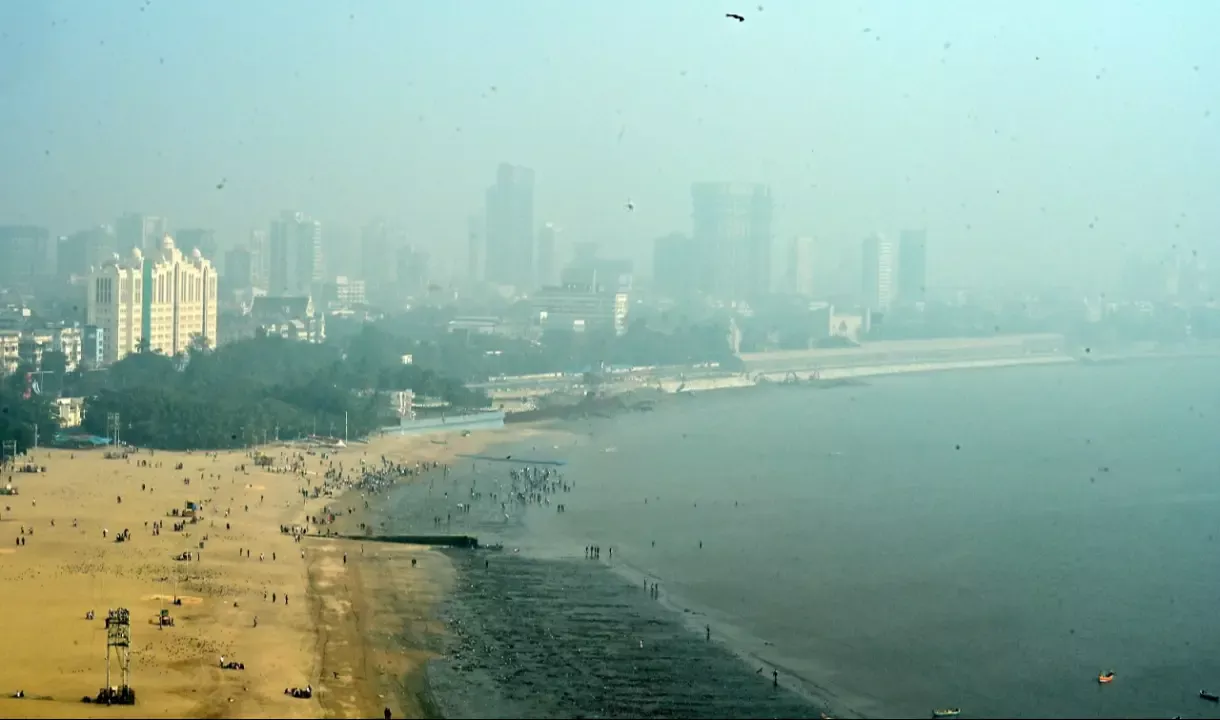
Mumbai is experiencing a surge in temperatures, prompting a yellow alert from the India Meteorological Department (IMD) as daytime highs reach 38°C. The city’s air quality has simultaneously deteriorated, with several locations registering ‘unhealthy’ to ‘severe’ pollution levels, raising public health and urban livability concerns.
According to IMD forecasts, clear skies are expected throughout the day, with minimum temperatures around 24°C. Residents have been advised to limit prolonged sun exposure, maintain hydration, and take precautionary measures to manage heat stress. Urban planners note that rising daytime temperatures combined with high humidity levels can exacerbate health risks, particularly for vulnerable populations such as the elderly, children, and outdoor workers. Air quality monitoring indicates that Mumbai’s overall Air Quality Index (AQI) reached 255 on Monday morning, categorising the city’s atmosphere as ‘unhealthy’. Several neighbourhoods recorded critical pollution levels, with Wadala Truck Terminal emerging as the most affected site at an AQI of 365 (‘severe’). Other hotspots include Mirashi Nagar (343), Mithchowki (336), and Juhu Scheme (327), highlighting concentrated urban emission sources. Experts attribute these spikes to vehicular emissions, construction activity, and localised wind patterns that prevent effective dispersion of pollutants.
Despite these high readings, pockets of the city maintained comparatively cleaner air. Areas such as Sathathharatha Nagar (67), Dahisar East (73), Chandivali (83), and Sarvodaya Nagar Station 1 (85) remained within the ‘moderate’ AQI category, reflecting the heterogeneous nature of urban air quality. Environmental specialists emphasise that such variation underscores the need for micro-level monitoring and targeted mitigation strategies to improve air conditions across all city zones. The current scenario illustrates the dual challenge Mumbai faces in managing heat and pollution. Rising temperatures contribute to increased energy demand, particularly for cooling, while elevated air pollution intensifies health risks, reduces outdoor activity, and can affect economic productivity. City authorities are urged to enhance public messaging, provide cooling shelters in high-density areas, and promote cleaner transport options to reduce emissions during critical periods.
Urban climate experts view these developments as a reminder of the city’s ongoing vulnerability to climate stressors and air quality hazards. Long-term resilience strategies, such as greening initiatives, sustainable transport systems, and stricter pollution controls, are essential to maintain livable conditions and protect public health in Mumbai’s dense urban environment.
Mumbai Under Yellow Alert Rising Temperatures