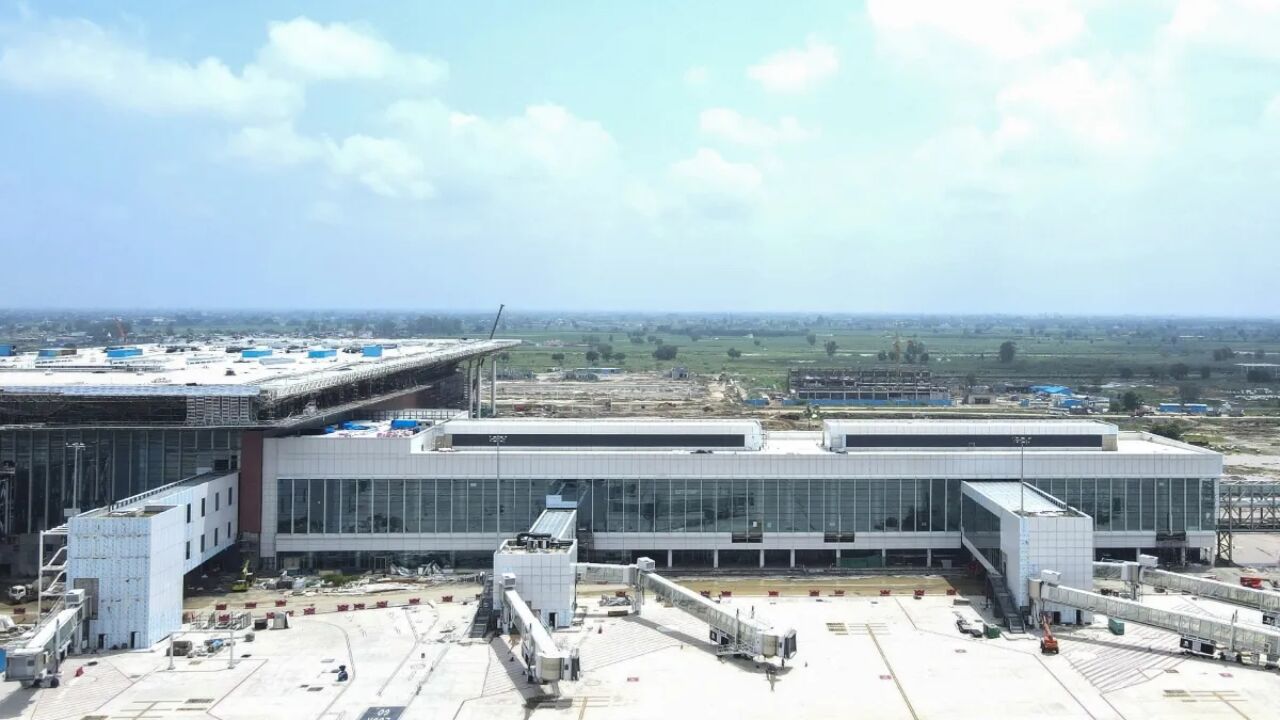
Noida Airport Clearance Signals New NCR Aviation Hub
The upcoming Noida International Airport security clearance has pushed the long-awaited aviation project in Jewar closer to launch, marking a major milestone for transport infrastructure in the National Capital Region (NCR). Authorities say the approval confirms that the airport’s safety and surveillance systems meet national aviation security standards, enabling the project to move toward final operational certification.
The clearance, granted by the national aviation security regulator, validates key protective frameworks at the airport, including passenger screening protocols, surveillance networks, access control systems and emergency contingency plans. With these measures in place, the aviation regulator is expected to complete its final inspection and issue the aerodrome licence required for commercial flight operations. Officials overseeing the project indicate that domestic passenger and cargo flights could begin within weeks after licensing, while international operations are expected later in the year as airlines gradually expand routes. Located in Jewar in western Uttar Pradesh, the greenfield airport has been designed as the second major aviation gateway for Delhi-NCR. In its first development phase, the facility is planned to handle around 12 million passengers annually, with future expansion expected to significantly increase capacity.
Urban infrastructure analysts say the project could reshape travel patterns across northern India by easing pressure on Delhi’s primary aviation hub and distributing passenger traffic across the wider region. Rapid growth in air travel demand over the past decade has stretched the capacity of existing airports, particularly in large metropolitan regions. The Noida International Airport security clearance therefore represents more than a regulatory milestone; it signals the emergence of a multi-airport aviation ecosystem in NCR. Similar models exist in cities such as London and Tokyo, where multiple airports share regional passenger flows to manage growing travel demand. Beyond aviation, the airport is also expected to act as a catalyst for regional economic development. Industrial zones, logistics parks and residential projects are already emerging around the Yamuna Expressway corridor as investors anticipate stronger connectivity and cargo movement once the airport becomes operational.
Supporting infrastructure is also advancing alongside the airport project. Dedicated expressway links now connect the airport zone with Delhi and surrounding NCR cities, while long-term mobility plans include a proposed regional rapid transit corridor linking Ghaziabad, Noida and the airport to improve public transport access. Urban planners emphasise that such large transport nodes can reshape metropolitan growth patterns by attracting new economic clusters around airports. The challenge for planners will be ensuring that airport-led urbanisation remains balanced, with adequate public transport, environmental safeguards and inclusive urban development. As the Noida International Airport security clearance moves the project into its final pre-launch phase, the focus now shifts to operational readiness—training staff, coordinating airlines and integrating logistics systems.
Once flights begin, the airport is expected to become a key gateway for both passenger travel and cargo movement in northern India, strengthening connectivity while redefining the aviation geography of the Delhi-NCR region.