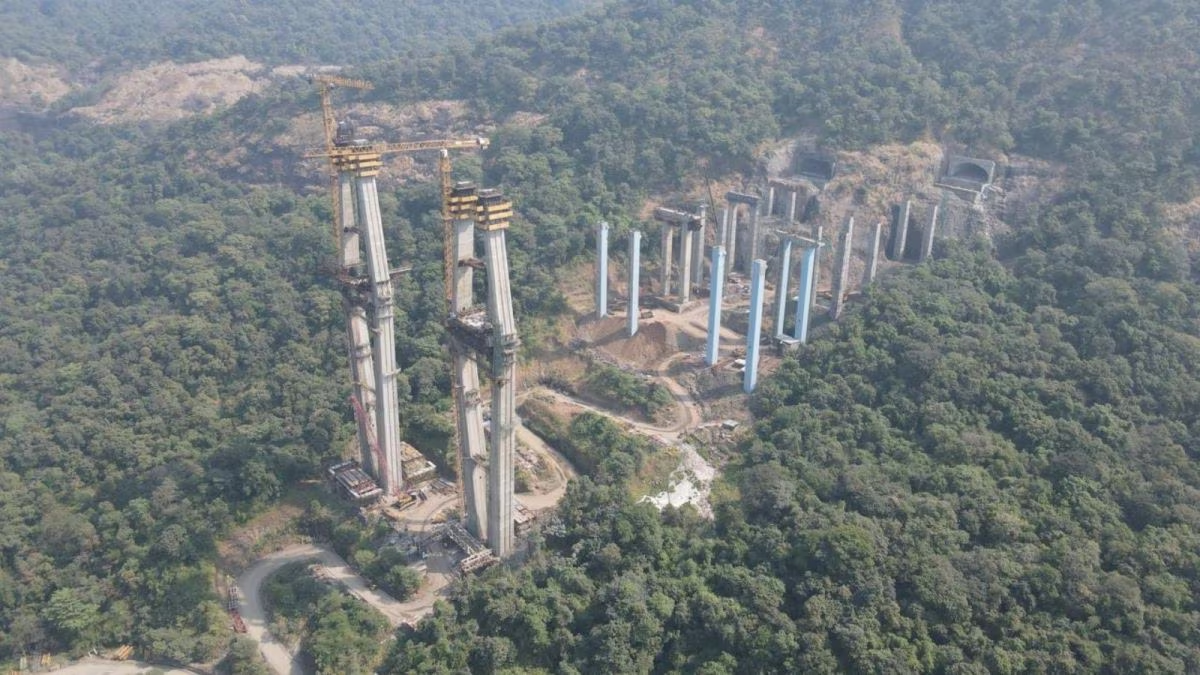
A major upgrade to the Mumbai–Pune Expressway is approaching completion as the long-planned alternate alignment designed to bypass the steep Khandala–Lonavala ghat section enters its final stage of construction. Officials overseeing the project say nearly all engineering work has been completed, with the new stretch expected to open soon, potentially transforming travel between Maharashtra’s two largest economic centres.
Developed by the state’s road infrastructure agency, the ₹6,695-crore Mumbai Pune expressway missing link project is designed to remove one of the most congested and technically challenging portions of the corridor. The new alignment connects Khopoli with Kusgaon, enabling vehicles to avoid a winding hill section that has historically slowed traffic and caused frequent bottlenecks.
Transport planners say the project could significantly reduce travel time between Mumbai and Pune, particularly during peak travel periods and long holiday weekends when traffic volumes surge along the expressway.
The existing ghat stretch is known for its sharp curves, steep gradients and weather-related visibility issues, which often limit speeds and create congestion. By introducing a shorter and more direct alignment, the Mumbai Pune expressway missing link aims to improve both journey time and road safety for commuters and freight traffic. Officials involved with the construction say the Pune-bound carriageway of the new alignment is already complete, while only a short section remains unfinished on the Mumbai-bound side. Civil engineering work across the project is expected to conclude within the scheduled timeline, after which final inspections and operational checks will take place before the corridor opens to the public.
The project features several complex engineering structures designed to navigate the steep terrain of the Western Ghats. At the Khopoli end, the route begins on an elevated viaduct rising roughly 60 metres above ground level before entering a tunnel stretching over one and a half kilometres through the hillside. Further along the alignment, the road crosses a deep valley via a cable-stayed bridge spanning hundreds of metres. Supported by tall pylons, the bridge structure ranks among the tallest of its kind for highway infrastructure in India and is designed to maintain high-speed travel across the challenging landscape.
Infrastructure analysts note that projects like the Mumbai Pune expressway missing link reflect a broader trend in India’s highway planning: investing in technically advanced engineering solutions to overcome geographic barriers while improving connectivity between economic clusters.
The Mumbai–Pune corridor is among the country’s busiest intercity routes, linking financial services, technology hubs, manufacturing centres and logistics networks across the western region. Faster and more reliable road travel is expected to support both passenger mobility and freight movement.
Urban mobility experts also point out that infrastructure improvements must increasingly balance connectivity with environmental considerations, particularly in ecologically sensitive hill regions such as the Western Ghats.
Careful management of drainage, slope stability and biodiversity remains critical in large mountain highway projects. Once operational, the new alignment will provide motorists with a smoother alternative route through the expressway’s most difficult terrain. Authorities expect the upgraded corridor to ease traffic pressure on the existing ghat section while improving resilience during accidents, breakdowns or weather disruptions.
Mumbai Pune Corridor Missing Link Nears Completion