


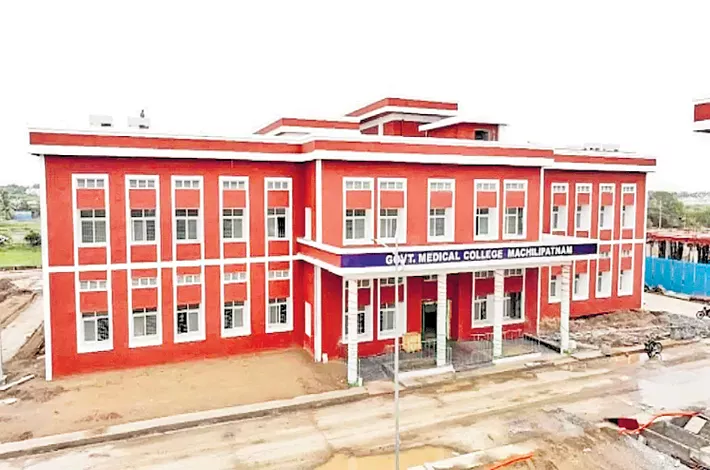
Amaravati is set to become a hub for medical education as the Andhra Pradesh government announced plans to operationalise 10 new medical colleges under a Public-Private Partnership (PPP) model over the next two financial years. The initiative, estimated to cost ₹8,480 crore, aims to address healthcare workforce gaps while modernising medical education infrastructure across the state.
Officials noted that Andhra Pradesh had 17 medical colleges sanctioned during the previous government, funded through a mix of National Bank for Agriculture and Rural Development (NABARD), central schemes, and state assistance for capital investment. However, experts argue that underutilisation of allocated funds and incomplete project implementation hindered the delivery of healthcare infrastructure in key regions.The state’s current strategy prioritises the PPP model to accelerate construction, improve operational efficiency, and attract private sector expertise for advanced medical education facilities. Analysts highlight that PPP structures can provide financial sustainability while leveraging innovation and management practices from private partners. This could result in more resilient healthcare institutions capable of responding to urban and rural medical demands.
Healthcare policy observers also emphasise that expanding medical colleges under a PPP framework can generate skilled professionals, support tertiary care, and stimulate ancillary services in local economies. By situating colleges in underserved districts, the government expects to enhance equitable access to medical training and improve regional healthcare outcomes.The announcement comes amid ongoing scrutiny of prior project delays and allegations regarding fund allocation in earlier regimes. Urban planners and public health experts note that transparent governance and accountability mechanisms are critical for ensuring the success of such large-scale infrastructure projects. Efficient land acquisition, timely construction, and sustained operational support will determine whether the initiative achieves its projected social and economic impact.
The initiative also aligns with broader trends in India’s healthcare expansion, where PPP models are increasingly being used to bridge gaps in higher medical education, modernise teaching hospitals, and integrate research with clinical training. With strategic investments and proper monitoring, Andhra Pradesh could serve as a model for scalable, inclusive, and high-quality medical education infrastructure in the country.Looking ahead, stakeholders emphasise that these new medical colleges should not only expand capacity but also adopt energy-efficient designs, digitised facilities, and community-linked programmes, ensuring that the infrastructure contributes to sustainable, people-first urban and regional development.
Andhra Pradesh Plans 10 PPP Medical Colleges
