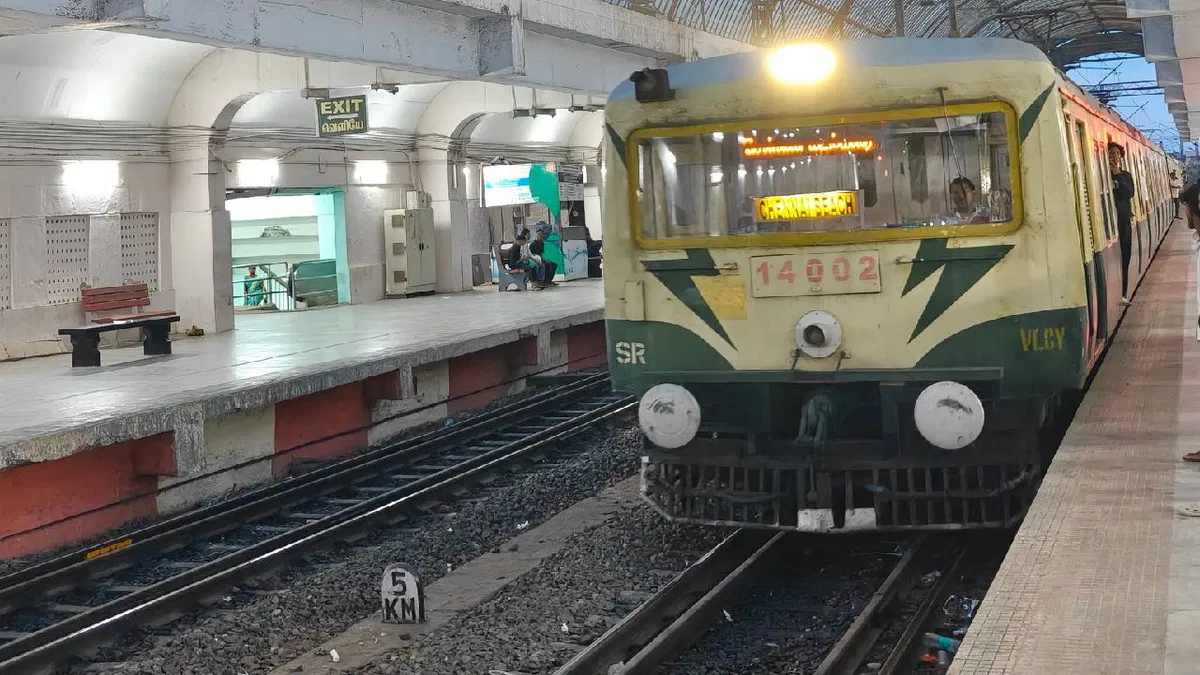
Chennai commuters reliant on the city’s suburban rail network are facing mounting travel challenges as curtailed train schedules and selective halts increasingly disrupt daily routines. On the Beach–Tambaram and Chengalpattu corridors, trains now bypass several stations, forcing passengers to navigate longer journeys and higher last-mile expenses, while uncertainty over train stops compounds congestion pressures.
Currently, a significant portion of the 115 operational EMU services stop only at major hubs, leaving smaller stations underserved. Commuters at these skipped stations report prolonged waiting times, overcrowding, and rising dependence on alternative transport. Urban mobility experts note that these disruptions not only slow travel but also inflate informal transport costs, creating economic strain for lower- and middle-income riders. Analysis of commuter patterns suggests that many residents are now travelling to major halting stations such as Guindy or Egmore to secure a reliable boarding point. This behaviour has increased demand for autos and shared transport, particularly during peak hours, driving fares up substantially. Transport economists estimate that these last-mile expenses have tripled in some corridors, effectively eroding the affordability of daily commutes.
The situation highlights systemic vulnerabilities in Chennai’s suburban transport network. Inconsistent train information on official apps and last-minute changes in station stops further aggravate commuter stress. Urban planners argue that unpredictability in EMU services undermines the reliability of the network, pushing residents toward costlier, higher-emission alternatives, which runs counter to sustainable mobility goals. From a city planning perspective, the current service pattern underscores the need for robust contingency measures and real-time communication systems. Integrating adaptive scheduling, enhanced shuttle services, and last-mile connectivity solutions could mitigate commuter burdens. Analysts suggest that aligning suburban rail schedules with feeder transport options and demand-responsive fares can strengthen both economic equity and urban resilience.
Environmental and social implications are also notable. Increased reliance on autos contributes to traffic congestion and higher carbon emissions, challenging Chennai’s commitments to climate-responsive infrastructure. Meanwhile, the disproportionate impact on commuters at skipped stations reflects broader issues of equitable access in urban transit design. Rail authorities have introduced some mitigation measures, including limited special bus services and expanded express halts, but commuters indicate that the improvements fall short of addressing systemic scheduling gaps. Experts emphasise that a data-driven, inclusive approach to suburban rail planning is essential to maintain efficiency, affordability, and sustainability in Chennai’s rapidly growing metropolitan region.