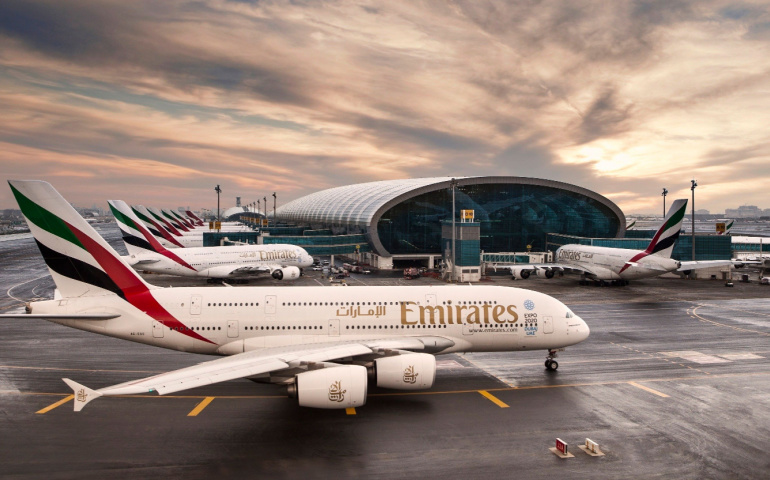
After nearly five days of disruption, Kolkata Dubai flight services resumed in limited capacity early Thursday, signalling a cautious restoration of air connectivity between eastern India and the Gulf. A commercial narrow-body aircraft from Dubai landed at Netaji Subhas Chandra Bose International Airport in the early hours, marking the first arrival since operations were suspended amid escalating tensions and airspace restrictions across parts of West Asia.
Airport officials confirmed that departures also recommenced on a restricted scale, though passenger loads remained significantly lower than pre-suspension averages. Aviation authorities described the move as a “phased operational reset”, contingent on evolving geopolitical and airspace conditions. The temporary halt had disrupted international services linking Kolkata with key Middle Eastern hubs, including Dubai, Doha and Abu Dhabi. For a city with deep labour, trade and diaspora ties to the Gulf, the interruption underscored the vulnerability of regional economies to global flashpoints.Kolkata’s airport functions as a critical gateway for migrant workers, small traders and service professionals travelling between eastern India and the Middle East.
Industry analysts estimate that Gulf-bound routes account for a sizeable share of international passenger traffic from the city, supporting not only airlines but also ancillary sectors such as logistics, hospitality and foreign exchange services. Aviation experts noted that while long-haul corridors often receive strategic priority during disruptions, short- and medium-haul Gulf routes are equally vital for urban economic continuity. “These links sustain remittance flows and labour mobility, both of which are deeply embedded in eastern India’s economic fabric,” said an aviation consultant tracking international operations. The partial restart of Kolkata Dubai flight services also highlights broader questions about resilience within urban transport networks. Airports increasingly operate as multi-modal economic hubs rather than mere transit points. Extended suspensions can ripple through cargo operations, export timelines and real estate activity surrounding aerotropolis zones.
Urban planners argue that cities must diversify connectivity and strengthen contingency planning as geopolitical volatility intensifies. Climate-related disruptions and conflict-driven airspace closures are becoming more frequent, demanding adaptive aviation management and smarter route planning. While operations have resumed on select sectors, airport authorities indicated there is no confirmed timeline for the full restoration of all Middle East routes. Airlines continue to monitor airspace advisories and insurance parameters before scaling up schedules. For Kolkata’s business community and migrant households, even a partial reopening brings relief. Yet the episode serves as a reminder that globally connected cities must build buffers against external shocks. As aviation networks recalibrate, the pace of recovery will depend not only on diplomatic stability but also on how swiftly airlines and regulators restore passenger confidence. The coming days will determine whether Kolkata’s Gulf corridor returns to normal frequency or remains a reminder of how closely urban economies are tethered to global fault lines.